Can internal issues be resolved with external solutions? The short answer is no, not fully. While external changes—such as improving your environment, relationships, or circumstances—can provide temporary relief or even create a more supportive space for healing, they rarely address the root cause of internal struggles.
Internal issues, like feelings of inadequacy, comparison, or self-doubt, often stem from deeply held beliefs, emotional wounds, or patterns of thinking that require introspection and self-work to resolve. While external solutions might act as a band-aid or a catalyst for growth, the real work involves confronting the internal causes—reassessing your self-worth, processing emotions, and building healthier thought patterns.
Comparison is an internal issue that cannot be fixed with external solutions. True contentment comes from within and requires addressing the underlying insecurities and beliefs that fuel comparison. No amount of external validation or changes in circumstances can fully resolve this internal struggle. It takes introspection, self-compassion, and a shift in perspective to overcome the habit of comparing ourselves to others and find genuine peace and satisfaction in who we are.
Ultimately, lasting change comes from within. It requires a combination of inner healing, self-awareness, and personal growth to address the core of these internal issues. External solutions can support this journey, but they are not the solution on their own.
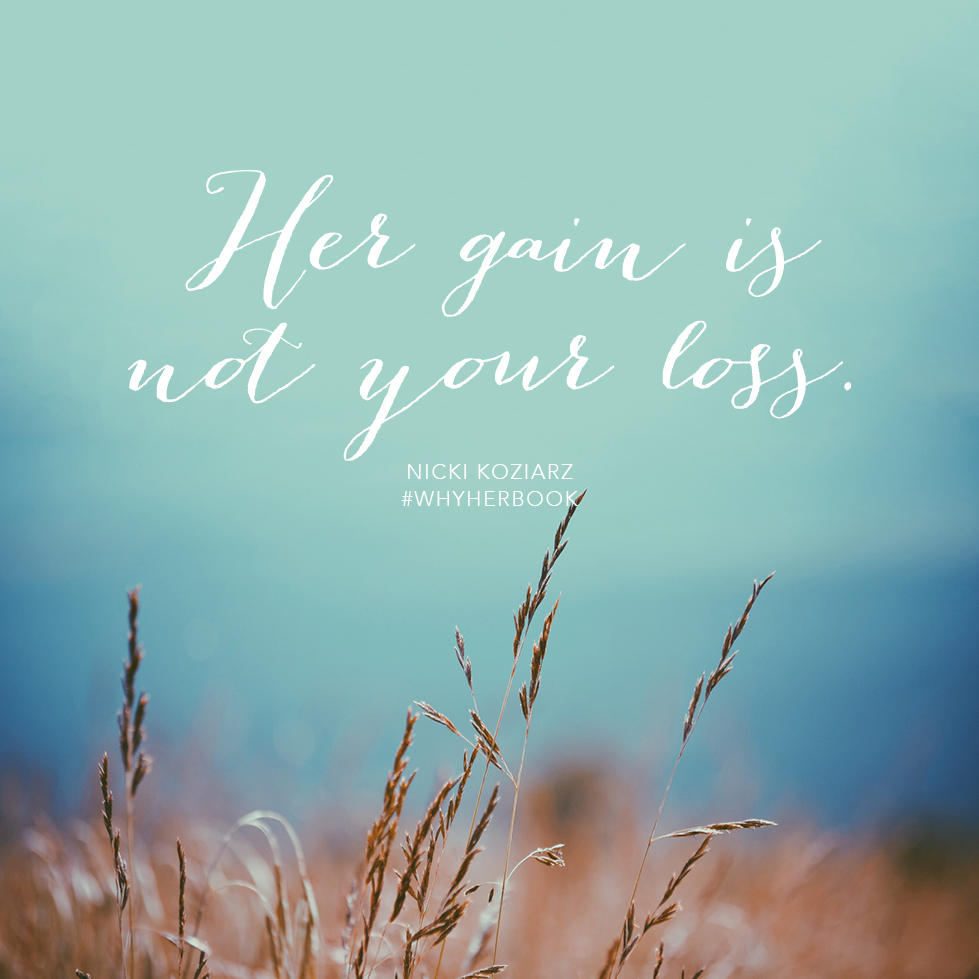
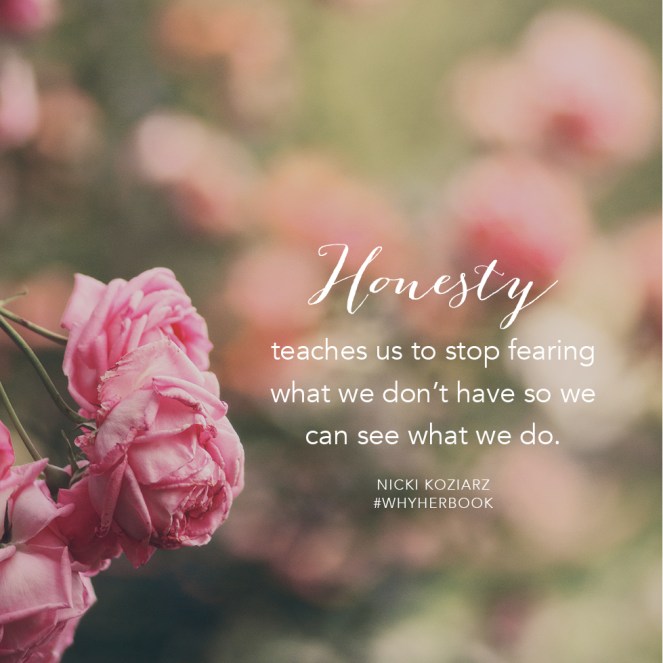
Several years ago, I participated in a Bible study using the book Why Her by Nicki Koziarz. The book focuses on the often painful struggle of comparison and provides insights to help women overcome this challenge. While I am generally a content person, different circumstances at that time made me particularly vulnerable to comparison, and I found myself constantly measuring my life against those around me.
At the time, the book was helpful. It offered valuable perspectives and practical advice that provided temporary relief and moments of clarity. However, I have come to realize that the real turning point in my struggle with comparison was not just the insights from a book but removing myself from the environment that was causing so much turmoil in my life.
The high-demand community I was part of created a culture of scrutiny and judgment, which significantly contributed to my feelings of inadequacy and self-doubt. I have written in a previous post that you cannot get well in the same toxic environment that was making you sick. Removing myself from that environment was a crucial first step in my healing process. It allowed me to gain perspective and start prioritizing my own well-being.
Reading my posts it may sound as if I am blaming all my problems on the religious community I was a part of, and while the environment was a factor, it was merely a catalyst for deeper issues. To begin healing, I had to confront and address these underlying problems and take responsibility.
Comparison is an internal issue that cannot be fixed with external solutions. True contentment comes from within and requires addressing the underlying insecurities and beliefs that fuel comparison. No amount of external validation or changes in circumstances can fully resolve this internal struggle. It takes introspection, self-compassion, and a shift in perspective to overcome the habit of comparing ourselves to others and find genuine peace and satisfaction in who we are.
Wherever you go, there you are—and if comparison is rooted within you, it will follow. Changing your surroundings won’t silence it; only shifting your mindset and finding contentment in your own journey can truly set you free.
Now, I am content not only with the choices I have made to create a healthier, more positive life, but also with who I am internally and externally, flaws and all. Looking back, I realize that the struggle was never about “her” or anyone else I compared myself to—it was always about me. By focusing on my own choices and well-being, I have found a sense of peace and fulfillment that comparison could never bring.
Last year on July 18, 2023, I posted my first installment in my series called Finding Faith Following Fundamentalism. To be honest, I was so nervous about opening up and posting about my personal growth and decision to leave the church and beliefs that I held for my entire life. At the time I had no idea what the perception or push back might be. Don’t get me wrong, I am not delusional enough to think that this blog would have any major reach, but it still took courage for me to be vulnerable enough to put my thoughts and feelings out into the ether of the internet. Opening up about personal struggles and growth isn’t easy, especially knowing that my words could potentially be seen and judged by others. However, the act of sharing my story, no matter how small the audience, was important to me.
I realize some of you may be new to this blog and wondering what exactly I mean by “Find Faith Following Fundamentalism.” Or maybe you’re interested but don’t want to read a year’s worth of posts. To save you time, I’ve summarized all the posts I’ve shared over the past year into the top ten lessons I’ve learned. (Links are included at the end if your interest is piqued and you want to read more in-depth.)
1. Healing Takes Time
Healing from the scars of fundamentalism is a gradual process. I’ve realized that time and distance are essential for healing wounds. Speaking from a place of healing, rather than raw pain, has allowed me to share my story with more clarity and compassion.
2. Faith is Fluid
Faith, I’ve learned, is not static but dynamic and evolving. This past few years have shown me that it’s okay for my beliefs to change and adapt as I grow and learn. Embracing this fluidity has allowed me to develop a more nuanced, deeper, and resilient faith. Life is not black and white and my faith based beliefs don’t have to be either.
3. The Power of Questioning
One of the easiest parts of being in a Fundamentalist religion is not having to think for yourself. The rigid views tell you what you are supposed to believe and how you are supposed to think. Questioning long-held beliefs was daunting at first, but it has proven to be incredibly liberating. I’ve come to understand that questioning is not a sign of weak faith but rather a path to deeper understanding and growth. Embracing curiosity and critical thinking has enriched my spiritual journey.
4. Embracing Authenticity
I’ve learned the importance of being true to myself. Breaking free from fundamentalism allowed me to explore and define my own beliefs, independent of rigid doctrines. My growth has been about discovering what truly resonates with my own beliefs and morals, leading to a more true and fulfilling spiritual life.
5. The Importance of Grace
Grace has been a recurring theme in my reflections through out this process. Extending grace to myself during moments of doubt and uncertainty has been essential. Grace requires nothing of me! Recognizing that I am a work in progress and allowing myself the space to grow and evolve has been a significant lesson. Extending grace to myself in turn has caused me to be more gracious to those around me.
6. Finding Community
Navigating this path alone would have been challenging. I’ve learned the value of finding and connecting with a supportive community that understands and respects my journey. Whether through online communities, podcasts, books, or in person conversations, sharing experiences with others who have undergone similar transformations has been incredibly validating and comforting.
7. The Beauty of Empathy
Empathy has been an important aspect. Understanding that others may have different perspectives and respecting their view point, even if they diverge from mine, has been important. I have discovered the beauty of letting go of judgment, which has been important in building connections and creating mutual respect.
8. Strength in Vulnerability
Sharing my journey has required vulnerability, which I’ve come to see as a strength rather than a weakness. Fundamentalism often promises certainty, but true faith allows for growth and questioning. Opening up and admitting when I’m struggling was (and still is) a big step for me. It shows that I am strong enough to face my doubts and open up to new opportunities and possibilities.
9. Growth
I’ve learned that every struggle and every moment of doubt is an opportunity for growth. Though I will always continue to grow and learn, I am now trying to see challenges as stepping stones toward a deeper faith and fuller life.
10. Gratitude for the Process
Above all, I’ve learned to be grateful. Every step, whether joyful or painful, has contributed to my growth. Embracing change and seeking truth has a transformative power!
And here is one extra lesson for free. Time and Distance Makes a Big Difference!
Over time and with some distance from difficult situations, I’ve personally found that things do get easier. The weight of emotions lessen, and healing begins. Stepping away physically and emotionally and gaining perspective plays an important role in finding relief and strength. While everyone’s situation is unique, the saying “it gets easier with time and distance” holds some truth.
I shared this poem in my first Finding Faith Following Fundamentalism post. I would like to share it again today because it is still just as true today as when I first shared it.
Growth Lies In Discomfort
In breaking free, I found my voice, Leaving fundamentalism, my choice. Some may be upset, emotions may rise, I share my truth, despite the cries.
For growth lies in discomfort, in open debate, I embrace the challenge, I will not hesitate. With understanding, to shed light. With empathy, I seek to unite,
In sharing my story, my purpose is found. Though reactions may vary, I hold my ground, I now speak from a place of relief My wounds have healed with renewed belief.
Here are links to some of my favorite posts from the last year:
Disclaimer: The personal experiences shared in this post are based on my personal perspective. While I chose to leave the IFB to find a more gracious and loving community, it is important to acknowledge that individuals may have different experiences and find happiness within the IFB or any other religious institution. The decision to leave the IFB does not imply a loss of faith, as faith is a deeply personal and subjective matter. It is essential to respect and recognize the diversity of experiences and perspectives within religious communities. The content shared is for informational purposes only and should not be construed as professional advice, guidance, or a universal representation of the IFB or any religious organization. It is recommended to seek guidance, conduct research, and consider multiple perspectives when making personal decisions or exploring matters of faith.
While working on a different post, my mind kept coming back to the thought that the shape of my body is not a moral failing. Let me explain… For years, I internalized the belief that my worth was tied to my appearance, influenced by societal standards and the rigid expectations of the religious community I was once part of. This led to constant self-criticism, punishing myself with excessive exercise for my perceived flaws, and a relentless pursuit of an unattainable ideal.
I fully believe that had I remained in the Independent Fundamental Baptist (IFB) community I was a part of, I never would have made these positive changes in my way of thinking. The rigid expectations and constant scrutiny would have continued to shape my self-perception, trapping me in a cycle of self-criticism and shame.
Being part of a high-demand fundamentalist religion, such as the IFB, profoundly shaped my perspective on beauty standards and my body. In these types of religious circles, strict and often unrealistic ideals about physical appearance are enforced, rooted in rigid interpretations of modesty and morality. This environment can create a deeply ingrained sense of body shame, judgment, and self-criticism.
Within these high-demand communities, the shape and appearance of one’s body can be scrutinized as a reflection of moral and spiritual standing. Adherence to specific dress codes and behaviors is seen as evidence of one’s piety and commitment to religious principles. This can create an oppressive atmosphere where any deviation from the norm is judged harshly, leading to a persistent internalization of body shame.
Stepping away from the high-demand religion has allowed me to see that the shape of my body is not a moral failing. Our bodies are diverse, influenced by genetics, health, and a host of other factors that have nothing to do with our character or spiritual worth. Equating body shape with moral value is a flawed perspective that only perpetuates harmful judgment and exclusion.
Rejecting these restrictive beauty standards and embracing body positivity has been crucial for my healing and self-acceptance. It involved challenging deeply ingrained beliefs, celebrating the diversity of human bodies, and learning to love myself as I am. By shifting the focus from rigid conformity to appreciating the uniqueness of each individual, I have learned I can combat the damaging effects of body shaming and promote a more inclusive and compassionate way of thinking.
This mental change hasn’t been easy. It involved unlearning deeply ingrained beliefs and confronting the internalized shame that stemmed from years of conforming to external expectations. But with each step, I’ve grown stronger and more compassionate toward myself. I’ve come to realize that my value isn’t determined by my appearance but by who I am as a person. Our bodies, in all their diversity, deserve respect and kindness.
Learning to accept my own body’s perceived flaws has made it easier for me to be kind to myself and, in turn, others. By embracing my imperfections, I’ve cultivated an internal empathy, allowing me to appreciate the uniqueness of myself and others without judgment. This shift in perspective has made me a more compassionate and supportive person, which everyone around me benefits from.
True beauty comes from authenticity and self-acceptance, not from adhering to an unrealistic and narrow set of standards. Everyone deserves to feel confident and valued, regardless of their physical appearance. The shape of my body is not a moral failing; it is a natural and unique expression of who I am. By recognizing this, I have been able to let go of the guilt and shame imposed by unrealistic beauty standards. Embracing my body as it is has allowed me to focus on what truly matters: my health, my happiness, and my overall well-being.
Disclaimer: The personal experiences shared in this post are based on my personal perspective. While I chose to leave the IFB to find a more gracious and loving community, it is important to acknowledge that individuals may have different experiences and find happiness within the IFB or any other religious institution. The decision to leave the IFB does not imply a loss of faith, as faith is a deeply personal and subjective matter. It is essential to respect and recognize the diversity of experiences and perspectives within religious communities. The content shared is for informational purposes only and should not be construed as professional advice, guidance, or a universal representation of the IFB or any religious organization. It is recommended to seek guidance, conduct research, and consider multiple perspectives when making personal decisions or exploring matters of faith.
“Don’t compare your insides to someone else’s outside.”
It’s so easy to fall into the trap of looking at other people’s lives and thinking they have it all together, that everything is perfect for them, and that we somehow fall short in comparison. But the truth is, we often see only what others choose to show us – their “outside” or public face. We rarely get to see the struggles, doubts, and insecurities that go on inside.
We all have our inner battles, our moments of self-doubt, and our personal challenges. It’s a part of being human. So, when we start comparing our own struggles and inner feelings to someone else’s seemingly perfect exterior, we’re not playing a fair game.
Social media, for example, is often just a highlight reel of people’s lives. It’s where they showcase the best moments and hide the rest. But behind those curated posts are real, complex people facing their own set of hurdles, feelings and struggles.
It’s important to be kind to yourself and recognize that you’re doing the best you can with the hand you’ve been dealt. Your life is uniquely yours, and it’s filled with experiences that make you who you are. Don’t be too hard on yourself when you see someone else’s seemingly perfect life. They have their own struggles, insecurities and imperfections too, even if they’re not on display.
In the end, focus on your own progress, your own growth, and your own path. Comparison rarely brings happiness; it often leads to unnecessary stress and anxiety. Embrace your uniqueness, and remember that it’s perfectly okay to have your own set of ups and downs. You are who you are supposed to be just the way you are.
Few things frustrate me more than encountering people who refuse to take accountability for their actions, even when they are clearly in the wrong. In today’s society, it seems all too common for people to shift blame onto others or external factors rather than owning up to their mistakes. Through personal experience, I’ve come to realize the significance of accepting responsibility for myself and my actions.
There’s a certain integrity and maturity in admitting when we’ve made a mistake or caused harm. It shows a willingness to learn and grow from our experiences. However, when individuals deflect responsibility, it not only perpetuates a cycle of dishonesty but also undermines trust and damages relationships.
Accepting responsibility is about more than just admitting fault; it’s about taking proactive steps to make amends and prevent similar mistakes in the future. It requires humility and self-awareness to acknowledge our shortcomings and the impact of our actions on others.
Moreover, embracing accountability fosters personal growth and empowerment. When we take ownership of our choices, we reclaim agency over our lives and become active participants in shaping our destinies. Instead of being at the mercy of external circumstances or blaming others for our misfortunes, we recognize our capacity to effect change and strive to do better.
Here are some insights I’ve gained about assuming responsibility for myself.
Self-reflection: Taking responsibility involves honestly assessing your role in the situations that are holding you back. It requires self-awareness and the willingness to acknowledge your mistakes, shortcomings, and areas for growth.
Ownership: When you take responsibility for your actions, you empower yourself to make positive changes. Instead of blaming external factors or other people for your circumstances, you focus on what you can control and take proactive steps to improve your situation.
Learn from mistakes: Accepting responsibility allows you to learn from your mistakes and use them as opportunities for growth. Instead of dwelling on past failures or shortcomings, you can extract valuable lessons that help you make better choices in the future.
Empowerment: By taking responsibility for your actions, you reclaim your power and agency. You no longer feel like a victim of circumstances but rather a capable individual who can create positive change in your life.
Commitment to change: Being willing to change means being open to new ideas, perspectives, and behaviors. It requires humility and a willingness to step outside your comfort zone in order to grow and evolve as a person.
Adaptability: Change is often uncomfortable and requires effort, but being willing to change allows you to adapt to new circumstances and overcome obstacles more effectively. It enables you to let go of old habits, beliefs, and patterns that are no longer serving you.
Personal growth: Embracing change as a necessary part of personal growth and development opens up new possibilities and opportunities for self-improvement. It allows you to explore your potential and become the best version of yourself.
In a world where accountability often seems scarce, being someone who takes responsibility for their actions can set you apart. It demonstrates integrity, reliability, and a commitment to ethical conduct. By embodying these qualities, we not only elevate ourselves but also contribute to a more honest and trustworthy society.
In conclusion, while it can be frustrating to witness others shirking accountability, I’ve learned firsthand the importance of accepting responsibility for myself and my actions. It’s a fundamental aspect of personal growth and integrity, essential for creating trust, building relationships, and being a positive change in the world.
Disclaimer:The experiences shared in this post are based on my personal experiences and perspective. I am not an expert, but I was part of a high demand community for the majority of my life. I acknowledge that I am on a continuous journey of growth and self-improvement. I am aware that I don’t always respond or behave in the perfect way, as I am only human. While I may stumble along the way, my intention is always rooted in creating positive interactions and demonstrating consideration for others. I hold firm to the belief that treating people with kindness and respect is of utmost importance.While I chose to leave the IFB to find a more gracious and loving path, it is important to acknowledge that individuals may have different experiences and find happiness within the IFB or any other religious institution. The decision to leave the IFB does not imply a loss of faith, as faith is a deeply personal and subjective matter.
Five years ago, I was drowning in a toxic environment that suffocated my mental, physical, and spiritual well-being. The negativity and toxicity were like chains, binding me to a life of self-inflicted misery. I felt trapped and out of control! I wanted to feel better, but nothing I was doing seemed to help. I reached a breaking point and that is when I knew it was time to make a life changing choice to break free, to heal, and to thrive. I realized it was time to leave the toxic environment that was making me sick.
Making significant changes in my life, I let go of what was holding me back and embraced a new way of living, a new way of thinking. Once I made those drastic changes I realized just how much that previous environment was negatively affecting me. I now choose to surround myself with positivity, embrace healthy habits, and nurture my mental health and spiritual growth.
Choosing to make those changes wasn’t easy; it required courage, resilience, and determination. Yet, with each step forward, I felt myself becoming lighter, stronger, less anxious, and more alive. I wasn’t just surviving, I was starting to thrive. Now, five years later, I stand in a completely different place—a place of peace, joy, and fulfillment. I’ve learned that you cannot become well in the same toxic environment that was making you sick.
Here are some tips on how to let go of what is holding you back from thriving:
1. Identify the source: Recognize what exactly is holding you back. It could be negative thought patterns, toxic relationships, self-doubt, fear of failure, or past traumas. Understanding the root cause is the first step to overcoming it.
2.Practice self-awareness: Pay attention to your thoughts, emotions, and behaviors. Notice when you’re feeling stuck or limited by something. Awareness empowers you to take action and make changes.
3.Challenge limiting beliefs: Question the beliefs that are keeping you trapped in a cycle of negativity. Replace them with empowering beliefs that support your growth and well-being.
4.Set boundaries: Learn to say no to things that drain your energy or bring negativity into your life. Set clear boundaries with toxic people or situations and prioritize your own needs and happiness. Be willing to cut ties with relationships that are holding you back.(This is extremely difficult , but absolutely necessary!)
5.Practice forgiveness: Let go of resentment, anger, or grudges that are weighing you down. Forgiveness doesn’t mean condoning the actions of others, but rather releasing yourself from the emotional burden of holding onto past hurt.
6.Focus on what you can control: Instead of dwelling on things outside your control, focus on the actions you can take to move forward. Break your goals into manageable steps and take consistent action towards them. One day at a time makes an enormous difference with consistency!
7.Surround yourself with positivity: Surround yourself with supportive and uplifting people who encourage your growth and well-being. Seek out inspiring books, podcasts, or activities that nourish your mind and spirit.
8.Practice self-care: Take care of your physical, mental, and emotional health. Make time for activities that bring you joy, relaxation, and fulfillment. Prioritize self-care as an essential part of your daily routine. Self care is not selfish, it is essential!
9.Seek support: Don’t be afraid to reach out for help if you’re struggling to let go of what’s holding you back. Whether it’s through therapy, counseling, or talking to a trusted friend or family member, seeking support can provide valuable guidance and perspective. We are not meant to do things alone! A burden shared is a burden lifted. When we open up to others and share our struggles, we allow them to offer support, understanding, and perspective.
10.Celebrate progress: Celebrate your successes, no matter how small. Acknowledge the progress you’ve made and the steps you’ve taken towards letting go of what’s holding you back. Celebrating your victories reinforces positive momentum and motivates you to keep moving forward.
While I was suffocating in that toxic environment I thought that was just how my life was always going to be. Change is scary. The unknown is frightening! I was drained, mental, physical, and spiritually exhausted . Choosing to change required courage and resilience, but through embracing the change, no matter how frightening, and letting go of what held me back, I discovered a newfound sense of peace and fulfillment.
Is my life perfect now? Absolutely not! But I now have equipped myself with better tools to navigate life’s challenges. By equipping myself with these better tools, I am better prepared to face whatever comes my way. While my life may not be perfect, I have learned to embrace imperfection and view challenges as opportunities for growth and learning.
Surrounding myself with positivity and prioritizing my health allowed me to grow stronger and happier. True healing can only happen when we are willing to take that first step towards leaving behind toxic environments and embracing the unknown. Today, I stand as proof that transformation is possible, leading to a brighter future filled with joy and endless possibilities. The temporary discomfort was worthwhile!
Resources that I have found to be helpful:
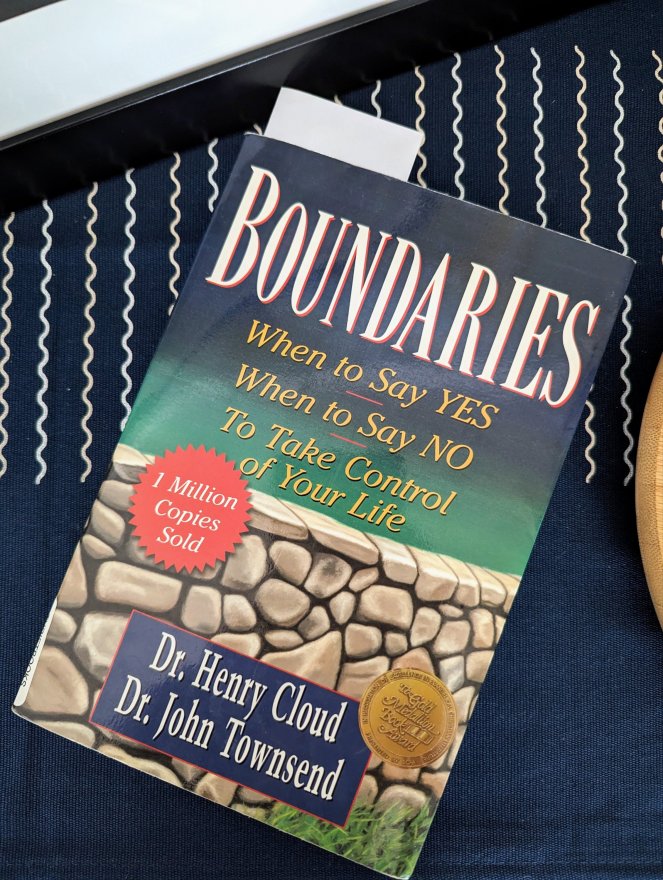
A book that has been instrumental in helping me set healthy boundaries is incidentally called “Boundaries” written by Dr. Henry Cloud and Dr. Townsend. Reading this book was absolutely an eye-opener for me. Their insights and practical advice really resonated with my own experiences, and it helped me see the importance of defining healthy limits in all aspects of my life.
The book highlights the significance of recognizing our personal limits and how it’s okay to say “no” when something doesn’t align with our values or makes us uncomfortable. It gave me the courage to put myself and my family first and prioritize my well-being without feeling guilty about it.
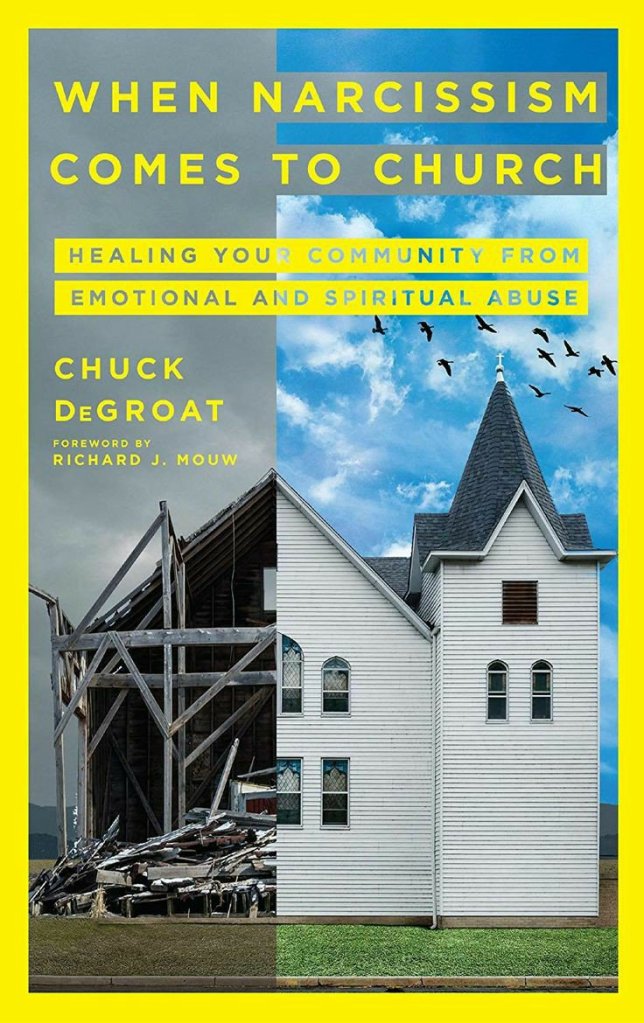
When Narcissism Comes to Church: Healing Your Community from Emotional and Spiritual Abuse by Chuck DeGroat. This book explores the issue of narcissism in the church. DeGroat, a counselor who has worked with many victims of narcissistic abuse, argues that narcissism is a growing problem in the church, and that it can have a devastating impact on individuals and communities. 10/10 recommend!
**An affiliate link is free to the user. It is a unique URL provided by an affiliate program or network to their partners, such as bloggers or website owners. When someone clicks on an affiliate link and makes a purchase or completes a desired action at no additional cost to them, the affiliate partner earns a commission or other form of compensation. These links are specifically tracked to attribute sales or conversions generated through the partner’s promotional efforts. In summary, an affiliate link is a specialized link that allows partners to earn commissions by driving traffic and sales to a particular product or service.**
Disclaimer:The experiences shared in this post are based on my personal experiences and perspective. I am not an expert, but I was part of a high demand community for the majority of my life. I acknowledge that I am on a continuous journey of growth and self-improvement. I am aware that I don’t always respond or behave in the perfect way, as I am only human. While I may stumble along the way, my intention is always rooted in creating positive interactions and demonstrating consideration for others. I hold firm to the belief that treating people with kindness and respect is of utmost importance.While I chose to leave the IFB to find a more gracious and loving path, it is important to acknowledge that individuals may have different experiences and find happiness within the IFB or any other religious institution. The decision to leave the IFB does not imply a loss of faith, as faith is a deeply personal and subjective matter.




















 Looking Joli Good