
Lifestyle

Love Me Like There’s No Tomorrow: Freddie Mercury and the Stigma of HIV/AIDS

Studying population public health has opened my eyes to the overwhelming impact that infectious diseases have on individuals and society. As I’m reading Anthony Fauci’s On Call, I find myself deeply moved by the part he played in the relentless battle against HIV/AIDS and the advocacy that shaped public health responses.

This story isn’t just about statistics and policies, it’s about the people behind them. My love for the musical group Queen makes it even more personal.As I was reading the sections of Dr. Fauci’s book talking about HIV/AIDS, I kept thinking about Freddie Mercury. His voice has always been a source of joy and inspiration to me, but his struggle with HIV/AIDS is a heartbreaking reminder of how deeply personal suffering can be, especially when met with fear and ignorance. He faced the disease with quiet strength, even as the world speculated about his health. His story is one of love, loss, and the desperate need for understanding in a time when so many suffered in silence.

Freddie Mercury, the legendary frontman of Queen, was not only a musical genius but also a man who carried an immense burden with grace. His battle with HIV/AIDS in the late 1980s and early 1990s was marked by secrecy, pain, and a world that often responded with fear rather than empathy. As his body weakened, his spirit never did, he poured everything he had into his music, leaving behind a legacy that continues to inspire. But beyond the music, his life serves as a stark reminder of the suffering so many endured in silence, battling not only a ruthless disease but also the cruel judgment of society. Mercury’s story urges us to remember, to care, and to continue fighting for a world free of stigma and ignorance.

The Diagnosis and Secrecy

During the 1980s, HIV/AIDS was widely misunderstood, leading to fear, discrimination, and misinformation. At the height of Queen’s success, Mercury was diagnosed with the disease, but he kept his condition private for several years. The intense stigma surrounding HIV/AIDS at the time forced many, including Mercury, to suffer in silence. Homophobia further fueled the discrimination, as the disease was often falsely labeled as a consequence of sexual orientation rather than a global public health crisis.

The Public Revelation and Its Impact

It was not until November 23, 1991, just one day before his death, that Mercury publicly acknowledged his illness. His statement read: “Following the enormous conjecture in the press, I wish to confirm that I have been tested HIV-positive and have AIDS. I felt it correct to keep this information private to date to protect the privacy of those around me.” This courageous announcement brought global attention to the disease, challenging the stigma and ignorance surrounding it.

Mercury’s death at the age of 45 was a tragic loss to the world of music. However, it also marked a turning point in the public conversation about HIV/AIDS. His revelation helped humanize the epidemic, demonstrating that it could affect anyone, regardless of fame or fortune. In the wake of his passing, organizations such as The Mercury Phoenix Trust were established to fund AIDS research and raise awareness.

The Broader Struggles of People Living with HIV/AIDS

Mercury’s struggle was not unique. During the 1980s and early 1990s, thousands of individuals with HIV/AIDS faced not only the physical devastation of the disease but also widespread discrimination. Many lost their jobs, were denied healthcare, and were even abandoned by family and friends. The stigma surrounding the illness prevented open discussions, delaying medical research and policy changes that could have saved lives.

Despite these hardships, advocacy efforts grew stronger. Activist groups such as ACT UP (which stands for AIDS Coalition to Unleash Power,) fought for better treatment options and government intervention. The development of antiretroviral therapies in the mid-1990s transformed HIV from a death sentence into a manageable condition, but stigma and misinformation persist even today.

Mercury’s Enduring Legacy

Freddie Mercury’s legacy extends far beyond his music. His bravery in the final days of his life, coupled with his immense talent, continues to inspire people worldwide. His story serves as a powerful reminder of the importance of compassion, education, and scientific progress in the fight against HIV/AIDS. Through continued advocacy and medical advancements, the world moves closer to eradicating both the disease and the stigma that surrounds it.

Today, as public health efforts focus on prevention, treatment, and awareness, Mercury’s influence remains a guiding force in destigmatizing HIV/AIDS and supporting those affected. His music, his resilience, and his impact on the fight against HIV/AIDS ensure that his legacy will never be forgotten.

In the words of Freddie Mercury
Freddie Mercury | lookingjoligood.blog

Love me like there’s no tomorrow

Hold me in your arms

Tell me you mean it

This is our last goodbye

And very soon it will be over

But today just love me like there’s no tomorrow

You can make a donation to Freddie’s organizations The Mercury Phoenix Trust to fund AIDS research and raise awareness by clicking HERE or by visiting https://www.mercuryphoenixtrust.org/site/getinvolved

Laura lookingjoligood.wordpress.com
Lifestyle

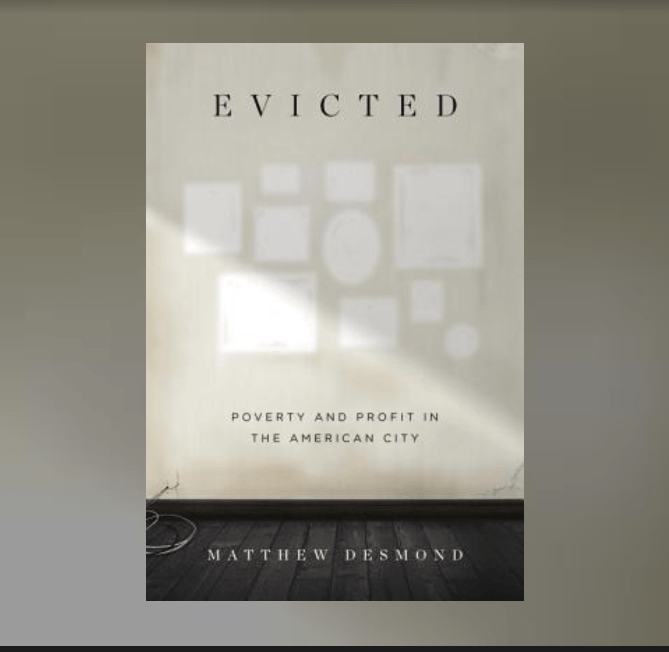
From Pages to Purpose: How Matthew Desmond’s Evicted Transformed My View of Public Health and Housing

“Every year in this country, people are evicted from their homes not by the tens of thousands or even the hundreds of thousands but by the millions.”― Matthew Desmond, Evicted: Poverty and Profit in the American City**

When I first picked up Evicted: Poverty and Profit in the American City by Matthew Desmond, I had no idea what an impact it was going to have on me. This book was assigned to me for the graduate class I will be taking this semester, and since I started reading it, I haven’t been able to stop thinking about it. Normally, I’m not one to reread books—there are so many I want to read and so little time—but as soon as I finished Evicted, I started rereading it. I also don’t usually buy books, preferring to borrow them from the library, but I have already purchased this one because I want to have it in my library.

From Pages to Purpose: How Evicted Transformed My View of Public Health | lookingjoligood.blog

The book is more than a work of sociological research; it is a piercing lens into the lives of individuals and families caught in the relentless cycle of poverty and housing insecurity. Desmond’s ethnographic approach brings to life the stark reality of poverty in Milwaukee, Wisconsin, during and after the 2007-2008 financial crisis, following eight families from diverse racial and socio-economic backgrounds. This isn’t just a book—it’s a call to witness and confront the systemic injustices that perpetuate poverty in the United States.

As someone who has worked in healthcare as a nurse and observed the barriers people face in accessing resources, Evicted forced me to look deeper at the intersection of housing and health. Desmond’s portrayal of eviction’s cascading effects—job loss, educational disruption, and mental health crises—highlighted how housing instability undermines all other aspects of well-being. I couldn’t help but think about the families I’ve encountered in my work who faced impossible choices: pay rent or buy groceries, prioritize medication or utilities. This book made it clear that housing insecurity is not just an individual issue; it’s a public health crisis.

Desmond’s meticulous research and vivid storytelling place readers inside the daily struggles of his subjects. I was struck by the resilience of families like Arleen’s, a single mother trying to provide for her children despite being evicted multiple times, and Lamar, a disabled man living in a dilapidated home while attempting to support his sons. These stories aren’t just anecdotes; they’re evidence of how deeply rooted inequities disproportionately affect vulnerable populations. The book’s exploration of how landlords profit from the desperation of tenants left me questioning the morality of a system that commodifies basic human needs.

“It was not that low-income renters didn’t know their rights. They just knew those rights would cost them.”― Matthew Desmond, Evicted: Poverty and Profit in the American City**

One of the most eye-opening aspects of Evicted was its examination of the role landlords play in perpetuating poverty. Desmond’s research shows how the power imbalance between landlords and tenants allows exploitation to thrive. I couldn’t stop thinking about the devastating reality that eviction isn’t just a result of poverty—it’s a cause of it. The act of losing one’s home sets off a chain reaction of instability, making it nearly impossible to escape the grip of poverty.

Reading Evicted also prompted me to reflect on the structural changes needed to address these issues. Desmond’s proposal for a universal housing voucher program is both compelling and necessary. Ensuring that families have access to safe and affordable housing is a foundational step toward breaking the cycle of poverty. The book inspired me to think critically about how public health policies could better integrate housing solutions to improve overall community health.

“The pursuit of happiness undeniably includes the pursuit of material well-being: minimally, being able to secure basic necessities. It can be overwhelming to consider how much happiness has been lost, how many capabilities snuffed out, by the swell of poverty in this land and our collective decision not to provide all our citizens with a stable and decent place to live.” ― Matthew Desmond, Evicted: Poverty and Profit in the American City**

This book left an indelible mark on me, not just as a professional interested in studying public health but as a human being. It reminded me of the importance of empathy and the need to amplify the voices of those who are often overlooked. Their voices must move beyond acknowledgment and become integral to shaping the conversations and decisions that affect them. They need a seat at the discussion table. The stories in Evicted are painful and infuriating, but they are also a powerful testament to the resilience of the human spirit.

Desmond’s work underscores a simple yet profound truth: where we live impacts how we live. Housing isn’t just about having a roof over one’s head; it’s about dignity, stability, and opportunity. Evicted compelled me to not only acknowledge the devastating realities of housing insecurity but also to consider my role in advocating for change. It’s a book that doesn’t let you look away, and for that, I am grateful to have had my eyes opened.

“It is only after we begin to see a street as our street, a public park as our park, a school as our school, that we can become engaged citizens, dedicating our time and resources for worthwhile causes: joining the Neighborhood Watch, volunteering to beautify a playground, or running for school board.”― Matthew Desmond, Evicted: Poverty and Profit in the American City**

Reference:

Desmond, M. (2016). Evicted: Poverty and profit in the American city. Crown Publishers.

Click HERE to order your own copy of  Evicted: Poverty and Profit in the American City**

Laura lookingjoligood.wordpress.com

**Affiliate link HERE

Non affiliate link click HERE

**An affiliate link is a unique URL provided by an affiliate program or network to their partners, such as bloggers or website owners. When someone clicks on an affiliate link and makes a purchase or completes a desired action, the affiliate partner earns a commission or other form of compensation. These links are specifically tracked to attribute sales or conversions generated through the partner’s promotional efforts. In summary, an affiliate link is a specialized link that allows partners to earn commissions by driving traffic and sales to a particular product or service.**