
Finding Faith Following Fundamentalism

When Beliefs Shape Scripture, Not the Other Way Around

I remember sitting in Sunday school one morning when someone confidently declared, “Well, the Bible does say God helps those who help themselves!” Everyone nodded in agreement, but I remember thinking, Wait a second …that’s not in the Bible. It was one of the first moments I realized how easily people confuse familiar sayings, opinions, or traditions with actual Scripture.

holy bible | lookingjoligood.blog

Years later, when instead of just hearing it preached to me, I finally started reading the Bible for myself, what surprised me most wasn’t what I found , it was what I didn’t find. So many of the verses I’d heard quoted my whole life either didn’t exist or meant something entirely different in context. It made me wonder how many Christians are unknowingly defending their own ideas while claiming to defend Scripture.

One of the most striking things I’ve noticed since leaving fundamentalism is how often people confidently declare, “The Bible says,” when what they’re really expressing is their belief, not what Scripture actually says. It’s a phrase tossed around like a divine stamp of approval, ending debates before they even begin. Yet many of the people who use it most often have never read the Bible from beginning to end, let alone studied it in its historical, cultural, or literary context. Instead, they’ve inherited a version of “truth” filtered through pastors, teachers, and traditions that reinforce what they already believe.

This pattern isn’t unique to one denomination; it’s widespread across modern Christianity. Many believers learn early on to depend on spiritual authorities to interpret Scripture for them. Sermons, devotionals, and Sunday school lessons become the main way they “hear” the Bible, so much so that their understanding of it often comes secondhand. Over time, the difference between what the Bible actually says and what they’ve been told it says becomes almost invisible. And because their beliefs feel sacred, they assume that Scripture must agree with them.

The phrase “The Bible says” becomes a weapon more than a witness. It’s used to shut down questions, silence disagreement, and justify personal or cultural biases. People quote half-verses out of context or blend biblical language with political talking points, convinced that their opinion carries the weight of divine truth. The irony is that Jesus consistently challenged people who misused Scripture to elevate themselves or oppress others. The religious leaders of His day knew the words but missed the meaning and He called them out for it.

bible  | lookingjoligood.blog

The real tragedy is that this habit keeps people from experiencing the richness and depth of Scripture for themselves. The Bible isn’t a static list of talking points it’s a collection of stories, poems, letters, and wisdom written across centuries, filled with tension, mystery, and beauty. Reading it honestly often leads to more questions than answers, and that’s not a bad thing. It means we’re engaging with it as living text rather than a tool to prop up our certainty.

When people say, “The Bible says,” what they often mean is, “My interpretation says.” The difference between those two statements is humility. The first assumes authority; the second admits limitation. True faith doesn’t require pretending to have all the answers, it requires the courage to keep seeking them, even when the text challenges our assumptions.

In the end, maybe the most faithful way to approach Scripture is not with the phrase “The Bible says,” but with the question “What is the Bible really saying here?” That question leaves room for growth, learning, and grace. It invites us to meet God in the tension between what we’ve been told and what we might discover for ourselves. Because when we stop using the Bible to reinforce what we already believe, we finally open ourselves to being transformed by what it actually says.

Laura lookingjoligood.wordpress.com

Disclaimer: The personal experiences shared in this post are based on my personal perspective. While I chose to leave the IFB to find a more gracious and loving faith, it is important to acknowledge that individuals may have different experiences and find happiness within the IFB or any other religious institution. The decision to leave the IFB does not imply a loss of faith, as faith is a deeply personal and subjective matter. It is essential to respect and recognize the diversity of experiences and perspectives within religious communities. The content shared is for informational purposes only and should not be construed as professional advice, guidance, or a universal representation of the IFB or any religious organization. It is recommended to seek guidance, conduct research, and consider multiple perspectives when making personal decisions or exploring matters of faith.


Finding Faith Following Fundamentalism

When the Claim “If You Disagree With Me, You Disagree With God” Becomes an Illusion of Speaking for God

young preacher  | lookingjoligood.blog

When I was in my early twenties, our church hired a new assistant pastor who was young, newly married, and absolutely certain of his divine calling. He had just graduated from a fundamentalist Christian college and carried himself with the kind of overconfidence that only comes from immaturity and believing you speak directly for God. I can still picture him, red-faced, on his tip toes, shouting from the pulpit about issues he had strong opinions on but little real-world experience with. It was almost surreal watching someone barely out of adolescence lecture a congregation full of people who had lived, suffered, raised families, and endured life’s complexities with far more wisdom than he possessed. Yet in his mind, and according to the church culture that shaped him, his youth and inexperience didn’t matter. He had authority because he believed he spoke for God, and to question him was to question God Himself.

In many Independent Fundamental Baptist (IFB) churches, a deeply ingrained belief exists that to disagree with leadership is to disagree with God. This idea sometimes spoken directly and other times implied through tone, teaching, or culture creates a powerful dynamic of control cloaked in spirituality. It blurs the line between divine authority and human interpretation, replacing faith in God with obedience to men who claim to speak for Him.

At the heart of this mindset is the belief that the pastor, or any spiritual authority, is the ultimate mouthpiece of God. In this framework, questioning a sermon, a doctrine, or even a church rule is framed not as critical thinking or discernment but as rebellion against God. This form of spiritual absolutism discourages independent thought and replaces humility with authoritarianism. The message becomes clear: submission to leadership is equated with submission to God, and dissent is treated as sin.

What makes this mentality especially harmful is that it distorts the relationship between believers and their faith. Instead of encouraging a personal, living connection with God, it conditions people to rely on intermediaries for spiritual validation. Members are taught to mistrust their own understanding, intuition, or experiences if those do not align with the “man of God.” Over time, this erodes spiritual confidence and creates dependency on the church, on the pastor, and on the institution’s interpretation of truth.

The consequences reach beyond theology. When disagreement is equated with disobedience to God, abuse of power becomes easy to justify. A pastor can silence opposition by claiming divine authority, and members learn to suppress questions to avoid being labeled rebellious or unspiritual. This environment leaves little room for healthy dialogue, accountability, or growth. It can lead to deep confusion and spiritual trauma for those who eventually realize that human leaders can, and often do, misrepresent God, sometimes for their own nefariousness reasons.

Ironically, the Bible itself challenges this very kind of control. The Bereans in Acts 17:11* were commended for examining Scripture for themselves rather than accepting teaching without question. Jesus consistently condemned religious leaders who used their authority for self-exaltation. True spiritual maturity involves discernment, humility, and personal responsibility, not blind submission to any one person’s interpretation of divine will.

For many who leave the IFB or similar authoritarian religious systems, healing involves untangling God’s voice from the voice of those who claimed to speak for Him. It means learning that disagreement is not rebellion, and that asking hard questions can be an act of faith, not defiance. Reclaiming spiritual autonomy is both painful and liberating! It requires courage to trust that God welcomes honest searching far more than unquestioning conformity.

The phrase “If you disagree with me, you disagree with God” reveals more about human ego than divine truth. It reflects a fear of losing control rather than a desire for genuine understanding. Healthy faith allows room for conversation, correction, and even disagreement, because truth does not fear scrutiny. God’s authority does not need to be defended by intimidation or manipulation. When believers are free to think, question, and seek for themselves, faith becomes not a cage, but a living, breathing relationship with the Divine.

Laura lookingjoligood.wordpress.com

*Acts 17: 11 NLT  And the people of Berea were more open-minded than those in Thessalonica, and they listened eagerly to Paul’s message. They searched the Scriptures day after day to see if Paul and Silas were teaching the truth.

Disclaimer: The personal experiences shared in this post are based on my personal perspective. While I chose to leave the IFB to find a more gracious and loving faith, it is important to acknowledge that individuals may have different experiences and find happiness within the IFB or any other religious institution. The decision to leave the IFB does not imply a loss of faith, as faith is a deeply personal and subjective matter. It is essential to respect and recognize the diversity of experiences and perspectives within religious communities. The content shared is for informational purposes only and should not be construed as professional advice, guidance, or a universal representation of the IFB or any religious organization. It is recommended to seek guidance, conduct research, and consider multiple perspectives when making personal decisions or exploring matters of faith.

Finding Faith Following Fundamentalism

Booking a Flight to Freedom and Canceling The Guilt Trip. Destination: Grace

When I think back to my years in a high-control church, I can still hear the tone of certain sermons: loud, emotional, and dripping with guilt. It wasn’t enough to encourage people toward good; we had to be made to feel bad first. I remember walking out of services heavy with shame, not because the Holy Spirit had convicted me, but because a man behind a pulpit had told me I should feel guilty for not living up to his version of holiness. For a long time, I believed that was what conviction felt like, that the more miserable I felt, the more spiritual I must be.

It took me years to realize that conviction from the Holy Spirit feels nothing like a guilt trip. Guilt is manipulative; it wants to control your behavior through fear and shame. Conviction, on the other hand, is restorative. It’s the gentle nudge of grace that says, You’re better than this. Let’s do better together. The Holy Spirit doesn’t belittle or humiliate. He leads with truth, but always in love.

Unfortunately, many Christians don’t know the difference because they’ve spent their whole lives being guilted into obedience. They’ve been told how to think, how to dress, how to act, and even how to feel, all in the name of “spiritual guidance.” When someone in authority says, “You should feel convicted,” what they often mean is, “You should feel guilty for not meeting my expectations.” It’s emotional manipulation wrapped in religious language. And it works, because when someone believes they’re disappointing God, they’ll do almost anything to make it right.

But conviction from the Holy Spirit doesn’t come through human coercion; it comes through personal connection. It’s the still, small voice that calls us inward, not the shouting from a pulpit or the judgmental glare from someone who thinks they know our hearts better than we do. Conviction draws us closer to God, while guilt drives us farther away. One leads to peace after repentance; the other leaves us stuck in shame, never feeling good enough to approach God again.

When people try to play the role of the Holy Spirit in someone else’s life, it reveals more about their need for control than their concern for your soul. True spiritual maturity recognizes that the Holy Spirit is fully capable of doing His own work without human interference.

break free | lookingjoligood.blog

The freedom that comes with understanding this difference is important. Once you stop mistaking guilt for conviction, you begin to see how many religious systems rely on guilt to maintain power. It keeps people small, compliant, and afraid to question. But when you start listening for the Spirit instead, you find that His conviction never crushes, it always restores. He points out what’s wrong not to punish, but to heal.

There’s a quiet confidence that comes from knowing the voice of God for yourself. You start recognizing when someone’s trying to manipulate you with Scripture or shame, and you simply don’t take the bait. You stop apologizing for peace, stop confusing boundaries with rebellion, and stop letting others define what your relationship with God should look like. Because at the end of the day, no one else gets to be the Holy Spirit in your life.

I don’t need a guilt trip. I need grace, truth, and the gentle conviction that comes from the One who actually knows my heart. The Holy Spirit doesn’t condemn to control; He convicts to transform. And that kind of conviction doesn’t leave you feeling unworthy, it leaves you covered with grace.

Laura lookingjoligood.wordpress.com

Disclaimer: The personal experiences shared in this post are based on my personal perspective. While I chose to leave the IFB to find a more gracious and loving faith, it is important to acknowledge that individuals may have different experiences and find happiness within the IFB or any other religious institution. The decision to leave the IFB does not imply a loss of faith, as faith is a deeply personal and subjective matter. It is essential to respect and recognize the diversity of experiences and perspectives within religious communities. The content shared is for informational purposes only

Finding Faith Following Fundamentalism

“By Their Fruit You Shall Know Them”

As a young teenager, summer camp was one of the highlights of my year. The days were full of excitement, games, funny skits, and team challenges. We cheered for our cabins, enjoyed the beautiful outdoors, ate camp food, and felt like we were part of something special. But as the sun went down each evening and we gathered in the chapel, everything changed. The air was thick with seriousness; the camp preacher took the stage and gone was the laughter, joy, and lightness of the daytime activities.

As his voice rose and fell with practiced emotion, it was meant to stir our hearts and move us to action. Sometimes that meant causing us to doubt our salvation, other times it meant feeling crushed under the weight of guilt for not being good enough or producing enough “fruit.” I remember one time in particular when the preacher gave a message sharing graphic details of the crucifixion of Christ and how it was my fault that He was whipped and bloody put on that cross. Leaving those services, I felt both convicted and confused, wondering if I could ever measure up. Would anything I did ever make me deserving of Christ giving His life for me?

Fruit | lookingjoligood.blog

One verse in particular often echoed through those sermons: “By their fruit you shall know them.” (Matthew 7:16) It was quoted so often that it became a kind of spiritual scoreboard, something to measure ourselves and others by. Jesus originally spoke those words as part of the sermon on the mount as a warning about false prophets, explaining that good trees bear good fruit and bad trees bear bad fruit. His point was simple and wise: you can tell the truth of someone’s character by their actions. But somewhere along the way, this teaching was stretched and twisted into something it was never meant to be.

In many religious settings, this verse becomes less about discernment and more about judgment. We are told that we are saved by grace through faith, yet at the same time reminded that our salvation is proven by the “fruit” of our works. The message becomes tangled: grace on paper but performance in practice. It creates a constant sense of spiritual insecurity. Every shortcoming, every lapse in behavior, every moment of struggle becomes a reason to question whether your faith is real. “Am I producing enough fruit?! Will I every be worthy?!”

Throughout the years, I remember hearing sermons where pastors would list all the behaviors that supposedly revealed who was “bearing good fruit” and who wasn’t. Things like how often you attended church, what music you listened to, what you wore, who your friends were, how obediently you submitted to authority. All of these things became the measures of one’s spirituality. I internalized the message that if I ever struggled with doubt, anger, or exhaustion, it meant something was wrong with me spiritually. This verse wasn’t bringing life or freedom; it was turning faith into a performance.

As a young teenager, I took that message to heart. I wanted so badly to please God and do what was expected of me that I examined every thought and action for signs of “good or bad fruit.” But no matter what, it never felt like enough. It seemed as if others seemed confident in their salvation, while I quietly battled fear and anxiety. The words of Jesus that were supposed to bring clarity instead were twisted to cause confusion, leaving me to wonder if I was one of the “bad trees.”

In hindsight, I see how that interpretation distorted the true meaning. The “fruit” Jesus referred to wasn’t about perfection, but about character: love, mercy, humility, and truth. Ironically, the very leaders who used this verse to instill fear often demonstrated the opposite fruits in how they treated others.

Looking back, I see how easily scripture can be used to manipulate emotions, especially in young and impressionable hearts. Those powerful camp sermons were not just passionate, they were calculated and manipulating . They pushed us toward guilt and fear in the name of conviction, but what they really did was make us easier to control. When people feel unworthy, they become dependent on whoever claims to hold the answers.

The intent of Jesus’s teaching in Matthew 7, wasn’t talking about ordinary believers anxiously measuring their worth; He was warning against false prophets. He was warning about those who used religion for power, control, and self-promotion.

The misuse of this verse creates a culture of spiritual insecurity, one where people learn to fake peace rather than pursue it, to appear joyful rather than admit pain, to act holy rather than being honest when they are struggling. It rewards performance over truth and fear over freedom. Ironically, the very leaders who often use this verse to instill fear often demonstrate the opposite fruits in how they treat others.

It took years to unlearn that fear and to see the heart of Jesus’s message for what it truly is. The fruit He spoke of was never about perfection or performance. The true mark of faith is not how flawless we appear to be, but how we love. Love that shows itself in kindness, mercy, humility, and compassion. That is the fruit that lasts.

Now, as I’ve unlearned those patterns, I’ve come to see that spiritual fruit isn’t something we show to prove our worth. It’s what naturally grows when we live in grace, not fear. The truest “fruit” comes from a heart that feels safe enough to be real, not one constantly afraid of being deemed unworthy. When scripture is read through the lens of grace, it brings healing and freedom. But when it is used as a weapon, it traps people in shame.

I like this version of Matthew 7:15-20 from the New Living Translation

You Will Know Them by Their Fruits

15 “Beware of false prophets who come disguised as harmless sheep but are really vicious wolves. 16 You can identify them by their fruit, that is, by the way they act. Can you pick grapes from thorn bushes, or figs from thistles? 17 A good tree produces good fruit, and a bad tree produces bad fruit. 18 A good tree can’t produce bad fruit, and a bad tree can’t produce good fruit. 19 So every tree that does not produce good fruit is chopped down and thrown into the fire. 20 Yes, just as you can identify a tree by its fruit, so you can identify people by their actions.

Laura lookingjoligood.wordpress.com

Disclaimer: The personal experiences shared in this post are based on my personal perspective. While I chose to leave the IFB to find a more gracious and loving faith, it is important to acknowledge that individuals may have different experiences and find happiness within the IFB or any other religious institution. The decision to leave the IFB does not imply a loss of faith, as faith is a deeply personal and subjective matter. It is essential to respect and recognize the diversity of experiences and perspectives within religious communities. The content shared is for informational purposes only and should not be construed as professional advice, guidance, or a universal representation of the IFB or any religious organization. It is recommended to seek guidance, conduct research, and consider multiple perspectives when making personal decisions or exploring matters of faith.

Finding Faith Following Fundamentalism

Failure Is for Learning, Not Shame

I remember that I was so excited to share what I had learned with my church ladies Bible study group. I had spent hours studying the book and passages and thinking about how to explain them in a way that would encourage discussion. As I began to speak, I noticed two women exchanging quiet glances. Their laughter was soft at first, barely audible, but it carried a weight that made me tense. Every word I spoke felt like a high-stakes examination where failure was not just an error, but a reflection of my character. They were intent on catching me in a mistake. When one of them finally asked a loaded question, not seeking clarity but looking to prove a point, I answered as best I could, keeping a practiced smile on my face. That night, I lay awake, replaying the interaction over and over, convinced I had failed not just as a person, but as a leader, and as a Christian. In the rigid world of the high-control church, where failure was treated as sin, being wrong was never seen as a chance to learn. Any mistake was seen as evidence of spiritual weakness. This mindset, which equates human error with moral failure is corrosive!

I think back to the years when the fear of failure felt completely normal. I was always trying so hard to get everything perfectly right. Whether it was in church, at work, in my marriage, and even in motherhood, I measured my worth by how successfully I could avoid mistakes. I didn’t realize it then, but this crippling self-assessment had deep roots in the high-control environment where failure was constantly treated as sin. It wasn’t until I recently read the words, “When you treat failure as information, not shame, you turn every loss into a stepping stone,” that I felt something seismically shift inside me. It was such a simple idea, yet one that felt almost revolutionary after a lifetime in an environment that did not allow room for failure. In the high-control IFB world, failure was often equated with sin. Mistakes were not opportunities to learn or grow; they were moral shortcomings that required repentance and often brought judgment or exclusion.

Looking back, I can see how deeply this mindset affected me. I learned to fear missteps, to hide imperfection, and to measure my worth by how well I appeared to uphold every rule and expectation. The problem was that this kind of life left no space for grace. It taught me to equate being human with being wrong, and it made growth nearly impossible. When failure is viewed as sin, curiosity and creativity shrink. People become afraid to try, afraid to question, and afraid to be honest about their struggles.

Failure  | lookingjoligood.blog

Now that I am outside that environment, I can see that failure is not a spiritual flaw but part of being alive. In fact, it is one of the most powerful teachers we have. Failure gives us data. It helps us see what does not work, what we might try differently next time, and where our true strengths lie. When we approach failure with curiosity instead of condemnation, we move closer to wisdom and compassion, both for ourselves and for others.

failure  | lookingjoligood.blog

God’s grace is not conditional on perfection. If anything, grace assumes imperfection. The difference between shame and truth and growth is that one crushes the spirit, while the other restores it.

Even now, years later, the memory of that Bible study, with the exchanged glances, shared snickers, and the pointed question, still carries a faint sting. The difference is that I no longer replay the conversation to find the moment I “failed” as a leader or a Christian. Instead, I see that moment not as evidence of my spiritual weakness, but as an illustration of the corrosive power of a system that equated humanity with deficiency. My shame has been replaced by a sense of compassion for those two women, who were and still are trapped in the same rigid mindset. They were merely following the rules of a game we had all been taught to play, desperately measuring their own worth by the errors they could expose in others and the mistakes they could avoid. When we refuse to internalize judgment, we find the grace to extend it outward. Failure no longer defines me; it refines me.

Now, I try to live in a way that honors learning over fear. I still struggle with trying to be perfect, I still make mistakes, but instead of hiding them, I try to ask, “What can I learn from this?” Every time I do, I feel freer. Failure no longer defines me; it refines me. And that, I believe, is where grace truly begins.

Laura lookingjoligood.wordpress.com

Disclaimer: The personal experiences shared in this post are based on my personal perspective. While I chose to leave the IFB to find a more gracious and loving faith, it is important to acknowledge that individuals may have different experiences and find happiness within the IFB or any other religious institution. The decision to leave the IFB does not imply a loss of faith, as faith is a deeply personal and subjective matter. It is essential to respect and recognize the diversity of experiences and perspectives within religious communities. The content shared is for informational purposes only and should not be construed as professional advice, guidance, or a universal representation of the IFB or any religious organization. It is recommended to seek guidance, conduct research, and consider multiple perspectives when making personal decisions or exploring matters of faith.

Finding Faith Following Fundamentalism

What Would Jesus Do

In the 1990s, a simple question swept through youth groups and church camps alike: What Would Jesus Do? The words appeared on colorful bracelets, bumper stickers, and T-shirts, meant to remind believers to act with kindness, humility, and compassion. It was supposed to be a personal moral compass, a quiet invitation to pause before reacting, to let love guide choices both big and small. The heart of the question wasn’t about judgment; it was about empathy.

But over time, that question began to change. What once encouraged introspection and gentleness slowly became a slogan of moral superiority. Instead of prompting people to ask how Jesus might respond with grace, it was used as a way to measure who was “in” and who was “out.” The question that once invited compassion became a tool for comparison. And in some circles, it stopped being a question at all—it became a statement of assumed certainty: We know what Jesus would do, and He would do exactly what we believe.

As Christian nationalism is rising, “What Would Jesus Do?” is being redefined again. It is no longer about the Jesus who knelt to wash His disciples’ feet or dined with outcasts. Instead, it is being tied to a vision of Jesus as a national defender, a warrior for political power and cultural dominance. WWJD has become less about self-examination and more about self-righteousness. It justified exclusion, aggression, and even violence in His name. The slogan that once reminded people to love their neighbor has become a banner waved in opposition to them.

jesus | lookingjoligood.blog

Somewhere along the way, the question stopped leading people back to the gentle teacher giving the sermon on the mount. The Jesus who blessed the peacemakers and taught forgiveness seventy times seven was replaced by one made in the image of our own fears and ambitions. Yet the real question still waits quietly beneath the noise, What Would Jesus Do? He would feed the hungry. He would welcome the stranger, refugee, and immigrant. He would touch the untouchable and forgive the unforgivable. He would love people the world forgot.

Maybe it’s time to reclaim the question, not as a slogan, but as a way of living. To let it once again be the whisper that draws us back to grace, not the shout that divides us.

Laura lookingjoligood.wordpress.com

Disclaimer: The personal experiences shared in this post are based on my personal perspective. While I chose to leave the IFB to find a more gracious and loving faith, it is important to acknowledge that individuals may have different experiences and find happiness within the IFB or any other religious institution. The decision to leave the IFB does not imply a loss of faith, as faith is a deeply personal and subjective matter. It is essential to respect and recognize the diversity of experiences and perspectives within religious communities. The content shared is for informational purposes only and should not be construed as professional advice, guidance, or a universal representation of the IFB or any religious organization. It is recommended to seek guidance, conduct research, and consider multiple perspectives when making personal decisions or exploring matters of faith.

Finding Faith Following Fundamentalism · Lifestyle

What Did Jesus Actually Teach?

The sun was warm on the hillside as Jesus sat down among the people. They gathered close as children sat resting at their mothers’ feet, fishermen still smelling of the sea, and travelers dusty from the road. His voice was calm, yet full of strength. He spoke about love, kindness, and forgiveness. He taught that even the smallest act of mercy mattered in the eyes of God. The crowd grew silent, hanging on every word. When He finished, there was no applause, only peace. Hearts that had arrived burdened felt lighter, and as the people walked away, they carried His words with them. Jesus had just spoken truths that would echo long after the day was done.

Years later, I sat in a church pew on a Sunday morning, listening to a preacher speak with fire in his voice about Jesus the Conqueror, the warrior king who would return to crush His enemies. The pastor seemed almost enthralled by the image, his words soaked in victory and vengeance. To him, Jesus was not the gentle teacher from the hillside but a commander coming to destroy all who dared to disagree or fall short. The message was clear: believe as he believed, or be counted among the conquered. By the end, hearts were racing, not comforted. When I stepped outside into the sunlight, I thought of Jesus on that hillside long ago, where He spoke about the meek inheriting the earth, the merciful being shown mercy, the peacemakers being called children of God. Jesus taught about grace, He was gentle and love was enough. Somewhere along the way, the message of Jesus had changed…

I was always taught that religion was about rules, appearances, and obedience to authority. The underlying message was that God was always watching, ready to punish the slightest mistake. Only later did I begin to notice that this version of religion often clashed with the words and actions of Jesus Himself. When we look at the Gospels, it becomes clear that Jesus consistently reframed religion away from fear and control, and instead pointed toward love, mercy, and relationship.

pink pencil on open bible page and pink | lookingjoligood.blog

When asked about the greatest commandment, Jesus didn’t give a list of rules. Instead, He said that everything hangs on two simple but profound truths: love God with all your heart and love your neighbor as yourself (Matthew 22:37–40)For Jesus, love was not just one command among many, it was the foundation of the entire faith. This stands in sharp contrast to the endless restrictions and expectations imposed in high-control religious environments. It can be challenging to find the message of loving your neighbor in sermons that focus heavily on judgment or exclusion.

Jesus also challenged the idea that religious rituals or sacrifices were what pleased God. Quoting the prophet Hosea, He declared, “I desire mercy, not sacrifice” (Matthew 9:13). In saying this, He revealed that what God values most is compassion, kindness, and mercy toward others, not outward displays of piety.

Far from burdening people with more rules, Jesus offered freedom and rest. “Come to me, all you who are weary and burdened, and I will give you rest” (Matthew 11:28–30). While the Pharisees loaded people down with guilt and impossible standards, Jesus offered a lighter yoke. His way was about relief and grace, not fear or exhaustion.

He also condemned religious hypocrisy. In Matthew 23, He confronted the Pharisees, saying they cleaned the outside of the cup while leaving the inside filthy. This metaphor highlighted His insistence on authenticity. Religion, according to Jesus, was not about appearances but about genuine transformation of the heart.

Even more radically, Jesus welcomed those the religious elite despised: tax collectors, women, Samaritans, and sinners. By sitting at their tables and treating them with dignity, He demonstrated that God’s kingdom is wide open to the marginalized, not reserved for those who appear righteous.If He were hear today He would be welcoming those the religious elite despised: the immigrants and those in the LGBTQ+.

Finally, Jesus framed faith as relationship, not servitude. In John 15:15, He told His disciples, “I no longer call you servants… instead, I have called you friends.” That shift from master-servant language to friendship reveals the heart of His teaching: God does not demand fearful obedience but desires loving relationship.

Taken together, these teachings show that Jesus did not create a religion of rules, guilt, and control. Instead, He invited people into a life marked by love, mercy, peace, and freedom. True religion, as Jesus taught it, is not about endlessly striving to prove ourselves worthy, it is about living in relationship with God and extending compassion to others.

For someone raised in an environment where control was called obedience and shame was disguised as holiness, this realization is both freeing and healing. The Jesus of the Gospels does not bind people in fear; He sets them free in love.

So if you find yourself sitting in a pew today, listening to a sermon heavy with hellfire and fear, maybe take a moment to remember that hillside, to the Jesus who chose compassion over conquest, and peace over power. Faith was never meant to sound like a battle cry, but like the quiet voice that says, “Blessed are the peacemakers.”

Laura lookingjoligood.wordpress.com
Finding Faith Following Fundamentalism

The Lasting Impact of a High-Stakes God on Children Raised in High Control Religions

Looking back, I had what I would describe as an ideal childhood! Two parents who loved me and each other. A home where I felt safe, loved, and free to be myself. I spent hours playing outside, exploring the world around me, and letting my imagination turn ordinary spaces into magical places. I was able to have a childhood that gave me confidence, joy, and the foundation to grow into who I am today.

A large part of my childhood was surrounded by the church we attended. I loved going to church, memorizing verses in Sunday School, singing hymns in the services, and being part of a close-knit community where everyone seemed to care about one another. We had all kinds of fun activities and traditions that I always looked forward to. Whether it was Vacation Bible Time in the summer or Christmas programs in the winter, there was always something exciting going on. I interacted with kind people who loved and cared about me. Our Pastor was a gentle, meek, kind man who exuded the love of Christ. Church was the center of my world, and at the time, it felt safe and familiar.

It wasn’t until I was older and the church leadership changed, that I started to struggle. I began to recognize how deeply the teachings of the high control religion I was born into had shaped my view of myself and the world around me. What once felt like a loving, faith-filled environment had quietly molded my personality around fear, guilt, and the constant need for perfection and approval, both from both God and those who claimed to speak for Him.

child reading the Bible

For children born into and raised in high control religions like the Independent Fundamental Baptist (IFB) churches, the idea of God is often presented through a lens of high stakes and conditional love. God is portrayed as watching every thought and action, keeping a record of failures, and ready to withdraw His blessing at the first sign of disobedience. This version of faith teaches children that the world is divided into two categories: the righteous and the wicked, the obedient and the rebellious. They are taught that one misstep could place them on the wrong side of God’s favor. The pressure to please an all-seeing, easily angered deity can quietly shape every part of a child’s development, leading to anxiety, perfectionism, and a lifelong struggle trying to feel “good enough.”

Verses like Romans 3:23, “For all have sinned, and come short of the glory of God,” and Jeremiah 17:9, “The heart is deceitful above all things, and desperately wicked: who can know it?” were often used to remind us of our unworthiness. We were told that our hearts could not be trusted, that our own instincts would lead us astray, and that obedience, no matter how uncomfortable, was the only path to righteousness. Isaiah 64:6 was another commonly cited verse: “But we are all as an unclean thing, and all our righteousnesses are as filthy rags.” (read more about what I have to say about this by clicking HERE) This teaching instilled the belief that even our best efforts were worthless in God’s eyes, leaving little room for grace or self-compassion.

This kind of theology makes it nearly impossible for children to develop a healthy sense of self. Instead of learning that God’s love is constant and unconditional, many grow up believing that His affection must be earned through fear, submission, and perfection. Being taught that we’re saved by grace through faith, not works, but then told our “fruit” must prove it, leaving many of us feeling like grace is never quite enough. It’s a worldview that can warp how the children relate to others as well: teaching them to equate authority with truth, to suppress doubt, and to see failure as moral weakness rather than part of being human.

child reading the Bible

The emotional consequences of this run deep. Many adults who grew up in high control religions now struggle with chronic guilt, spiritual anxiety, and difficulty trusting their own intuition. When you are taught that questioning is rebellion and that your own thoughts cannot be trusted, you learn to silence your inner voice, the very voice that helps you discern right from wrong, safety from danger, and love from manipulation! It also creates a warped image of God. An image that is more like a harsh taskmaster than a loving creator.

Children raised under this high-stakes faith often become adults who either live in constant fear of disappointing God or walk away from faith altogether, unsure if the God they were taught about is worth knowing. A theology built on fear can produce temporary obedience, but it rarely nurtures true love. When the foundation of faith is fear rather than trust, it leaves lasting scars on the soul.

True faith, the kind that brings peace and healing, does not thrive in an atmosphere of control or shame. It grows in the freedom to question, to wrestle, and to learn that being loved by God does not depend on perfection. Breaking free from the high-stakes view of God isn’t rebellion, it’s recovery! It’s rediscovering that a relationship with God was never meant to be about fear, but about love, compassion, and grace.

Laura lookingjoligood.wordpress.com

Disclaimer: The personal experiences shared in this post are based on my personal perspective. While I chose to leave the IFB to find a more gracious and loving faith, it is important to acknowledge that individuals may have different experiences and find happiness within the IFB or any other religious institution. The decision to leave the IFB does not imply a loss of faith, as faith is a deeply personal and subjective matter. It is essential to respect and recognize the diversity of experiences and perspectives within religious communities. The content shared is for informational purposes only and should not be construed as professional advice, guidance, or a universal representation of the IFB or any religious organization. It is recommended to seek guidance, conduct research, and consider multiple perspectives when making personal decisions or exploring matters of faith.

Lifestyle

Earth has no sorrow that Heaven cannot heal.

Earth has no sorrow that Heaven cannot heal. 
~Thomas Moore

Do you ever wonder if you’ll go to Heaven when you die? Do you ever wonder where you’ll go after this life ends? 

I have a message of hope and life!  The gospel of Jesus Christ teaches us that Jesus died on the cross for our sins, that He was buried, and that He rose on the third day.  And because of His sacrificial work of redemption, all people can be saved!

In order to be saved, you must personally receive Jesus Christ as Lord and Savior.

How do I do this?

Realize you are guilty before God, but you can be forgiven!        

  • Romans 3:10 – “There is none righteous, no, not one.”
  • Romans 3:23 – “For all have sinned and come short of the glory of God.”
  • John 3:17 – Jesus came “that the world through Him might be saved.”
Romans 3:10 | lookingjoligood.blog

Realize there is a punishment for sin, but…Jesus took your place on the cross!

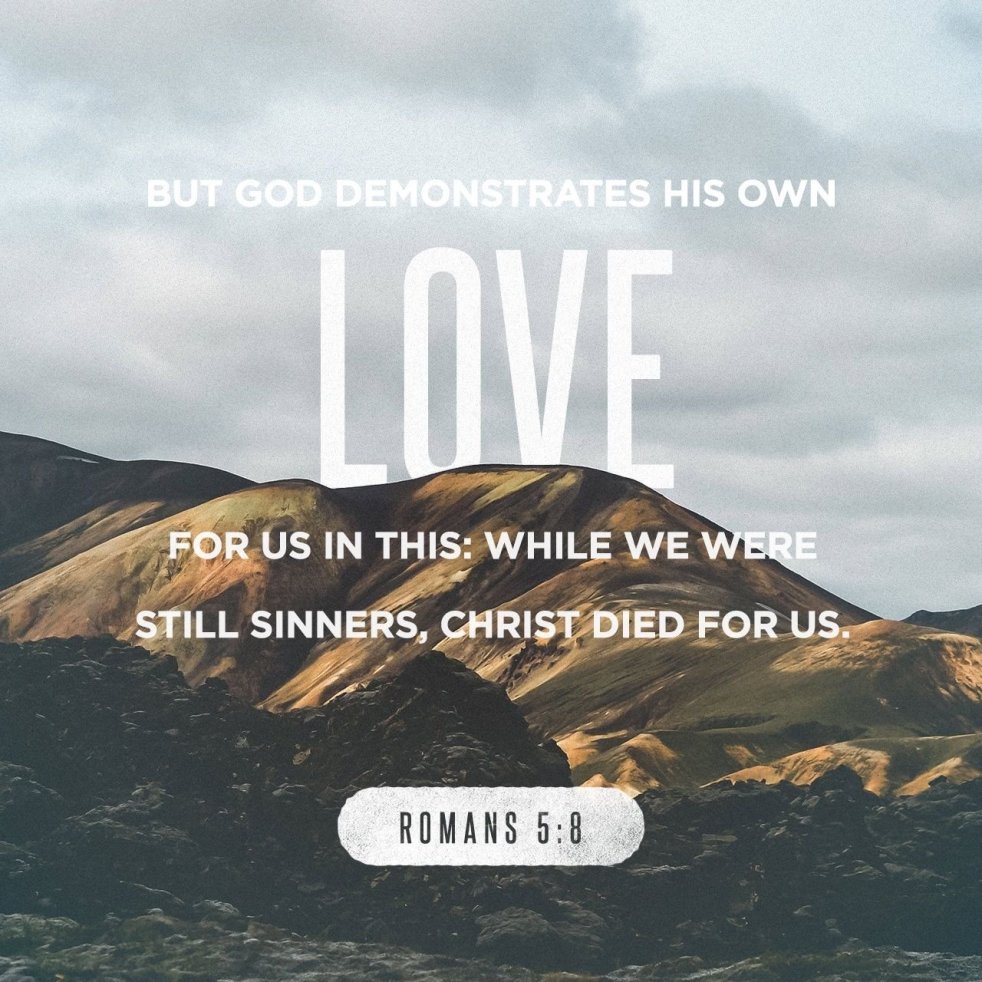
  • Romans 5:8 – “But God commendeth His love toward us, in that, while we were yet sinners, Christ died for us.”
Romans 5:8 | lookingjoligood.blog

Realize you cannot earn your way to Heaven, but…God offers you the free gift of eternal life!

  • Ephesians 2:8-9 – “For by grace are ye saved…not of works…it is the gift of God.”
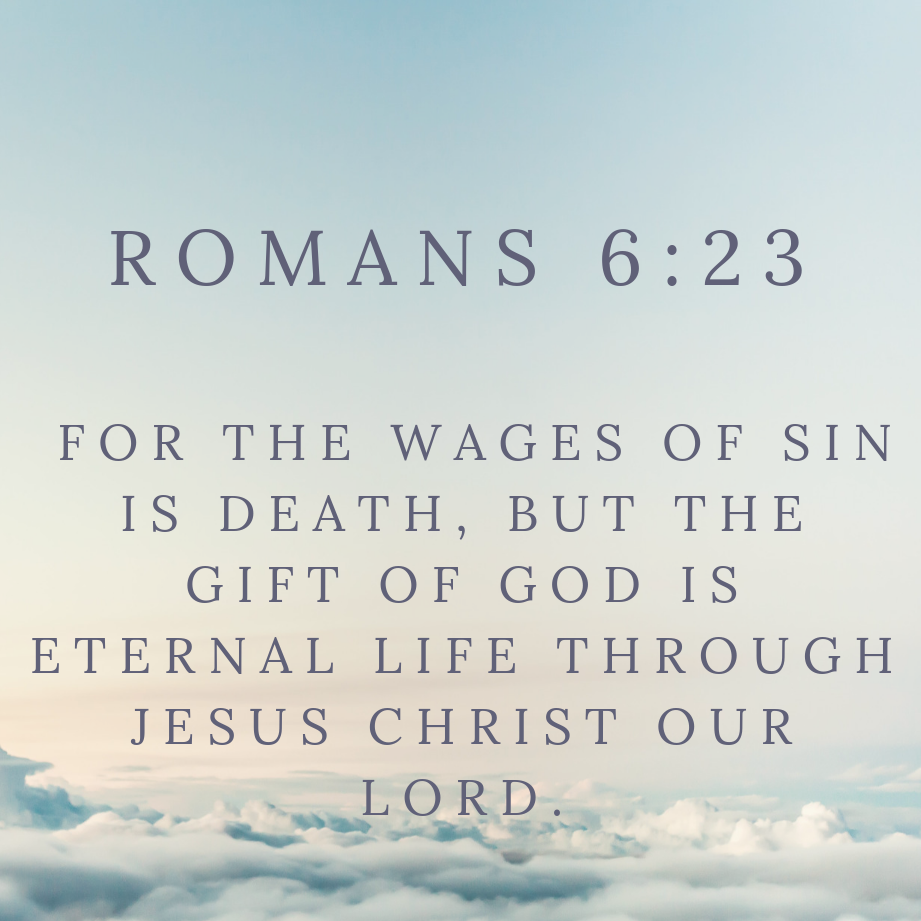
  • Romans 6:23 – “For the wages of sin is death, but the gift of God is eternal life through Jesus Christ our Lord.”  (See also: Revelation 20:14; 21:8; I John 5:11-13)
Romans 6:23 | lookingjoligood.blog

Believe that He died for your sins, that He rose from the grave, and that He is the only way for salvation!

  • John 3:16 – “That whosoever believeth in Him should not perish, but have everlasting life.”

Receive the gift of eternal life by calling upon Him!

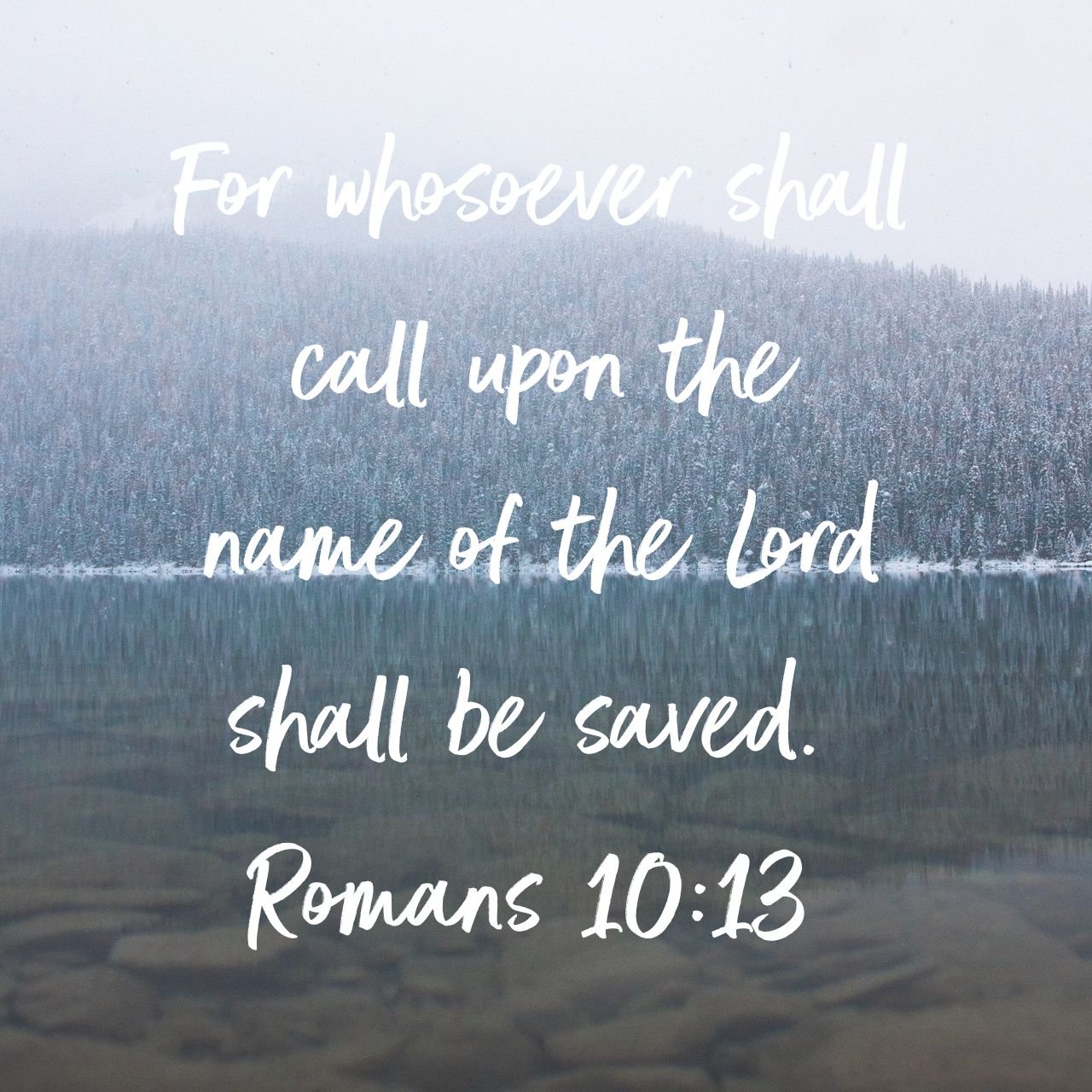
  • Romans 10:13 – “Whosoever shall call upon the name of the Lord shall be saved.”
Romans 10:13 | lookingjoligood.blog

If you want to call upon the Lord for His salvation, pray this prayer to Him in humble sincerity:

“Dear Lord Jesus, I admit to You that I am a guilty sinner.  I am undeserving of Heaven and I am unable to save myself.  I believe you died on the cross to pay for my sins, and that you rose from the grave.  I am completely putting my trust in You to be my personal Savior.  Please forgive my sin and help me live a life that is pleasing to You.  Amen.”

**this post is adapted from my church’s website

lookingjoligood.wordpress.com

I would love for you to follow me on TwitterInstagramPinterest, and Facebook. You can find me as Looking Joli Good on all four.

Lifestyle

What Comes After This Life?

Do you ever wonder if you’ll go to Heaven when you die? Do you ever wonder where you’ll go after this life ends? 

I have a message of hope and life!  The gospel of Jesus Christ teaches us that Jesus died on the cross for our sins, that He was buried, and that He rose on the third day.  And because of His sacrificial work of redemption, all people can be saved!

In order to be saved, you must personally receive Jesus Christ as Lord and Savior.

How do I do this?

Realize you are guilty before God, but you can be forgiven!        

  • Romans 3:10 – “There is none righteous, no, not one.”
  • Romans 3:23 – “For all have sinned and come short of the glory of God.”
  • John 3:17 – Jesus came “that the world through Him might be saved.”
Romans 3:10 | lookingjoligood.blog

Realize there is a punishment for sin, but…Jesus took your place on the cross!

  • Romans 5:8 – “But God commendeth His love toward us, in that, while we were yet sinners, Christ died for us.”
Romans 5:8 | lookingjoligood.blog

Realize you cannot earn your way to Heaven, but…God offers you the free gift of eternal life!

  • Ephesians 2:8-9 – “For by grace are ye saved…not of works…it is the gift of God.”
  • Romans 6:23 – “For the wages of sin is death, but the gift of God is eternal life through Jesus Christ our Lord.”  (See also: Revelation 20:14; 21:8; I John 5:11-13)
Romans 6:23 | lookingjoligood.blog

Believe that He died for your sins, that He rose from the grave, and that He is the only way for salvation!

  • John 3:16 – “That whosoever believeth in Him should not perish, but have everlasting life.”

Receive the gift of eternal life by calling upon Him!

  • Romans 10:13 – “Whosoever shall call upon the name of the Lord shall be saved.”
Romans 10:13 | lookingjoligood.blog

If you want to call upon the Lord for His salvation, pray this prayer to Him in humble sincerity:

“Dear Lord Jesus, I admit to You that I am a guilty sinner.  I am undeserving of Heaven and I am unable to save myself.  I believe you died on the cross to pay for my sins, and that you rose from the grave.  I am completely putting my trust in You to be my personal Savior.  Please forgive my sin and help me live a life that is pleasing to You.  Amen.”

**this post is adapted from my church’s website

lookingjoligood.wordpress.com

I would love for you to follow me on TwitterInstagramPinterest, and Facebook. You can find me as Looking Joli Good on all four.