Abstract/TL;DR: Churches often prioritize extroverted qualities, but it’s important to recognize and value introverts’ strengths and needs for meaningful connections and solitary recharging. Balancing social activities with introspection creates an inclusive environment where both personality types (ambiverts too)feel valued and supported in their faith journey.
I’ve been thinking about this for awhile now, churches, with their emphasis on social interactions, group activities and communal gatherings, often cater to the preferences of extroverted people. Extroverts tend to thrive in the vibrant and interactive atmosphere, finding comfort and energy in the company of others. They enjoy the lively worship services, engaging in discussions, and participating in various church events. Extroverts recharge their batteries by being in the company of others.
On the other hand, those who are introverted or less inclined towards social interactions might find themselves at a disadvantage in such church settings. Introverts often prefer solitary reflection and meaningful one-on-one conversations. The constant pressure to participate in large group settings and the expectation to be outgoing can be overwhelming and draining for them. Introverts recharge their batteries by spending time in solitude and engaging in introspective activities. Their batteries are drained by prolonged or intense social interactions and external stimuli, leading to a need for solitary downtime to recover.
Introverts might struggle to connect with others in such an extroverted environment, feeling like their voices and thoughts are overlooked amidst the fervor of group activities. As a result, they may find it challenging to build meaningful relationships within the church community.
In some cases, introverts might feel a sense of guilt or inadequacy for not being as socially active as their extroverted counterparts. This can lead to feelings of isolation and make them feel like they don’t fully belong or fit into the church culture.
While neither personality is inherently superior, there is often a perception that people who excel in group social gatherings are given more prominence in the church and are seen as more significant contributors to the “cause of Christ” compared to those who find value in quieter, personal connections.
The loud exuberance of the extroverted person is praised, while the quieter introvert is made to feel wrong for not enjoying the same level of social interaction. Society and churches often celebrate the outgoing and vivacious personalities, perceiving them as the “life of the party” and the ones who bring joy to any gathering. They are given positions in the spotlight and given positions of authority and their ability to effortlessly navigate social situations and engage with others is highly regarded and admired.
On the other hand, the introverted individual, who prefers moments of introspection and solitude, might be misunderstood or labeled as shy, aloof, or anti-social. They may feel pressured to conform to societal expectations of being more outgoing, as if their natural inclination to seek quiet reflection is somehow deficient or undesirable. The prevailing focus on extroverted qualities within the church community sometimes overshadowed the quieter contributions that introverted individuals could make.
This societal bias can be challenging for introverts, as it leaves them feeling like they need to change who they are to fit in or be accepted. They might question themselves, doubting whether their preference for quiet environments is a flaw or a limitation. In reality, introverts possess unique strengths, such as deep thinking, empathy, and excellent listening skills, which can contribute significantly to meaningful interactions and connections with others.
Recognizing and understanding these differences is crucial for churches to create inclusive and supportive environments for all congregants, regardless of their personality traits. Embracing a diversity of personalities and offering opportunities for both communal gatherings and more intimate interactions can help introverted individuals feel valued and appreciated within the church community. Additionally, creating a culture of acceptance, where each person is encouraged to participate in ways that feel comfortable to them, can enable both extroverts and introverts to engage meaningfully in their faith journey.
For introverted individuals, the vibrant and socially demanding environment of church services and events can be particularly draining. After a service filled with enthusiastic interactions and large group gatherings, they may find themselves in need of solitude and quiet reflection to recharge their energy. This need for self-preservation and personal space is essential for introverts to maintain their emotional well-being.
Although I don’t personally identify solely as an extrovert or an introvert, I fall somewhere in between. I lean towards being an extrovert with the social battery of an introvert. (often referred to as an “ambivert”)
In the past, my experiences at church as an ambivert were a mix of engagement and fatigue. While I could actively participate in group activities and discussions, I found myself feeling drained afterward, craving solitude to recharge. I can only imagine what it is like for introverted people! (check out my recent post about needing to nap after Sunday services by clicking HERE)
Unfortunately, some churches may inadvertently add to the pressure on introverts by emphasizing constant engagement in various ministries and group activities. Introverted individuals might feel guilty or inadequate for prioritizing their self-preservation over endless involvement, as if their quieter contributions are less valued.
It’s vital for churches to recognize and appreciate the unique strengths that introverts bring to the community. They often excel in deep, meaningful connections and thoughtful contributions that may not be as visible in large group settings. Creating opportunities for introverts to serve and contribute in ways that align with their personalities and strengths fosters a more inclusive and supportive church environment.
Allowing introverts the space to recharge and respecting their need for quiet reflection can lead to greater engagement and dedication in the long run. By embracing a diversity of personalities and valuing each person’s unique contribution, churches can create an environment where both extroverted and introverted people feel valued, accepted, and encouraged in their faith journey.
Disclaimer: The following reflections are based on my personal perspective and experiences. It’s important to note that neither extroverted nor introverted personalities are inherently superior; both have their unique strengths and contributions that enrich our understanding of human diversity. The intention is to shed light on the church dynamics between these personality types within certain contexts, rather than to pass judgment on their merits.
Abstract/TL;DR: Controlling people’s time means controlling their lives. This influence extends to their priorities, commitments, choices, opportunities, and relationships, ultimately shaping who they become.In the Independent Fundamental Baptist (IFB) community, there’s this concept of “Three to Thrive” that says you must attend church at least three times a week to thrive in your faith. Some pastors take it to an extreme, expecting you to be there for every little thing they put on the social calendar, even during life’s most significant moments. This pressure can be distressing, especially when dealing with grief or loss. Church attendance should never be used to control or manipulate congregants. True faith should inspire, not burden with guilt. If church attendance becomes a source of distress, it’s okay to reevaluate and find a balance that prioritizes well-being and genuine spirituality.The Bible doesn’t directly tell us to attend church services as we do today, but it does highlight the value of coming together, fostering fellowship, helping those in need, and being actively involved in a community of believers.
If you can control people’s calendars and time, then you can control a significant aspect of their lives. This control extends to their priorities, commitments, and even the choices they make. Manipulating someone’s time can impact their opportunities for personal growth, self-assurance, and pursuing their passions. It can also influence their social interactions and relationships, limiting their exposure to diverse perspectives and experiences. Ultimately, controlling someone’s time can shape their beliefs, actions, and decisions, impacting the course of their life and the person they become.
By controlling time a sense of dependency on the controlling party is created, making it challenging for individuals to break free from the cycle of control. It can also involve prioritizing certain activities or obligations over others. In some environments, individuals might be pressured to devote an excessive amount of time to specific tasks or responsibilities, leaving them with little room for personal growth, rest, or pursuing their interests.
For the majority of my young life I spent countless hours each week attending church related activities. As I child and teen, I loved spending time at the church with my friends and fellow members, creating wonderful memories while serving together. However, as an adult, I found myself torn between spending time with my young family, work, school, seeking rest and peace, and the persistent guilt and pressure of attending every single church activity.
In the Independent Fundamental Baptist (IFB) community there is a common concept concerning church attendance called “Three to Thrive.” According to them, you’ve got to be in church no less than three times a week to truly thrive in your faith and Christian walk. 1) Sunday school and Sunday morning services 2) Sunday evening and 3) Wednesday evening prayer meeting. But it doesn’t just stop at three…there are also many other times that a faithful member should be attending as well: Thursday evening and Saturday morning soul winning, bus route visitation, and revival meetings, missions conference, special guest speakers and evangelists services, VBS and summer outreach programs, teen activities, children’s activities, ladies’ Bible study, men’s prayer breakfasts, men’s and women’s conferences, couples retreats, young married get togethers, choir practice, spring cleaning days, Christmas decorating, Christmas and Easter play practices, Christmas and Valentine’s day dinners, special programs, regular programs, making meals for those who are sick or in need, studying and preparing to teach Bible lessons, game nights, picnics and potluck dinners, before morning service coffee, in between service fellowships, after church fellowships, ice cream fellowships, deacons’ meetings, Sunday school teachers meetings, ministry meetings, nursery meetings, baby dedications, bridal showers, baby showers, weddings and funerals for people you may or may not know, arriving early and staying late, the list goes on…When the doors of the church are open, you are expected to be there, no exceptions.
In some extreme cases, certain pastors and members in the IFB community take the emphasis on church attendance to an unsettling level. Picture this: you just gave birth to a beautiful baby. Congratulations! You had a rough labor and delivery and you are so tired, overwhelmed, and in pain from the experience. All you want to do is spend time enjoying your new baby and resting from the experience… but don’t forget to hurry back to church shortly after giving birth! It is seen as a badge of honor to bring a brand new tiny newborn to church only days or hours after being discharged from the hospital. That little one needs to start attending church immediately. For example, on more than one occasion, I heard one of my church’s former pastors proudly boast about wanting to leave his laboring wife to attend Sunday services and choir practice!!! Even now, he continues to preach to his congregation that he expects them to have the same level of commitment to church attendance and that this is an essential aspect of Christian spirituality.(can I say FOMO?!)
The pressure to adhere to the “Three to Thrive” concept in church attendance can sometimes lead to uncomfortable situations, including feeling compelled to attend church even when feeling unwell. It’s not uncommon to hear stories of individuals feeling guilty for missing a service due to illness, as if their dedication to faith is being put to the test.
What’s even more concerning is when this pressure comes from the leadership itself. Some pastors, driven by the belief that church attendance is paramount, may set an example by attending church despite being ill, even with fevers and contagious illnesses. This behavior can inadvertently encourage congregants to push their own limits and prioritize church attendance over their health and the well-being of others. I can attest that all too many times the youth pastor’s children were brought to the nursery with runny noses, coughs, fevers, and even one time with pink eye, which is highly contagious.
While the intention behind this may be to show the importance of church involvement, it can send the wrong message and place unnecessary strain on members who are already dealing with health issues. Attending church while contagious can risk spreading illnesses to others in the congregation and undermine the significance of responsible self-care. In my opinion, this disregard for staying home while sick was evident in the actions of many IFB pastors during the pandemic. They seemed frantic to reopen their churches, putting their congregations at risk despite the advice of the CDC and department of health to stay closed and distant.
In such situations, it is crucial for church leaders to prioritize the health and safety of their congregation. Encouraging members to prioritize rest and seek medical attention when needed shows genuine care and understanding for their well-being. Faith and spirituality are not measured by the number of times someone attends church while sick; rather, it is a matter of personal growth and connection with God. Despite what many IFB pastors preach, a connection with God is possible outside of the church while at home recovering from illness.
I know of one member who had cancer who would boast about wearing his ambulatory chemotherapy infusion pump to church, even after undergoing all-day chemo infusions. As an oncology nurse, I would advise him against attending services on days he received chemo, concerned about his well-being. However, to my chagrin, the church leaders praised him for his dedication, despite the potential risks to his health.
While church can offer comfort and support during challenging times, it is equally important to recognize that attending church while ill can be counterproductive and potentially harmful. Pastors should be advocates for both spiritual growth and physical well-being, promoting a healthy balance between church commitments and self-care. Ultimately, creating an environment of understanding and compassion will enable members to thrive spiritually without compromising their health.
Even immediately after the loss of a loved one during times of profound grief and mourning, there is pressure to return to church and ministry. This expectation can be emotionally distressing for those already suffering with the weight of their sorrow. I realize the idea behind this approach is often rooted in the belief that being in church and surrounded by the congregation will provide comfort and support. While seeking comfort from a supportive community can be valuable, the pressure to return to church and continue serving immediately after a significant loss can feel insensitive and overwhelming. Grieving is a deeply personal and delicate process, and everyone copes with loss differently. Pushing people to suppress their grief and prioritize church attendance can add further distress and hinder their natural grieving process.
Genuine pastoral care should encompass empathy, understanding, and compassion. Encouraging members to find their own path to healing and providing support without imposing rigid expectations is more conducive to a healthy emotional recovery. Respecting the uniqueness of each person’s grieving process and allowing them the time and space they need is a vital aspect of genuine care and support in times of sorrow. I knew and know pastors that practice this type of compassion, I am personally related to one of them.
While church can be a source of comfort and community during both exciting and difficult times, it should never be wielded as a tool to control or impose expectations on congregants who are navigating illness, life changes, or profound loss.
I understand the significance of church in some people’s lives—connecting with faith, finding comfort, and building a sense of community. While church is essential for some people’s faith, let’s not forget that it’s okay to miss a service now and then. It seems some pastors have taken “Three to Thrive” to a new level and believe it’s the key to unlocking spiritual greatness. Some pastors really seem to believe church attendance is the only measure of one’s spirituality. At times, it feels like a measure of control, as if one’s devotion and dedication are being tested. The pressure to be ever-present in the church community can leave some people feeling guilty and inadequate if they can’t meet these lofty standards. I also believe some pastors fear that if their congregants are given space to breathe and don’t spend an excessive amount of time busying themselves at the church, they might start to notice certain flaws in what they are being taught. (In my opinion this is another reason why many IFB pastors were frantic to reopen their churches during the pandemic putting their congregations at risk despite the advice of the CDC and department of health)
While regular church attendance can be an essential aspect of one’s faith journey, it becomes concerning when it turns into a means of control rather than an aid to genuine spiritual growth. True faith should inspire and uplift, not burden with unrealistic expectations. If missing a worship services causes overwhelming guilt and anxiety it may be important to pause and reconsider and reflect on the underlying reasons behind these feelings. It’s important to remember that genuine spirituality should not be driven by fear or pressure, but rather by a sincere desire to connect with God. If attending church becomes a source of distress rather than peace, it might be beneficial to take a step back and reevaluate. Finding a balance between personal well-being and church involvement is essential, and everyone’s journey of faith is unique and valid.
Another observance I have noted, is oftentimes, congregants are encouraged to prioritize their time and energy towards church activities, yet there are instances when these same pastors who encourage attendance at all costs might not make themselves available to the congregants in the same way. It’s intriguing how the emphasis on and pressure of attendance and service sometimes doesn’t apply across the board to all members equally either. (I have personally known of instances where pastors expect their congregants to be available at a moment’s notice, but when things are reversed, there have been occasions when members reach out for support these same pastors are too busy due to being engaged in travel for pleasure or to other churches for speaking engagements or are busy with other endeavors.)
While I understand the value of a thriving church community, this unbalanced dynamic can create feelings of frustration and confusion among congregants. Witnessing pastors encourage constant engagement while not consistently practicing the same level of availability for their members can be demoralizing. It raises questions about authenticity and whether the expectations set are truly equal. A healthy church community should be built on a foundation of shared commitment, where leaders and congregants alike uphold the principles they preach. (If you have been following along with my journey of finding faith following fundamentalism, you’re aware that the discrepancy between preaching one thing and practicing another is a significant concern for me.)
In the grand scheme of things, “Three to Thrive” might be a catchy phrase, but it’s not the ultimate measure of faith. Sometimes, life calls for a little flexibility. Ultimately, prioritizing mental, spiritual, and emotional well-being is a vital aspect of adopting a healthy and genuine relationship with faith. We should be understanding and supportive of one another, even if we can’t make it to every service. Attend church, engage with your community, and nurture your faith. But remember, it’s not about religious obligations; it’s about the genuine journey we take on our own path of faith. So, whether you feel the need to attend “Three to Thrive” or not, no one should feel coerced into sacrificing their well-being or family time in the name of strict church attendance.
“Three to Thrive,”
“Three to Thrive,” they often chant, A moment of rest, a wish to grant! Not just Sundays and Wednesdays, it’s so much more, We’re always rushing out the door.
Amidst the chaotic frenzy, in church life I find,
An overwhelming guilt, so intertwined.
From Sunday school to Wednesday prayer,
So many activities, you must be there.
Sunday morning, Sunday night,
And Thursday’s soul winning, schedules are tight.
Saturday’s outreach, it never ends,
So many events, my head spins.
Revival meetings, missions too,
Special guest speakers, there’s always a few.
VBS in the summer, bus routes all year round,
With so much to do, I just might drown.
Children go wild, teen activities galore,
Ladies’ Bible studies, men’s meetings and more.
Couples retreats, so much to plan,
In this whirlwind, can I still stand?
Choir practice, and cleaning days,
Christmas, Easter, endless plays.
Dinners, picnics, one after another,
Is there room to breathe, I often wonder?
Game nights, potlucks, ice cream craze,
Fellowship prep that take up all my days.
Deacons, nursery, teachers meetings abound,
In this packed schedule, I’m feeling bound.
Funerals, Bridal and baby showers too,
Weddings and baby dedications, so much more to do!
No exceptions, always be there,
Activity overload, it’s too much to bear.
In this frenzy, I must confide,
Sometimes it feels like a crazy ride.
In this flurry, I must confess,
Sometimes it feels like a massive mess.
With love and faith, is it all sincere?
But is there space to breathe in here?
So let’s take a step back, and take a break,
Reevaluate for our own sake.
In the quest for growth, let’s redefine,
A balanced church life, that’s truly Divine.
Disclaimer: The Bible doesn’t explicitly command church attendance in the way that modern practices of attending a church service are understood. However, the Bible does emphasize the importance of fellowship, gathering together, and being a part of a community of believers. I am painting with a broad brush, not all IFB pastors or members believe this way.It’s important to acknowledge that people have diverse experiences and emotions when it comes to church attendance. Some find great comfort, community, and peace in their church, while others may feel overwhelmed by the pressure to constantly commit time, money, and effort to the congregation. When guilt is used to manipulate and control those who struggle with attendance, it is concerning and should not be condoned. True pastoral care involves understanding and compassion for each person’s unique journey and challenges, without resorting to manipulation or imposing rigid expectations. Not all IFB pastors use guilt and shame to coerce their members to attend church faithfully. Everyone should be given the freedom to navigate their faith and church involvement in a way that feels right for them. If the Holy Spirit isn’t bringing about conviction, it’s not the pastor’s place to impose guilt.
Abstract/TL;DR:After leaving my former church, I attended my niece’s baptism there. Returning brought up mixed emotions and feelings of anxiety and unsafety. While it was a bittersweet experience, it reinforced that my decision to leave was the correct choice.
After leaving my former church, I found myself facing an emotional challenge when I decided whether or not to attend my niece’s baptism there. I had trepidation about going back, knowing that it could stir up memories and emotions I had worked hard to put behind me. But family is important, and I wanted to be there for my sister and my niece on her special day.
As I walked through the doors of the church, memories flooded back, and I felt a mix of emotions. Seeing familiar faces and hearing familiar hymns brought both comfort and unease. It was like revisiting a place I used to call home, but now it felt foreign.
During the service, I felt a sense of disconnection. The familiar beliefs and teachings that once shaped my worldview now felt distant and unfamiliar. I had grown and evolved, and the church’s ideology no longer aligned with my own.
As the baptism proceeded, I couldn’t help but feel anxious and unsafe. The atmosphere felt stifling, and I was acutely aware of the judgments and expectations that used to surround me. It was a strange sensation to be back in a place so familiar, yet so alien.
After the service, I spoke with many old friends, many asked where I had been and if I would be returning. Due to the business of various ministries, many people hadn’t even noticed I had been gone, they thought our path just hadn’t crossed because I had just been serving somewhere else.
While I was happy to be there for my niece’s special day, I also felt a sense of relief when I walked out those doors knowing that I would never be returning again. Leaving the church had been a challenging decision, and attending this baptism brought back memories of the people I had left behind. There was a bittersweet undercurrent to the experience.
In the aftermath of the visit, I found myself processing a whirlwind of emotions. The visit had stirred up old wounds, and I found myself grappling with feelings of anxiety and vulnerability for days following the baptism. The choice to leave the church had been transformative, but confronting my past also reminded me of the challenges I had faced. It reaffirmed my commitment to embracing my own beliefs and values and find strength in staying true to myself.
In the end, attending my niece’s baptism was a reminder of why I made the choice I did to leave. Returning solidified the reassurance I needed. I was reminded of the intentional growth I had made since leaving the church. It was a bittersweet experience, but it also reinforced my decision to distance myself from that community. While it may have been challenging, I’m grateful for the growth and self-awareness that came from confronting my past and finding strength in the person I’ve become today.
Returning
Familiar faces and hymns I knew, But the beliefs, once mine, seemed askew. A disconnection in that sacred space, Where I once found comfort, but not grace.
Reflecting now, I see the light, Embracing beliefs that feel right. It was in leaving, I found my way, A stronger self in the present day.
Disclaimer: The personal experiences shared in this post are based on my personal perspective. While I chose to leave the IFB to find a more gracious and loving community, it is important to acknowledge that individuals may have different experiences and find happiness within the IFB or any other religious institution. The decision to leave the IFB does not imply a loss of faith, as faith is a deeply personal and subjective matter. It is essential to respect and recognize the diversity of experiences and perspectives within religious communities. The content shared is for informational purposes only and should not be construed as professional advice, guidance, or a universal representation of the IFB or any religious organization. It is recommended to seek guidance, conduct research, and consider multiple perspectives when making personal decisions or exploring matters of faith.
Abstract/TL;DR:Sundays used to be a struggle for me while I was in the IFB community, causing anxiety and exhaustion. Leaving the community brought freedom and relief, allowing for relaxation and self-reflection on Sundays. Napping became a necessary emotional recharge, but after leaving, it transformed into a source of enjoyment and rejuvenation. Listening to my body has been transformative, leading to self-compassion and setting boundaries. Now, I no longer push myself beyond my limits and embrace a healthier lifestyle.
If you have been following along with my recent pivot from beauty content to talking about my personal and spiritual growth, thank you! I am being mindful of how often I bring up my experiences in the Independent Fundamental Baptist (IFB) community. I’m trying to refrain from being too negative. With 40 years of information to process through, I’m thoughtfully deciding what to share openly and what to keep private. I genuinely appreciate your patience and understanding as I work through all of this and selectively share.
Back when I was still attending church in the IFB community, Sundays were always a struggle for me. I would wake up and immediately feel the weight of the day ahead. I dreaded getting ready, feeling uptight and anxious the entire morning. During my last few years in that community, I was also suffered with frequent migraines and constant neck pain. Despite being a short distance, the drive to church was the worst. I would often feel my heart racing, my shoulders tense, and my palms sweating with anticipatory anxiety. As soon as we stepped through the door of the church, I sensed the pressure to be constantly “on.” It was as if one wrong move could instantly make me fodder for gossip. The pressure and expectation to be perfect was overwhelming.
Leaving the church after the morning services, I would be physically and emotionally drained. The pressure to fit in and the fear of being judged weighed heavily on my mind. At times, I found myself questioning my own thoughts and actions, wondering if they aligned with the expectations of the church. The combination of the lengthy sermons and the pressure to conform to a specific system of rules left me utterly exhausted. Only then to dread returning later that evening for a second round of services.
While some seemed to feel uplifted and rejuvenated by the services, I felt depleted. Like a battery that has been drained of its power.
Napping on Sunday afternoons between services became a necessity for me to survive the rest of the week. If I didn’t take that nap, I would be completely spent, struggling to find the energy to face the challenges ahead. It almost felt like a mandatory emotional recharge to make it through the coming days.
However, things changed when I decided to leave the IFB community. As I stepped away from that environment, I noticed a remarkable shift in my mental and emotional well-being, along with a sense of freedom and relief, I no longer constantly felt exhausted.
No longer bound by rigid expectations and exhausting routines, I discovered a newfound vigor. With the weight of the IFB teachings lifted, the overwhelming need for Sunday afternoon naps dissipated. I found myself energized and excited about the week ahead, free from the mental and emotional exhaustion that once plagued me. Rather than being confined to a routine, instead of requiring sleep, Sundays became a time for relaxation, time with my family, and pursuing activities that genuinely brought me joy, rather than a struggle to recover from draining obligations.
I no longer need Sunday afternoon naps because I’ve freed myself from the constraints of that community. This has also taught me the importance of listening to my body. For a long time I was pushing myself to “do what is right” despite the physical and emotional pain it was causing me. Stepping away from that community, it became clear that taking care of myself was not a sign of weakness or selfishness, but an elementary act of self-respect and self-preservation.
Learning to listen to my body’s signals has been transformative. I now recognize the value of self-compassion and the significance of setting boundaries to protect my well-being. It has enabled me to break free from the cycle of pushing myself beyond my limits and has allowed me to embrace a healthier and more fulfilling way of living. If a situation or group is consistently causing me to have a racing heart, tense shoulders, and sweating palms, migraines, and exhaustion, that situation needs to be reevaluated.
I now take naps for enjoyment, not out of necessity. Instead of using naps as a means to recover from mentally, spiritually, and emotionally exhausting religious obligations, I now see them as a way to recharge my mind and body. The shift from feeling compelled to rest as a means of survival, to choosing to rest for enjoyment has brought contentment. Each nap is now an opportunity to pause, unwind, and simply rest.
Disclaimer: The personal experiences shared in this post are based on my personal perspective. While I chose to leave the IFB to find a more gracious and loving community, it is important to acknowledge that individuals may have different experiences and find happiness within the IFB or any other religious institution. While I was happy attending the IFB for many years, I began to feel overwhelmed and stifled. The decision to leave the IFB does not imply a loss of faith, as faith is a deeply personal and subjective matter. It is essential to respect and recognize the diversity of experiences and perspectives within religious communities. The content shared is for informational purposes only and should not be construed as professional advice, guidance, or a universal representation of the IFB or any religious organization. It is recommended to seek guidance, conduct research, and consider multiple perspectives when making personal decisions or exploring matters of faith.
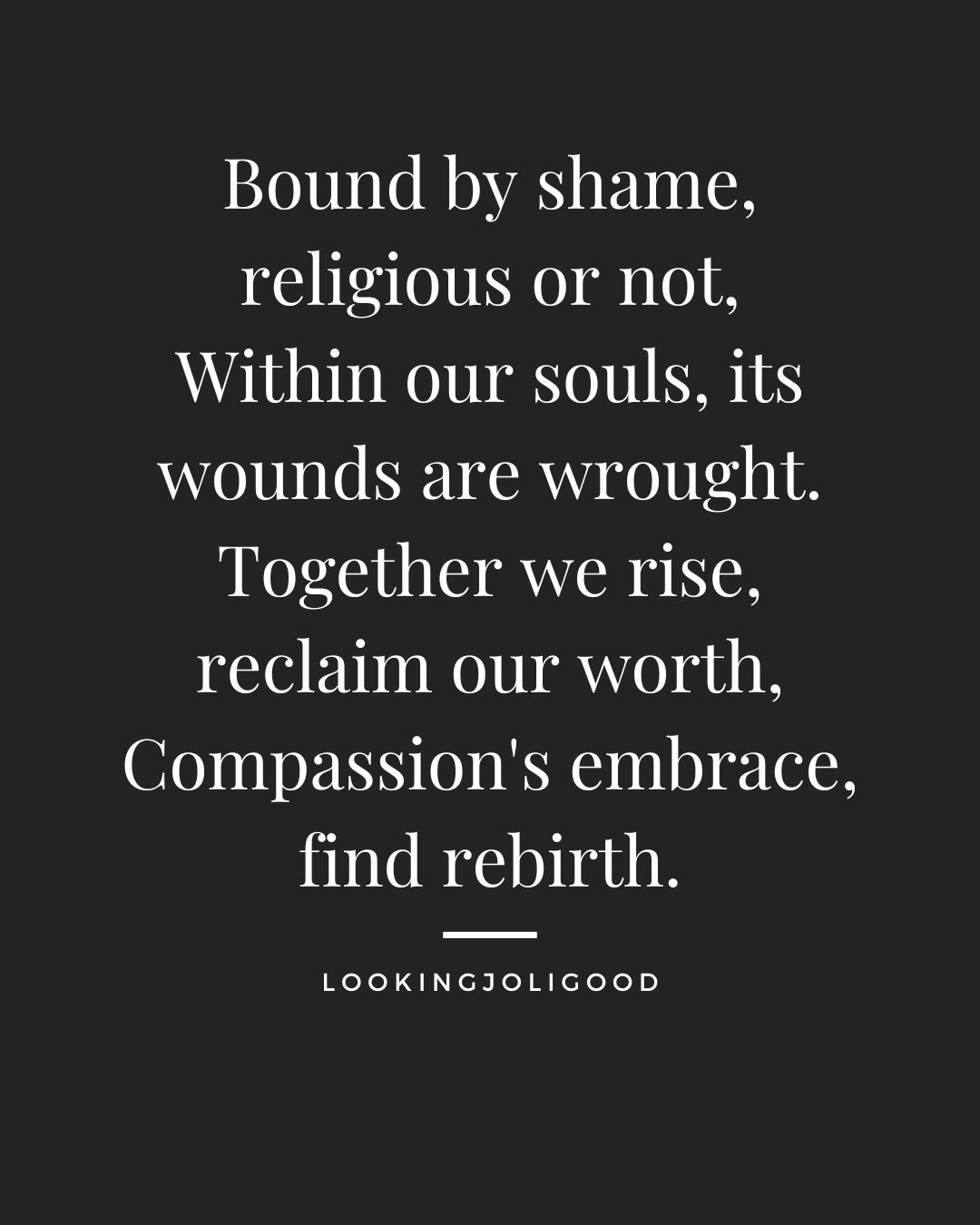
Abstract/TL;DR:Shame, whether in religious or non-religious contexts, can deeply harm individuals. It is used as a tool of control, punishment, and conformity. It can be seen in personal relationships, workplaces, social circles, and online communities. Breaking free from shame requires questioning ingrained beliefs, encouraging empathy, and creating supportive environments. By challenging the weaponization of shame, we can create a more compassionate society where people thrive.
*Please see disclaimer below
Content Warning: I may not cover all of these things in detail, you might feel triggered by the content of this post. CW: religious trauma, spiritual abuse, physical abuse, SA, guilt and shame, emotional manipulation, church discipline, loss of community, and fear of rejection
Shame is a complex emotion that can sneak into our lives in various ways, and dealing with it can be quite a challenge. It’s like when we mess up at work or in our personal relationships, and that feeling of failure starts gnawing at us. Even comparing ourselves to society’s beauty standards can trigger body shame, making us feel less than. Financial struggles or unemployment can bring on shame too, as we wonder why we can’t seem to get it together like others. (For instance, even though I find immense joy and satisfaction in being a stay-at-home mom and taking grad school classes, whenever someone inquires about my job, I can’t help but feel a pang of shame and an urge to justify why I am not currently employed.)
Those past mistakes we can’t shake off, they haunt us too. We beat ourselves up over things we did wrong, and the guilt weighs heavily in our minds and on our hearts. Sometimes, we might even feel ashamed of our family background or cultural differences, as if we don’t fit in. And the whole topic of sexuality and relationships can be a minefield of shame, with society’s judgmental eyes on us.
Mental health issues add another layer of complexity. Society’s stigma can make us feel ashamed for struggling with anxiety, depression, or any other challenges. It’s like we’re expected to hide our struggles and put on a brave face, acting like we have it all together at all times, which only makes things worse.
Even in simple social situations, we might feel awkward or different from others, and that can lead to a sense of shame and isolation.
But the truth is, we’re not alone in feeling this way. Shame is something we all encounter at some point in life. We’re all human, and we all have flaws. Finding healthy ways to cope with shame is important. We deserve to accept ourselves and let go of that unnecessary shame that holds us back.
Coping with shame, whether it originates from ourselves or is inflicted by others, can be incredibly challenging. In particular, I’d like to focus on the difficulties associated with dealing with shame that is weaponized by others. They may use hurtful words, judgmental attitudes, or social exclusion to make us feel inadequate and unworthy. This deliberate tactic can deeply impact our self-esteem and emotional well-being. When shame is weaponized, it can undermine our confidence and create a sense of powerlessness. It’s important to recognize this manipulative behavior and set boundaries to protect ourselves.
Weaponized shame can occur in both religious and non-religious contexts, and its impact can be deeply detrimental to an individuals’ well-being. In religious settings, shame may be misused as a means of control, punishment, or enforcing conformity. Strict rules and expectations can create a culture where people feel constant pressure to meet unattainable standards, leading to intense feelings of guilt, unworthiness, and fear of divine punishment. Using public humiliation or exclusion as a means to enforce conformity can compelling people to suppress their true beliefs.
My focus will be on weaponized shame within a religious context, although it’s important to note that this concept is not limited solely to religious settings.It can also be observed in personal relationships, workplaces, social circles, and online communities. Emotional manipulation tactics can involve constant criticism, ridicule, or demeaning behavior, leaving one feeling inadequate, submissive, and fearful. In workplaces, shame can be wielded through public humiliation, belittlement, or scapegoating, creating a toxic environment that undermines employees’ confidence, motivation, and overall well-being and enjoyment. Within social circles, shame may be used to exclude or gossip about individuals based on their appearance, interests, or lifestyle choices, creating feelings of isolation and self-doubt. In the digital realm, cyberbullying and online shaming inflict shame on people publicly, leading to severe emotional distress and social withdrawal.
Weaponized shame in religions is a topic that resonates with me. It refers to the misuse of shame as a form of control or punishment within religious contexts. Shame, as a powerful emotion, can have both positive and negative effects on people. In healthy religious environments, it can be used constructively to encourage personal growth and uphold moral values. However, when shame is intentionally weaponized, it can have severe consequences on mental, emotional, and spiritual well-being.
I have experienced the weight of weaponized shame firsthand. It’s discouraging to witness shame being used as a means of control and punishment. The pressure to conform to rigid religious standards can be suffocating, leaving little room for personal growth. Instead of encouraging a sense of belonging and acceptance, this kind of shame creates a culture of fear, where one’s worthiness is constantly questioned.It often stems from the imposition of rigid rules and standards that are nearly impossible to meet. When I failed to adhere to these expectations, I was flooded with intense feelings of shame and guilt. The fear of divine punishment and the belief that I am inherently flawed was overwhelming, leading in my case to anxiety. (you can read more about that by clicking HERE)
The constant internal battle between who I am and who I was expected to be took a toll on my mental and emotional health. It became a struggle to find my own identity and voice within the constraints of imposed shame. The demoralizing sight of church leaders saying one thing and acting in a different way, while simultaneously attempting to shame congregants, only intensified my frustration. The constant fear of judgment and rejection from my religious community created a sense of anticipatory shame. Yet contradiction between the preached ideals and the hypocrisy of those in positions of authority eroded my faith and trust.
Instead of creating a loving and compassionate connection with the divine, teachings that use shame as a tool can create a distorted perception of a punishing higher power. The belief that you are inherently flawed and deserving of punishment tarnishes the understanding of spirituality and hinders the development of a genuine and meaningful relationship with God.
Another aspect of weaponized shame is the use of public humiliation or exclusion to enforce conformity. This culture of fear instills a constant need to conform, suppressing true beliefs and identity out of the fear of shame and rejection. It becomes a tricky balance between being authentic and adhering to the expectations set by the community. I have witnessed individuals being publicly shamed or ostracized within the religious community for deviating from group norms and teachings. For instance, women being publicly shamed in front of the church for becoming pregnant without being married, even though there is no male partner present to share the shame. (While I have very strong feelings about the public shaming of unmarried pregnant women, I will not get into the discussion of that today.)
Church discipline, as mentioned in the Bible (Matthew 18:15-17), addresses unrepentant, serious sin within the Christian community. The focus is on restoration and reconciliation rather than shame or punishment. It seeks to guide individuals towards recognizing their actions, seeking repentance, and encourage healing and grace within the community.
Women are often shamed and preached to about the importance of dressing modestly, while simultaneously being chastised for causing men to stumble due to their mere physical presence. Ironically, the men who criticize them are often not prioritizing modesty in the way they are living their own lives. It is important to note that modesty encompasses much more than just a woman’s choice of clothing. Living a life of modesty involves embracing simplicity, humility, and contentment, valuing inner qualities over material possessions, and showing respect and consideration for others in all aspects of one’s actions and interactions. (Might I also point out Matthew 5:29: “If your right eye causes you to stumble, gouge it out and throw it away. It is better for you to lose one part of your body than for your whole body to be thrown into hell.”)
I am not condoning or encouraging wrong behavior, but using shame as a way of control or punishment is harmful and damaging to one’s well-being and sense of self-worth. It can lead to long-lasting emotional scars and prevent open and honest communication, hindering personal growth. Using shame as a tool of control or punishment can have negative effects on both the individuals subjected to it and the group employing it. It can lead to a lack of trust and division within the group, while hindering compassion and empathy. Additionally, the group might struggle to have genuine connections among its members due to fear of shame being used against them.
It is important to acknowledge that not all religious communities engage in weaponized shame. Some emphasize compassion, forgiveness, and acceptance. Sharing experiences and challenging the harmful effects of weaponized shame can contribute to the creation of religious spaces that uplift and inspire people, nurturing their spiritual well-being. However, when shame is used as a tool of control and manipulation, it has severe negative consequences.
The Holy Spirit serves as a guiding presence in our lives, functioning as our conscience. It is through the Holy Spirit that we receive conviction and guidance regarding our thoughts, actions, and decisions. While shame can be a powerful emotion, it is important to discern whether it stems from the Holy Spirit’s gentle conviction or from manipulative tactics of the church or others. If we do not feel genuine shame from the Holy Spirit, we should not allow the church leaders or religious institutions or others to manipulate us into feeling shame. Instead, we should seek a deeper understanding of God’s love, grace, and forgiveness, and allow the Holy Spirit to lead us in righteousness, free from undue manipulation or spiritual harm.
Romans 8:1-2 “So now there is no condemnation for those who belong to Christ Jesus. And because you belong to him, the power of the life-giving Spirit has freed you from the power of sin that leads to death.”
This verse emphasizes that as believers in Christ, we are set free from condemnation. The Holy Spirit guides us into a life-giving relationship with Jesus, freeing us from the power of sin and any false shame associated with it.
Galatians 5:1 “So Christ has truly set us free. Now make sure that you stay free, and don’t get tied up again in slavery to the law.”
This verse encourages believers to embrace the freedom found in Christ and to guard against being burdened by legalistic rules and regulations. It reminds us that true freedom in Christ includes freedom from manipulative spiritual practices or unnecessary shame. The entire book of Galatians speaks about grace and freedom from shame and legalism.
1 John 2:27 “But you have received the Holy Spirit, and he lives within you, so you don’t need anyone to teach you what is true. For the Spirit teaches you everything you need to know, and what he teaches is true—it is not a lie. So just as he has taught you, remain in fellowship with Christ.”
This verse reminds us that as believers, we have received the Holy Spirit who dwells within us. The Holy Spirit teaches us what is true, and we can rely on the Spirit’s guidance without needing others to manipulate or shame us spiritually.
There are several more Bible verses that speak to the issue of shame and the importance of finding healing and freedom from it. Here are a few examples:
Psalm 25:3: “No one who trusts in you will ever be disgraced, but disgrace comes to those who try to deceive others.”
Psalm 34:4-5: “”I prayed to the Lord, and he answered me. He freed me from all my fears. Those who look to him for help will be radiant with joy; no shadow of shame will darken their faces.”
Isaiah 61:7: “Instead of shame and dishonor, you will enjoy a double share of honor. You will possess a double portion of prosperity in your land, and everlasting joy will be yours.”
Romans 9:33: “For the Scriptures say, ‘I will take revenge; I will pay them back,’ says the Lord. ‘Instead, I will bless you.'”
Romans 10:11 – “As the Scriptures tell us, ‘Anyone who trusts in him will never be disgraced.'”
2 Corinthians 5:17: “This means that anyone who belongs to Christ has become a new person. The old life is gone; a new life has begun!”
1 Peter 2:6: “As the Scriptures say, ‘I am placing a cornerstone in Jerusalem, chosen for great honor, and anyone who trusts in him will never be disgraced.'”
1 Peter 4:16: “But it is no shame to suffer for being a Christian. Praise God for the privilege of being called by his name!”
By acknowledging the harmful impact of weaponized shame and striving to create supportive environments, we can contribute to a more compassionate and inclusive society. In such a setting, individuals can thrive and grow without the burden of shame holding them back.
Disclaimer: The personal experiences shared in this post are based on my personal perspective. While I chose to leave the IFB to find a more gracious and loving community, it is important to acknowledge that individuals may have different experiences and find happiness within the IFB or any other religious institution. My decision to leave the IFB does not imply a loss of faith, as faith is a deeply personal and subjective matter. It is essential to respect and recognize the diversity of experiences and perspectives within religious communities. The content shared is for informational purposes only and should not be construed as professional advice, guidance, or a universal representation of the IFB or any religious organization. It is recommended to seek guidance, conduct research, and consider multiple perspectives when making personal decisions or exploring matters of faith.
Want more information about weaponized shame? Here are some references:
Shame Resilience Theory by Brené Brown: This theory explains how shame can be managed and overcome. Brown argues that shame resilience is essential for living a healthy and fulfilling life. https://www.habitsforwellbeing.com/shame-resilience-theory/
Using Shame as a Weapon: Does it Work? by Tim Hill “The risk in using shame as a weapon is not that it won’t work, but that it will. Shame suppresses, contracts, limits and weakens the person who is shamed.”http://timhillpsychotherapy.com/shame-as-a-weapon/
You might have noticed that I’ve been adding disclaimers to many of my recent posts. Maybe you’re wondering why I’m doing this? Well, let me explain…
The simple explanation: as I write my posts, I often feel the need to include disclaimers. I believe this stems from my upbringing in a culture that heavily emphasizes black and white thinking. So, whenever I express my opinions or share my experiences, I can’t help but feel the pressure to add disclaimers, fearing that my words might be misunderstood or judged harshly.
The longer explanation: In the past, I used to try and soften my statements or preface them with caveats, hoping to avoid coming across as too assertive or confrontational. It was a way for me to protect myself from potential criticism or backlash, but it also made me hesitant about expressing my true thoughts and feelings.
Having been in an environment where individuality and diverse perspectives were not openly encouraged also played a significant role. I often felt that having a differing opinion automatically meant I was wrong, rather than something to be discussed or explored. I had internalized the belief that my opinions and experiences need positive validation or justification from others in the group.
However, as I have gained more self-awareness, I’m starting to understand how this pattern impacted my communication style. I have realized that constantly seeking validation has limited my ability to express myself authentically. While it is nice to be validated, it’s essential for me to strike a balance between respecting others’ viewpoints and staying true to my own.
I also believe the use of disclaimers can be a valuable communication tool. They help enhance clarity in my messages, ensuring that my intentions are properly understood by others. By providing context and setting the stage for my thoughts and ideas, disclaimers enable readers to interpret my words in the intended light.
Moreover, adding disclaimers allows me to encourage respectful discussions and welcome diverse perspectives. I hope that it shows that I am open to different viewpoints and willing to engage in constructive conversations. I want to create a place for sharing ideas without fear of judgment or criticism.
Transparency is another aspect that disclaimers offer. By acknowledging any biases or limitations in my understanding, I am trying to build trust and credibility with you, my audience. Disclaimers demonstrate a sense of responsibility in my communication. They show that I am mindful of the potential impact my words may have on others and that I take responsibility for the content I share.
So while this post is basically a disclaimer of in itself, here is a disclaimer for this post:
Disclaimer:As I share my thoughts and opinions, I want to acknowledge that I am constantly growing and learning. My views may evolve over time, and I aim to approach discussions with an open mind and a compassionate attitude towards others. I believe in creating a respectful and understanding environment where diverse perspectives are welcome. Therefore, the ideas expressed here reflect my current understanding, but I am open to gaining new insights and embracing positive change. Though I may not necessarily agree with the opinions of others, I firmly believe that everyone is entitled to their own perspective. I don’t want my words to hurt anyone even if we have differing opinions and views.
Want a little more insight as to why I feel like I need to add disclaimers? Read more about my choice to find a more gracious and loving spiritual environment by clicking HERE
This post will tell you a bit more about how going to church each week gave me anxiety, click HERE to read more.
Maybe you are interested in learning more about the environment where individuality and diverse perspectives were discouraged, click HERE
Abstract/TL;DR: Growing up in a fundamentalist background, I experienced firsthand how it limits critical thinking and embraces a black and white worldview. Nuance and diverse perspectives are discouraged, leading to divisiveness and a lack of empathy. Breaking free from this mindset requires courage and openness to explore complexities and adopt diverse ideas. Letting go of rigid beliefs allows for personal growth and a deeper understanding of the complexity of the world and human experience. Expecting the world to be black and white is an easy way out of thinking that requires little critical thought. Embracing nuance is a continuous process of unlearning and seeking diverse perspectives.
I grew up in a religion full of us vs them. The saved vs the unsaved, Christians vs worldly people. Pro-Life vs Pro-choice. Republicans vs Democrats. Our church versus other denominations. This upbringing in a fundamentalist background showed me firsthand how it rejects any semblance of nuance. The rigid beliefs and dogmas that permeate every aspect of life leave little room for questioning or exploring alternative perspectives. In this environment, the world is viewed through a narrow lens, where everything is distilled into absolutes of right and wrong, good and evil.
Within this framework of thinking, complexity is reduced to simplistic black and white choices, and any shades of gray are dismissed as moral compromises or signs of weakness. Expecting the world to be black and white is a simplistic easy way out of thinking that requires little critical thinking. The fear of straying from the prescribed path, of entertaining doubt or ambiguity, is ingrained deeply.
This lack of nuance has far-reaching consequences. It fosters an “us versus them” mentality, creating an environment of divisiveness and judgment. Dissenting voices or differing beliefs are seen as threats rather than opportunities for introspection and growth. The subtleties of human experience are brushed aside in favor of strict adherence to a predetermined set of beliefs.
Instead of seeking to understand others, there is a tendency to label and dismiss those who hold different viewpoints. This closed-mindedness not only isolates individuals from diverse perspectives but also limits their own understanding of the world.
Breaking free from this black and white thought pattern requires a willingness to challenge deeply ingrained beliefs. It involves recognizing that the world is more nuanced and complex than what was once thought. It means embracing the uncertainty and exploring the shades of gray that exist between the rigid boundaries.
A nuanced perspective recognizes that faith and doctrine can withstand scrutiny. Questioning and seeking understanding strengthen true faith, leading to a deeper, more genuine belief that can endure challenges. Welcoming scrutiny enriches our spiritual foundation rather than weakening it. If faith and doctrine cannot withstand being scrutinized, they need to be reevaluated.
Reclaiming nuance necessitates engaging in self-reflection and actively seeking out diverse perspectives. It involves questioning the narratives that were once unquestionable and being open to the possibility of growth and change. It requires cultivating empathy and compassion, understanding that people’s experiences and journeys differ, and that it is through listening and understanding that true connection can be created.
A move towards accepting nuance may be daunting. It is an ongoing process of unlearning and reevaluating, breaking free from the constraints of extreme terms, and embracing the beauty and complexity of the human experience. Expecting the world to be black and white is a simplistic easy way out of thinking that requires little critical thinking, and it’s essential to challenge ourselves to move beyond this binary mindset and accept the richness of diverse perspectives and ideas.
Disclaimer: The experiences shared in this post are based on my personal perspective. While I chose to leave the IFB to find a more gracious and loving community, it is important to acknowledge that individuals may have different experiences and find happiness within the IFB or any other religious institution. My decision to leave the IFB does not imply a loss of faith, as faith is a deeply personal and subjective matter. It is essential to respect and recognize the diversity of experiences and perspectives within religious communities. The content shared is for informational purposes only and should not be construed as professional advice, guidance, or a universal representation of the IFB or any religious organization. It is recommended to seek guidance, conduct research, and consider multiple perspectives when making personal decisions or exploring matters of faith.While I speak from personal experience and perspective, I want to acknowledge that I come from a place of extreme privilege. I understand that I have the means and support to change my situation, which may not be the case for everyone. It is important to recognize that each individual’s circumstances vary, and not everyone has the same resources available to them.
Abstract/TL;DR:Discovering Plato’s Cave was an eye-opening experience for me. The allegory perfectly mirrored my journey of leaving the IFB community. Just like the person leaving the cave, I stepped into the sunlight of new ideas and perspectives, broadening my understanding of the world. Leaving the familiar was challenging but liberating, and it taught me the importance of questioning, seeking knowledge, and being open to change. Embracing this journey has been rewarding and eye-opening.
A few years ago I was having a conversation with someone that I respect, they were explaining to me the philosophical concept called “Plato’s Cave,” and let me tell you, it opened my eyes! You know, sometimes you come across ideas that resonate so deeply with your own experiences, and that’s exactly what happened to me when I heard about it.
Let me break it down for you the way that I understand it… Imagine there’s this group of people living in a dark cave, and they’ve been there their entire lives. The only thing they can see are the shadows dancing on the cave wall, which are actually just reflections of objects outside the cave. They have no knowledge of the real world because they’ve never seen it firsthand. It’s all they know, so they accept the shadows as their reality.
One of these cave people decides to face their fears of what is beyond and leaves the cave. They step into the sunlight and see the world outside for the first time. They’re exposed to the beauty of nature, the vastness of the landscape, and the wonders of the real world. This person’s perception of reality changes completely.
What struck me is how closely this parallels my own journey of leaving the Independent Fundamental Baptist (IFB) community. I was brought up in a highly conservative and sheltered environment, where certain beliefs and practices were unquestionably accepted as truth. I had been living in my own version of the cave, only seeing shadows of what the world could be like.
But life has its way of nudging you towards the truth. For me, it was a gradual process of questioning and seeking knowledge outside of the bubble I was in. I started to read books, explore different perspectives, and engage in conversations with people from diverse backgrounds while keeping an open mind. It was like stepping into the sunlight, my mind opening up to new ideas and concepts.
Just like the person who left the cave, my perception of reality shifted dramatically. I realized that there was so much more to the world than what I had been taught. Leaving the IFB community meant breaking away from the familiar and venturing into the unknown, but it also meant embracing a broader, more inclusive view of the world.
Now, I don’t want to paint an entirely negative picture of my past. The IFB community provided me with a strong sense of community, and I met many kind and well-intentioned people there. However, it became evident that there were limitations to the beliefs and practices I had grown up with.
The concept of Plato’s Cave taught me the importance of questioning, seeking knowledge, and being open to change. It’s not always easy to leave the comfort of our caves, but doing so can lead to a deeper understanding of ourselves and the world around us. It’s been an eye-opening experience, and I’m grateful for the opportunity to see the world in a new light.
Disclaimer: The experiences shared in this post are based on my personal perspective. While I chose to leave the IFB to find a more gracious and loving community, it is important to acknowledge that individuals may have different experiences and find happiness within the IFB or any other religious institution. My decision to leave the IFB does not imply a loss of faith, as faith is a deeply personal and subjective matter. It is essential to respect and recognize the diversity of experiences and perspectives within religious communities. The content shared is for informational purposes only and should not be construed as professional advice, guidance, or a universal representation of the IFB or any religious organization. It is recommended to seek guidance, conduct research, and consider multiple perspectives when making personal decisions or exploring matters of faith.While I speak from personal experience and perspective, I want to acknowledge that I come from a place of extreme privilege. I understand that I have the means and support to change my situation, which may not be the case for everyone. It is important to recognize that each individual’s circumstances vary, and not everyone has the same resources available to them.
Abstract/TL;DR:The Bible advises not to be anxious, but some churches impose strict rules causing anxiety. This can create a conflict between preached messages and expectations, leading to guilt and constant anxiety. Leaving that type of a church can be liberating, allowing for a more authentic and compassionate approach to spirituality. It’s essential to find a spiritual space that nurtures your soul without unnecessary anxiety, trusting yourself to make the right choices for your well-being. Remember, you are not alone in this journey, and your peace of mind matters.
The Bible tells us in Philippians 4:6-7: Let not your heart be troubled, and God’s word tells us to be anxious for nothing. However, the church piles on a list of legalistic standards that cause fear and anxiety. How can these two conflicting messages be correct?!
When I was part of my previous church community, it was quite challenging for me, because they often preached about not being anxious and trusting in faith. However, at the same time, they had strict rules and legalistic standards that created a constant state of anxiety within me. It felt like I was always walking on eggshells, worried that I might not measure up to their expectations.
It’s like they were telling us not to worry, yet their actions and requirements seemed to contradict that message. This mismatch between what was preached and what was expected created an internal conflict, making it even harder to find peace of mind.
As a result, I found myself in this constant cycle of feeling guilty and anxious if I couldn’t live up to their ideals. It was exhausting and emotionally draining, and I felt like I was set up to fail at every turn.
I’ve always believed that the church should be a supportive and understanding community, but I’ve encountered situations where judgment and lack of empathy prevailed. It’s discouraging when you desire acceptance and find yourself dealing with anxiety instead.
Every Saturday evening, the anticipatory anxiety would slowly creep its way into my thoughts and emotions. I’d sense my chest tightening, the urge to fidget, and micromanage, unfortunately, that tension would manifest in me being short and unkind to my family. As I began to prepare for the Sunday morning church services, the stress would intensify, and I could feel my shoulders tensing up, rising towards my ears.
The anticipatory anxiety felt suffocating, like an overwhelming weight on my chest. I found myself striving for perfection, knowing that judgment and scrutiny awaited me. It was as if every step I took was under a microscope, and the fear of not meeting expectations intensified the pressure even more. It seemed as though certain people wanted me to fail, almost as if they were eagerly waiting to hold me accountable for any misstep.
As I have mentioned in previous posts, leaving the church was a tough decision, but it was liberating too. It allowed me to break free from those suffocating standards and embrace a more authentic and compassionate approach to life and spirituality. I realized that true faith and spirituality should be about love, understanding, and acceptance, not fear and anxiety.
Since then, I’ve found a new sense of peace and contentment. I’ve discovered spiritual practices that resonate with me personally and align with my values. I’ve made a conscious choice to surround myself only with people who genuinely want the best for me and cheer on my success. It’s incredible how this decision has lifted the heavy burden of anxiety from my shoulders. I’ve learned to trust myself and follow my instincts. If something is causing me significant anxiety, I now understand the importance of reevaluating my involvement and making choices that prioritize my mental well-being.
Making the decision to leave that judgmental church community behind is something I’ll always be thankful for. It was an important choice, and I’m grateful I had the courage to make that change.
If you’re experiencing a similar situation, know that you’re not alone. It’s ok to question and challenge the status quo, especially if it’s causing you unnecessary anxiety. Take the time to explore what truly brings you peace and comfort, and don’t be afraid to make changes that will lead you to a healthier and happier path.
Remind yourself that it’s ok to take a break. Stepping away from the source of anxiety, even for a few minutes, (…or forever) can be extremely restorative.
Your well-being matters above all else. Trust yourself, and surround yourself with people who uplift and support you. You deserve to find a spiritual space that nurtures your soul without the burden of constant anxiety.
Be kind to yourself, and trust that you’ll find the way that’s right for you.
Disclaimer: The experiences shared in this post are based on my personal perspective. While I chose to leave the IFB to find a more gracious and loving community, it is important to acknowledge that individuals may have different experiences and find happiness within the IFB or any other religious institution. My decision to leave the IFB does not imply a loss of faith, as faith is a deeply personal and subjective matter. It is essential to respect and recognize the diversity of experiences and perspectives within religious communities. The content shared is for informational purposes only and should not be construed as professional advice, guidance, or a universal representation of the IFB or any religious organization. It is recommended to seek guidance, conduct research, and consider multiple perspectives when making personal decisions or exploring matters of faith.While I speak from personal experience and perspective, I want to acknowledge that I come from a place of extreme privilege. I understand that I have the means and support to change my situation, which may not be the case for everyone. It is important to recognize that each individual’s circumstances vary, and not everyone has the same resources available to them.
Abstract/TL;DR:Those annoying sayings like “no one can make you feel bad without your consent,” “they’re just jealous of you,” and “copying is the most sincere form of flattery” may have some truth to them, but they can be unhelpful and frustrating when you’re dealing with someone who’s envious and trying to bring you down. They oversimplify complex emotional experiences and don’t offer practical solutions. Instead, focus on your own well-being, surround yourself with supportive people, and trust your instincts in finding your own path to healing and growth.
There are these sayings that people throw around when you’re feeling down or dealing with negativity and they’re trying to help you feel better. Things like “They’re just jealous of you.” “Copying is the most sincere form of flattery.” or “No one can make you feel bad about yourself without your consent” These sayings are supposed to be comforting and offer some sort of wisdom, but honestly, they can be more annoying than anything and not nearly as helpful as they claim to be. Let me share a personal story that explains what I am talking about…
A woman I know who, despite her own achievements, was clearly envious of my accomplishments. Instead of being happy for me, she would make snide comments and try to belittle my achievements. It was incredibly frustrating, and she succeeded in making me question myself and my worth.
In moments like that, hearing the saying “No one can make you feel bad about yourself without your consent” just made me roll my eyes. Sure, it’s technically true that we have control over how we react to others’ words, but it doesn’t mean their hurtful remarks don’t sting. It’s not as simple as just flipping a switch and suddenly feeling confident and unaffected by someone else’s poor treatment. The reality is, we’re human beings with emotions, and sometimes, people’s words and actions can hurt, even if we try not to let them.
Then there’s the infamous line: “They’re just jealous of you.” Yes, jealousy might be at play, but labeling someone as jealous doesn’t magically make their hurtful behavior easier to deal with. It doesn’t make their words any less hurtful or their actions any less frustrating. Understanding their jealousy might provide some insight into their behavior, but it doesn’t automatically make the situation any better.
And let’s not forget the saying, “Copying is the most sincere form of flattery.” Well, call me crazy, but having someone copy my every move doesn’t exactly feel flattering. It feels invasive and like a violation of my individuality. It’s not an enjoyable experience to see someone imitate your work or style without giving credit or acknowledging your originality. It’s not a genuine form of flattery; it feels more like a desperate parody, lacking any originality.
In situations like these, these sayings may contain a grain of truth, but they miss the mark when it comes to offering real support or practical advice. They oversimplify complex emotional experiences and don’t provide any actionable solutions.
When you find yourself dealing with someone who’s envious or trying to bring you down, don’t rely too heavily on these clichéd sayings. Instead, focus on your own emotional well-being. Surround yourself with supportive people who genuinely uplift you. Take the time to process your feelings and remember that it’s okay to be affected by others’ negativity.
Jealousy and envy can be challenging emotions to navigate, and when someone else experiences these feelings towards us, it’s important to be empathetic and understanding towards them. Their jealousy or envy may stem from their own insecurities, unfulfilled desires, or personal struggles. They might not even realize, acknowledge or admit to these feelings. It’s important to respond with compassion.
It’s also important to set boundaries and not let someone else’s jealousy or envy dictate your own choices or undermine your achievements.
While the envious person might not be interested, encourage open and honest communication with the person experiencing jealousy or envy. Have a conversation about their feelings, express your own perspective, and try to find common ground or solutions that can benefit both parties. Try to create an environment of understanding and mutual respect.
Remember, while it’s okay for someone else to feel jealous or envious, it’s important to maintain healthy boundaries and prioritize your own growth and happiness. Aim for a supportive and understanding approach in handling these complex emotions.
Also, while it’s ok to draw inspiration from others, it’s important to give credit where credit is due. Copying someone without acknowledging their originality or giving them credit can be seen as unfair and disrespectful. It’s essential to recognize and appreciate the work, ideas, and creativity of others.
If you find inspiration in someone else’s work, ideas, or style, it’s best to acknowledge them openly and honestly. By doing so, you show respect for their contributions and recognize the influence they have had on your own creative process. Similarly, when others draw inspiration from your work, it is truly appreciated when they openly acknowledge and credit your originality and ideas. Building an environment of recognition and respect when it comes to creative inspiration creates a sense of collaboration and appreciation.
So, while these sayings might hold a grain of truth, let’s not rely solely on them for comfort or guidance. Let’s find support in genuine relationships and develop strategies to navigate life’s challenges and emotions.
You don’t have to pretend that hurtful words and actions don’t hurt, and you certainly don’t have to accept that these sayings offer all the answers. Trust your instincts and be kind to yourself! And remember it’s ok to be annoyed by jealous copy cats sometimes!





































 Looking Joli Good