
Finding Faith Following Fundamentalism

Every Good Thing About You Is Actually Just Filthy Rags…Or Is That Just What You Have Been Told?

Isaiah 64:6 (KJV) But we are all as an unclean thing, and all our righteousnesses are as filthy rags; and we all do fade as a leaf; and our iniquities, like the wind, have taken us away.

This verse is often used in high-demand religious environments to emphasize human depravity and unworthiness, even in the face of sincere effort or goodness. It can shape a person’s view of themselves in profoundly damaging ways—especially when it’s repeated without context or nuance.

Growing up in a high-control religious environment, I heard Isaiah 64:6 quoted more times than I can count:

“All our righteous acts are like filthy rags.”

The verse was always delivered with a certain weight, like a warning: Don’t think too highly of yourself. Don’t get too proud. Even your best efforts are garbage in God’s eyes. I internalized this message deeply, not just as theology, but as identity. It told me I was inherently unworthy, even when I was trying to be good.

When I heard “filthy rags,” I didn’t picture ancient fabrics or ceremonial metaphors. I pictured the greasy, oil-soaked rags used in a mechanic’s garage. I remembered the sharp smell of gasoline, the black stains that never washed out, the way those rags were always tossed in the corner when they’d outlived their usefulness. That was the image I attached to my best efforts. I could almost smell the verse. My good works didn’t matter, I believed. They were dirty, offensive, worthless. Like a mechanic’s rag, used up and discarded.

This interpretation shaped how I saw myself and others. If nothing I did was ever truly good, then what was the point of trying? And worse, it made me suspicious of anything that felt like confidence, self-trust, or joy. I was taught that trusting myself was prideful. That doing something kind or brave or meaningful didn’t count unless it fit into the narrow definition of righteousness handed down by my church. The message was clear: Don’t trust your instincts. Don’t celebrate your goodness. You are broken. God may love you, but only in spite of who you are, never because of it.

But as I grew older, I started to question that interpretation. Not just because it made me feel small and ashamed, but because it didn’t align with the God I was coming to know, a God of mercy, justice, creativity, and love. I began to dig deeper into the context of the verse that had haunted me for so long.

Isaiah 64 is a chapter of communal lament. It wasn’t written to tell every individual in every generation that their best efforts are trash. It was a confession spoken by a people in exile, grieving their collective failures, longing for restoration. The “filthy rags” metaphor was a symbolic acknowledgment of how far they had strayed, not a universal doctrine of human worthlessness. The Hebrew word used for “filthy” likely refers to ritual impurity, not moral disgust. In context, the people were saying, Even the things we think are good are contaminated by how disconnected we’ve become from our purpose.

That’s a far cry from the message I received growing up.

What I’ve come to believe is this: my goodness is not garbage. My instincts are not inherently wicked. My efforts to love, create, comfort, and show up for others matter. They are not oil-soaked rags to be tossed aside, they are part of my humanity, and they are sacred. Yes, I am imperfect. But I am also capable of kindness, wisdom, and truth. And that capacity is not something I need to be ashamed of. It’s something to be honored.

When someone uses Isaiah 64:6 to shame others or keep them dependent on religious authority, it’s not about humility, it’s about control. Because when people doubt their own goodness, it becomes easier to manipulate them. If I believe I am inherently broken, I’m more likely to defer to someone else to tell me what’s right. I’m more likely to stay in toxic systems, harmful relationships, and spiritual environments that keep me small.

But I don’t believe that’s what God wants. I don’t believe that was ever the point.

So now, when I think of that verse, I still sometimes picture the rags from the garage. But I don’t smell shame anymore. I remember how those rags were used to fix things, to clean up messes, to tend to engines, to keep things running. They weren’t worthless. They were tools. Necessary. Valuable.

Just like me.

Laura lookingjoligood.wordpress.com

Disclaimer: The personal experiences shared in this post are based on my personal perspective. While I chose to leave the IFB to find a more gracious and loving community, it is important to acknowledge that individuals may have different experiences and find happiness within the IFB or any other religious institution. The decision to leave the IFB does not imply a loss of faith, as faith is a deeply personal and subjective matter. It is essential to respect and recognize the diversity of experiences and perspectives within religious communities. The content shared is for informational purposes only and should not be construed as professional advice, guidance, or a universal representation of the IFB or any religious organization. It is recommended to seek guidance, conduct research, and consider multiple perspectives when making personal decisions or exploring matters of faith.

Finding Faith Following Fundamentalism

No, Seriously, You Actually Can Trust Yourself and You Are NOT Desperately Wicked For Doing So

“The heart is deceitful above all things, and desperately wicked: who can know it?”Jeremiah 17:9 (KJV)

This verse is commonly quoted in high-control religious environments to discourage trust in one’s own feelings, thoughts, or intuition. It’s often used to justify external control or authority, implying that people must not trust themselves and must instead rely entirely on religious leaders or teachings.

For much of my life, I wanted to trust myself. I longed to believe that my instincts, my thoughts, and my judgment were worthy of trust. But growing up in a high-demand religious environment, I was constantly told otherwise. I was taught that my heart was “desperately wicked,” that my desires and feelings were unreliable, and that the only path to righteousness was through unquestioning submission to external authority. I was taught to doubt myself, to suppress my own intuition in favor of what others dictated, and to believe that my worth was defined not by my own choices but by how well I adhered to a prescribed set of rules. It wasn’t just that I couldn’t trust myself; I was made to believe that to do so was wrong.

Slowly, quietly, and often painfully, I began to unlearn that lie. And in its place, a simple but radical truth emerged: I can trust myself.

Learning to trust myself didn’t happen overnight. It came with listening to the gut feelings I chose to honor, boundaries I dared to set, emotions I allowed myself to feel without shame. At first, it felt like betrayal. I had been conditioned to believe that to trust myself was to rebel against God, authority, or tradition. But I began to see that trusting myself was not an act of defiance, it was an act of integrity.

To trust myself is to believe that I am capable of making good decisions, even if they don’t look like what others expect. It’s believing that I know when something isn’t right, even if I can’t explain it in a way that satisfies everyone. It’s allowing myself to change, to grow, to evolve, even when others prefer the version of me that was easier to control.

Trusting myself means recognizing that my intuition is not a liability, it’s a compass. That my needs are not inconveniences, they’re signals. That my story matters, not just the polished version, but the messy, honest, human one.

I no longer outsource my truth to people who think they know me better than I know myself. I am not perfect, and I will make mistakes, but that doesn’t mean I’m untrustworthy. It means I’m human. And the more I’ve learned to listen to my own voice, the more I’ve discovered that it was never trying to lead me astray, it was trying to lead me home.

When a pastor or spiritual leader consistently uses your “heart is deceitful and desperately wicked” as a tool to discourage self-trust, question your instincts, or dismiss your emotions, that’s spiritual manipulation, not biblical teaching in good faith.

If every thought, emotion, or gut feeling is immediately suspect, then there’s no room for spiritual maturity or emotional intelligence to develop. Healthy spiritual leaders encourage you to grow in discernment and critical thinking, not silence your voice in the name of obedience. Even Scripture affirms the need to “test the spirits” (1 John 4:1) and that wisdom is available to those who ask (James 1:5). If a pastor discourages testing his spirit, if questioning him is equated with rebellion, that’s a red flag.

A spiritual leader who uses this verse repeatedly to shut down questions or enforce conformity is saying, “You can’t trust yourself, only me.” That’s not biblical authority, that’s authoritarianism.

Believing that your inner voice is inherently wicked can severely damage your relationship with both yourself and God. You may begin to mistrust your own experiences, dismiss legitimate concerns, and remain in harmful situations because you’ve been taught to confuse control with care. Over time, this mindset erodes your ability to distinguish between the voice of God and the voice of whoever claims to speak on His behalf, leaving you spiritually disoriented and emotionally disconnected.

When we are taught to distrust our own hearts, we are not being protected, we are being controlled. True spiritual growth does not come from silencing ourselves in fear, but from learning to discern wisely and walk in truth. A healthy relationship with God invites self-awareness, honesty, and the courage to listen inwardly with grace, not suspicion. Reclaiming trust in ourselves is not rebellion, it’s restoration. It’s the beginning of a faith that is lived, not imposed.

Laura lookingjoligood.wordpress.com

The heart is deceitful above all things, and desperately wicked: who can know it?
Jeremiah 17:9 (KJV)

This verse is frequently quoted in isolation. But when we look at the historical and literary context, we gain a clearer understanding of what it’s actually addressing. A healthier interpretation might say, “You can learn to trust yourself while also practicing discernment.”
If you are interested in learning more about what I have discovered about the historical and literary context you can check out this post from September 2023 by clicking HERE or below

Disclaimer: The personal experiences shared in this post are based on my personal perspective. While I chose to leave the IFB to find a more gracious and loving community, it is important to acknowledge that individuals may have different experiences and find happiness within the IFB or any other religious institution. The decision to leave the IFB does not imply a loss of faith, as faith is a deeply personal and subjective matter. It is essential to respect and recognize the diversity of experiences and perspectives within religious communities. The content shared is for informational purposes only and should not be construed as professional advice, guidance, or a universal representation of the IFB or any religious organization. It is recommended to seek guidance, conduct research, and consider multiple perspectives when making personal decisions or exploring matters of faith.

Finding Faith Following Fundamentalism

Just Because It Is Said About You Doesn’t Mean It Is True

There is a quiet kind of violence in the words people speak about us. Sometimes it’s loud and obvious, labels hurled in anger or judgment. Other times, it’s subtle, passive-aggressive, cloaked in concern or advice, spoken from pulpits, whispered in passing, or passed down like family heirlooms. “You’re rebellious.” “You’re too sensitive.” “You’re not enough.” or sometimes it is that “You’re too much.” Over time, their words echo in the back of our minds, growing louder than our own thoughts, making it hard to determine what is true. But here’s the truth: just because it’s said about me doesn’t mean it’s true.

journaling  | lookingjoligood.blog

For those of us who grew up in high-control environments, whether religious, cultural, or familial, this lesson is hard-won. When your worth has been measured by how well you fit someone else’s mold, it’s easy to believe that their version of you is the only one that counts. It takes time, distance, and often a great deal of pain to realize that the stories others tell about you are not always rooted in truth, they’re rooted in their expectations, their fears, and quite often their need for control.

They may say I’m difficult because I ask questions. That doesn’t make it true.
They may say I’m ungodly because I left their version of faith. That doesn’t make it true.

They may say I’m demanding because I no longer let them manipulate me. That doesn’t make it true.
They may say I’m broken because I no longer perform the role they assigned me. That doesn’t make it true.

We do not owe our identity to those who benefit from our silence or compliance. And we are not required to carry the weight of someone else’s narrative simply because they say it with confidence or authority. Freedom comes when we stop handing people the pen and start writing our own story.

This is not about defiance for the sake of defiance. It’s about discernment, learning to recognize which voices are worth listening to and which ones were never speaking in love to begin with. It’s about drawing a sacred boundary around our worth and saying, “You don’t get to define me just because you’re louder.”

The more I shed the labels others gave me, the more clearly I see who I actually am. I am curious, compassionate, resilient, thoughtful, brave, and yes, still growing. But most importantly, I am who I say I am. I get to decide what is true about me.

Laura lookingjoligood.wordpress.com
Lifestyle

When Passion Replaces Pressure: Finding Peace in Public Health

public health

For the last several years I have been slowly working on getting my Masters of Science in Nursing, Public Health Nursing. As I approach the finish line, I’m excited to begin the next chapter of my nursing career in public health.

For much of my career as a nurse, I’ve been known as someone who is confident, composed, and capable. On the surface, I appeared to handle challenges with ease, but underneath that exterior, I was often battling high-functioning anxiety. This form of anxiety is particularly deceptive, it hides behind achievements, perfectionism, and tireless effort. I was constantly overanalyzing situations, over preparing far beyond what was necessary, and pushing myself to meet unrealistic internal standards. While this helped me succeed in many ways, it also left me emotionally drained and in a constant state of tension.

chaos to calm

I love being a nurse and helping people. I loved taking care of cancer patients and found studying oncology so interesting, but so many other aspects of nursing gave me constant inner turmoil! What changed everything for me was discovering my niche in public health. For the first time, I felt like I belonged! The intense pressure I had felt for so long began to ease, not because the workload decreased, but because my mindset shifted. I was no longer working to prove something or to stave off a fear of failure. Instead, I was driven by curiosity, a desire to learn, and a genuine excitement about making a difference.

Interestingly, I still over-prepare. That part of me hasn’t changed. But what has changed is the reason behind it. My efforts now come from a place of passion rather than pressure. This new headspace is not exhausting, it’s energizing. I no longer feel like I’m in a race against my own doubts. Instead, I feel grounded, motivated, and grateful to be doing work that matters to me.

Looking back, I realize how easy it is to mistake high-functioning anxiety for ambition. But true fulfillment doesn’t come from constant striving, it comes from finding your place and embracing it with your whole heart. Public health has given me that, and I’ve never felt more at peace with my career or with myself.

Laura lookingjoligood.wordpress.com
Finding Faith Following Fundamentalism

Never Enough…

For as long as I can remember, the message was clear, be more, do more, give more. And yet, no matter how much I did, it was never quite right, never enough. This phrase “never enough” echoed quietly beneath the surface of my life, a constant hum in the background of my thoughts, my choices, my identity. It took years before I realized that I had internalized a system that thrived on my inadequacy.

Growing up in an environment that prized perfection cloaked in piety, I learned early that love and acceptance were conditional. In church, the sermons urged us to be holy, to be separate, to be pure. Any failure to meet these expectations was met with disappointment or worse, silence. I didn’t question it. It was just the way things were. I just kept trying to be better, to be good enough.

I tried to be the best, the best Christian, the best example. I led Bible studies, dressed modestly, try to avoid anything deemed “worldly,” and offered apologies before anyone had a chance to be upset. Whenever I engaged in “worldly” activities like watching movies or listening to secular music, I was overwhelmed with guilt, not just because I was letting down my parents or church leaders, but because I believed I was disappointing Jesus Himself. No matter how holy I tried to be the target always moved. If I met one expectation, another would arise. It was as though the rules were designed for the goal to be just out of reach. If I were thinner, quieter, more agreeable, more submissive, then maybe I would be enough. But I never was.

The heartbreaking thing about being stuck in this cycle is that it doesn’t ask you to improve for your own growth or joy, it asks you to shrink. The more I conformed, the less of myself I became. I began to doubt my own instincts. I didn’t voice my opinions and when I did I saw the disapproving looks on the faces of those around me. I knew what I liked and wanted, only to feel I should avoid or suppress them. I lived in fear of disappointing people whose approval I was taught to need in order to be loved, not just loved by them, but loved and accepted by God.

It took years of unlearning to realize that “never enough” wasn’t the truth. It was a tool, one used to control, to manipulate, to keep people (especially women) small and dependent. It kept me chasing validation from systems and people who had no intention of ever giving it. Because if I ever did feel like I was enough, I might stop complying. I might stop serving. I might stop performing. I might realize that I didn’t need them.

Healing means reclaiming the parts of myself I was told to cut away. It means understanding that my worth isn’t rooted in how well I follow someone else’s script. It means saying no without guilt and resting without shame. Most importantly, it means rejecting the lie that I am only as valuable as my church attendance and performance.

“Never enough” was never the truth. I am enough, not because of what I do or how I appear, but because I exist. And that is finally enough for me.

Laura lookingjoligood.wordpress.com

Grace costs nothing and requires nothing of me!

Lifestyle · Love and Life

Mr. Big Might Want to Be with You, But I Sure Don’t

Music has an uncanny ability to transport us back in time, reviving memories both joyful and painful with just a few familiar notes. I hadn’t heard To Be with You by Mr. Big in years, but the moment it played, I was instantly transported back to an experience from my childhood that left a lasting impression. Although I genuinely enjoy the song, it is forever tied to that memory.

I was around eleven years old when my neighbor had a birthday party at a skating rink. She was closer to my older sister than to me, she wasn’t able to go to the party for some reason or another, and I wasn’t particularly eager to go alone. However, as was often the case back then, my sister guilted me into attending in her place. I reluctantly went, already anticipating an uncomfortable time. As I expected, I knew hardly anyone there, and while I was only mildly friendly with the birthday girl, I was certainly not part of her close circle of friends.

The party proceeded as these events typically did, everyone laced up their skates and took to the rink. Loud music played over the speakers and everyone seemed to be having a great time. The birthday girl was surrounded by her friends, laughing and enjoying herself, while I glided around unnoticed, feeling out of place. Still to this day I remember the lump forming in my throat, the kind that signals an impending cry, but I willed myself to hold it together. No one was overtly mean to me (…yet), but the absence of any acknowledgment made me feel invisible, which in some ways was just as painful. Over the speaker Mr Big sang “Why be alone when we can be together, baby?” But in that moment, surrounded by people yet feeling completely isolated, the lyrics felt more like cruel irony. 

Then came the moment that cemented this memory in my mind… We had gathered around to sing Happy Birthday and enjoy cake and ice cream. As I moved my arm, I accidentally knocked the plate of the birthday girl’s grandmother, causing her piece of cake to drop onto the floor. What followed was a shocking outburst. I can still picture it clearly in my mind as if it happened yesterday, the woman screamed at me as if I had committed an unforgivable offense. Her reaction was wildly disproportionate to the situation, berating me in front of everyone over a simple accident. While I don’t recall whether I ended up crying, I do remember the overwhelming embarrassment and shame that washed over me.

I don’t know if as a child I knew that her reaction was more about her own issues than about me or the fallen dessert? There was no excuse for speaking to a child that way, especially in a public setting over something so trivial. It wasn’t the first time I had witnessed an overreaction from this woman, she often spoke to her grandchildren that way, but it was the first time I had been the target of her misplaced anger. As far as I can remember it was the first time I had ever been the target of anyone’s misplaced anger, which is probably why it sticks out so starkly in my memory.

Mr Big To Be With You | lookingjoligood.blog

Decades later, when To Be with You played, I was instantly transported back to that moment, the skating rink, the loneliness, the humiliation. And yet, surprisingly, I really like the song. It’s strange how emotions and memories become intertwined with music, shaping our connection to it in ways we don’t always understand. Though the memory itself is painful, I may have felt small and invisible that day, but I emerged a stronger person. I personally would never speak to anyone that way, especially not a child. I have also learned that other people’s misplaced anger and overreactions are reflections of them, not of me.

It is so interesting how music has a way of stitching together moments of the past with the present. For people to truly want “To Be With You,” kindness and warmth matter far more than simply being present. Situations like what happened that day have taught me that making others feel included and valued is what truly brings people together. 

Laura lookingjoligood.wordpress.com
Lifestyle

Love Me Like There’s No Tomorrow: Freddie Mercury and the Stigma of HIV/AIDS

Studying population public health has opened my eyes to the overwhelming impact that infectious diseases have on individuals and society. As I’m reading Anthony Fauci’s On Call, I find myself deeply moved by the part he played in the relentless battle against HIV/AIDS and the advocacy that shaped public health responses.

This story isn’t just about statistics and policies, it’s about the people behind them. My love for the musical group Queen makes it even more personal.As I was reading the sections of Dr. Fauci’s book talking about HIV/AIDS, I kept thinking about Freddie Mercury. His voice has always been a source of joy and inspiration to me, but his struggle with HIV/AIDS is a heartbreaking reminder of how deeply personal suffering can be, especially when met with fear and ignorance. He faced the disease with quiet strength, even as the world speculated about his health. His story is one of love, loss, and the desperate need for understanding in a time when so many suffered in silence.

Freddie Mercury, the legendary frontman of Queen, was not only a musical genius but also a man who carried an immense burden with grace. His battle with HIV/AIDS in the late 1980s and early 1990s was marked by secrecy, pain, and a world that often responded with fear rather than empathy. As his body weakened, his spirit never did, he poured everything he had into his music, leaving behind a legacy that continues to inspire. But beyond the music, his life serves as a stark reminder of the suffering so many endured in silence, battling not only a ruthless disease but also the cruel judgment of society. Mercury’s story urges us to remember, to care, and to continue fighting for a world free of stigma and ignorance.

The Diagnosis and Secrecy

During the 1980s, HIV/AIDS was widely misunderstood, leading to fear, discrimination, and misinformation. At the height of Queen’s success, Mercury was diagnosed with the disease, but he kept his condition private for several years. The intense stigma surrounding HIV/AIDS at the time forced many, including Mercury, to suffer in silence. Homophobia further fueled the discrimination, as the disease was often falsely labeled as a consequence of sexual orientation rather than a global public health crisis.

The Public Revelation and Its Impact

It was not until November 23, 1991, just one day before his death, that Mercury publicly acknowledged his illness. His statement read: “Following the enormous conjecture in the press, I wish to confirm that I have been tested HIV-positive and have AIDS. I felt it correct to keep this information private to date to protect the privacy of those around me.” This courageous announcement brought global attention to the disease, challenging the stigma and ignorance surrounding it.

Mercury’s death at the age of 45 was a tragic loss to the world of music. However, it also marked a turning point in the public conversation about HIV/AIDS. His revelation helped humanize the epidemic, demonstrating that it could affect anyone, regardless of fame or fortune. In the wake of his passing, organizations such as The Mercury Phoenix Trust were established to fund AIDS research and raise awareness.

The Broader Struggles of People Living with HIV/AIDS

Mercury’s struggle was not unique. During the 1980s and early 1990s, thousands of individuals with HIV/AIDS faced not only the physical devastation of the disease but also widespread discrimination. Many lost their jobs, were denied healthcare, and were even abandoned by family and friends. The stigma surrounding the illness prevented open discussions, delaying medical research and policy changes that could have saved lives.

Despite these hardships, advocacy efforts grew stronger. Activist groups such as ACT UP (which stands for AIDS Coalition to Unleash Power,) fought for better treatment options and government intervention. The development of antiretroviral therapies in the mid-1990s transformed HIV from a death sentence into a manageable condition, but stigma and misinformation persist even today.

Mercury’s Enduring Legacy

Freddie Mercury’s legacy extends far beyond his music. His bravery in the final days of his life, coupled with his immense talent, continues to inspire people worldwide. His story serves as a powerful reminder of the importance of compassion, education, and scientific progress in the fight against HIV/AIDS. Through continued advocacy and medical advancements, the world moves closer to eradicating both the disease and the stigma that surrounds it.

Today, as public health efforts focus on prevention, treatment, and awareness, Mercury’s influence remains a guiding force in destigmatizing HIV/AIDS and supporting those affected. His music, his resilience, and his impact on the fight against HIV/AIDS ensure that his legacy will never be forgotten.

In the words of Freddie Mercury
Freddie Mercury | lookingjoligood.blog

Love me like there’s no tomorrow

Hold me in your arms

Tell me you mean it

This is our last goodbye

And very soon it will be over

But today just love me like there’s no tomorrow

You can make a donation to Freddie’s organizations The Mercury Phoenix Trust to fund AIDS research and raise awareness by clicking HERE or by visiting https://www.mercuryphoenixtrust.org/site/getinvolved

Laura lookingjoligood.wordpress.com
Delicious Recipes

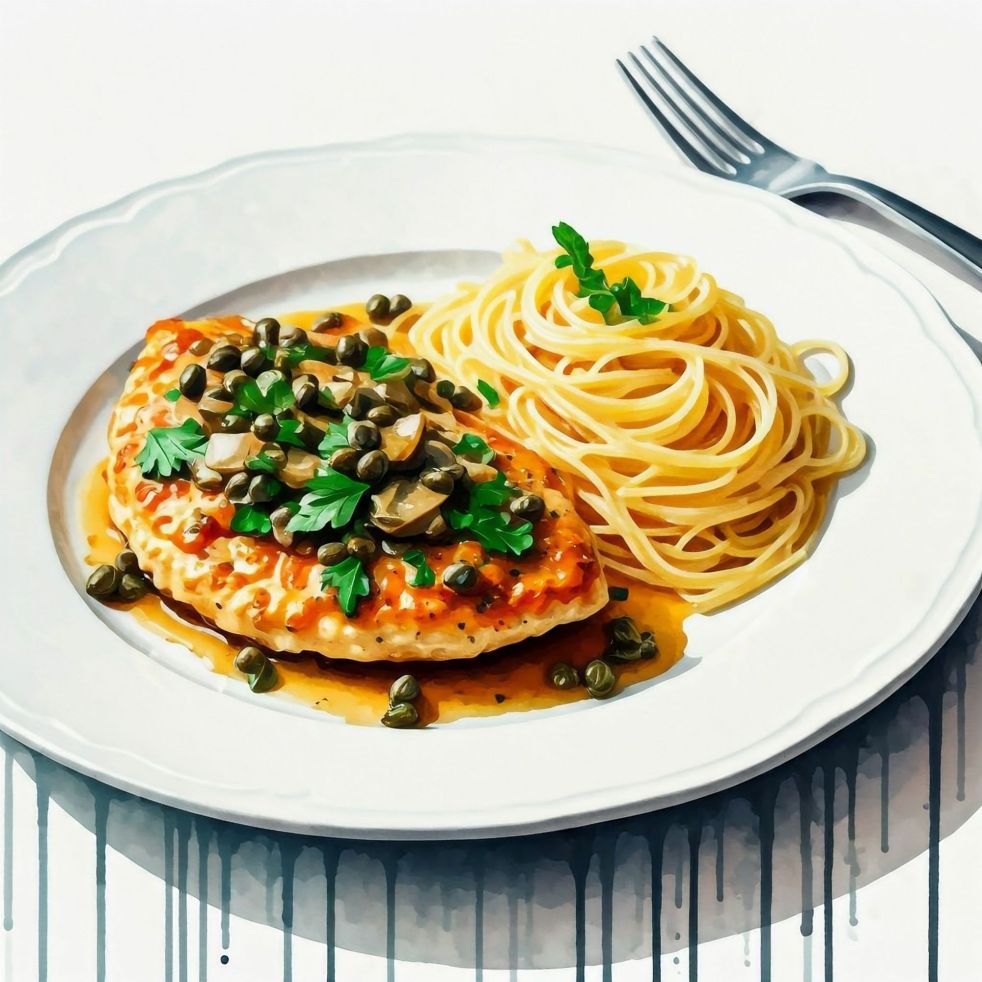
Chicken Piccata

I’m a creature of habit. Whenever we dine out at a fancy restaurant, I always find myself drawn to one of three dishes: a hearty braised beef, a delicate salmon, or a classic Chicken Piccata. While these restaurants certainly know how to elevate these dishes, I’ve learned that I don’t need a Michelin-star chef to enjoy a delicious plate of Chicken Piccata. In fact, this elegant dish is surprisingly simple to make at home.

Ingredients:

Chicken Piccata | lookingjoligood.blog
  • 4 boneless, skinless chicken breasts, pounded thin
  • 1/2 cup all-purpose flour
  • 1/4 teaspoon salt
  • 1/4 teaspoon black pepper
  • 2 large eggs, beaten
  • 1/2 cup breadcrumbs
  • 2 tablespoons olive oil
  • 1/4 cup butter
  • 1/4 cup all-purpose flour
  • 1 cup chicken broth
  • 1/2 cup dry white wine
  • 1/4 cup fresh lemon juice
  • 2 tablespoons capers, drained
  • 1/4 cup chopped fresh parsley
  • Prepared pasta or rice

Instructions:

  1. Prepare the chicken: Pounding the chicken thin is a very important step in making this chicken dish taste delightful.
  2. Dredge each chicken breast in flour seasoned with salt and pepper. Dip in beaten eggs, then coat with breadcrumbs.
  3. Cook the chicken: Heat olive oil in a large skillet over medium-high heat. Cook the chicken breasts until golden brown on both sides. Remove from the pan and set aside.
  4. Make the sauce: In the same skillet, melt butter over medium heat. Stir in flour and cook for 1 minute. Gradually whisk in chicken broth, white wine, and lemon juice. Bring to a boil, then reduce heat and simmer until thickened.
  5. Combine and serve: Stir in capers and parsley. Return the chicken to the sauce and cook for a few more minutes until heated through. Serve immediately with pasta or rice.

I love this lemony, caper-topped, and just buttery enough chicken dish! Enjoy your homemade Chicken Piccata!

Laura lookingjoligood.wordpress.com
BOOKS BOOKS BOOKS · Lifestyle

An Overwhelming TBR List: Wanting to Be More Intentional About What I Am Reading

I once knew a woman who bragged about the fact that she never read. I always felt bad for her because she has no idea that she is missing out on so many opportunities for growth, imagination, and connection. Reading opens doors to new worlds, ideas, and perspectives, and I couldn’t help but feel that by avoiding books, she was limiting her ability to expand her mind and experience life in a deeper way. It isn’t just about knowledge, it is about the richness that reading can bring to our lives, and I couldn’t understand why she would choose to forgo that.

I love reading. It’s my escape, my way to learn, and often, my source of comfort. I use Goodreads to keep track of the books I have read and the books that I want to read. I currently have 742 books on my “To Be Read” (TBR) list. That is an insane number of books. With every new book I hear about, I add it to the list, thinking, “I’ll get to that one day.” But for some books that day has never come, and I’m left with a list that grows longer by the week. What started as an enjoyable hobby has turned into an overwhelming list. There are just too many options, and the pressure to read it all can seem impossible.Although, not so humble brag, but since 2012 when I started intentionally reading more, as well as keeping track of the books I read, I have read an astounding 927 books! Even with such a high number of books read, there are so many more that I want to read…742 to be exact.

I realized that I need to step back and approach my TBR list more intentionally, rather than letting it control me. I enjoy reading, but I also enjoy checking things off of a list. So, I’ve started reflecting on how to be more thoughtful about the books I choose and, more importantly, how to be more selective about the books I add to the list in the first place.

Understanding the Overwhelm

reading books | lookingjoligood.blog

The first thing I had to do was admit to myself that my TBR list had become a bit of a problem. I added books because they were recommended by friends, because I saw them on social media, or because they seemed like the “right” books to be reading at the time. But the truth is, I wasn’t always in the mood for them, or they didn’t even align with what I was interested in anymore. My TBR had turned into a hodgepodge of random titles with no real purpose. I have grown and changed so much since I started that list in 2012, I have started looking through my TBR list and removing books that no longer align with who I am. I started by taking a hard look at what was on the list. Why had I added each book? Did it still spark my curiosity? Was it something I actually wanted to read right now? I still have more purging to do, but I have already removed a good number of books from my TBR list.

1. Setting Clear Intentions

I’ve started to think about what I really want from my reading. Am I looking to learn something new? Am I seeking a way to escape for a while? Setting clear intentions has helped me narrow down the books I actually want to dive into. For example, as I work on my Master of Science in Nursing (MSN) I’m currently drawn to books that explore population public health, so I’ve been prioritizing those. And when I’m in the mood for fiction, I know exactly what genres or authors to go for, instead of just adding random recommendations that don’t really resonate with me.

2. Prioritizing Books That Fit My Current Needs

Lately, I’ve realized how much easier it is to enjoy a book when it aligns with what’s going on in my life. If I’m going through a stressful period, I might choose something comforting or lighthearted. If I’m feeling more introspective, I’ll reach for a self-help or memoir. Being more intentional with my choices means I’m not just reading for the sake of reading, I’m reading what feels right for me at the moment. If I am feeling anxious or there is a lot going on, I am not going to be able to focus on a book that requires deep concentration or emotional investment. In those moments, I need something lighter or more soothing, perhaps a comforting novel I’ve read before or a book with simple, engaging prose. When my mind is scattered, the last thing I want is to feel frustrated by a complex plot or heavy themes. Instead, I want a story that can hold my attention without overwhelming me, something that lets me escape for a while without demanding too much of my mental energy.

3. Letting Go of Book FOMO

There’s a big part of me that wants to keep up with the latest trends and read the books everyone is talking about. But I’ve come to realize that I don’t need to read everything that’s popular. There’s no need to succumb to the pressure of reading what everyone else is reading just because it’s trending. I can read at my own pace, and if a book feels like it will bring me joy or insight, I’ll read it when I’m ready. Some people enjoy buying books and building their library, I prefer to borrow books from the library and have no problem waiting for a book that is on hold from the library. For me, there’s something satisfying about the anticipation of a book being available, knowing I’m part of a community of readers sharing the same space. It’s also a way to keep my collection from growing too large, which helps prevent the feeling of being overwhelmed by shelves full of unread books. Borrowing books also allows me to explore new genres and authors without the commitment of owning them, making my reading experience feel more fluid and flexible.

4. Embracing the Joy of Rereading

I used to feel like I always had to be reading something new, but I’ve started to embrace the idea of rereading books that I’ve loved in the past. It’s comforting to revisit stories or ideas that I’ve connected with before. Sometimes, I’ll pick up a book I’ve already read because I know it will bring me a sense of peace or spark new reflections. There’s no shame in rereading, it’s a way to deepen my connection to a book I know brings me value.

“A person who reads the same book twice is not the same person.” This idea reflects the notion that as we grow and change, our perspectives and interpretations evolve. Each time we revisit a book, we bring new experiences and insights to it, so even though the words on the page remain the same, the way we understand them can be entirely different. This speaks to how both the reader and the book can change over time, making each reading a unique experience.

5. Allowing Flexibility

Life changes, and so do my reading moods. Some books that seemed interesting six months ago don’t appeal to me now, and that’s okay. I’ve learned not to force myself to read something just because it’s on the list. If it doesn’t feel right, I’ll put it aside. I want to read books that excite me, not feel like I’m ticking boxes on an endless checklist.

I have a feeling that being more intentional about what I read will make a huge difference. I feel more connected to the books I’m choosing, and reading feels like something I want to do, not something I have to do. By focusing on what truly matters to me at this moment, I’ve been able to turn my TBR list from an overwhelming pile into something manageable and enjoyable. I’m going to savor my reading experiences rather than rushing through books just to cross them off.

The books I recommend that I have already read in 2025

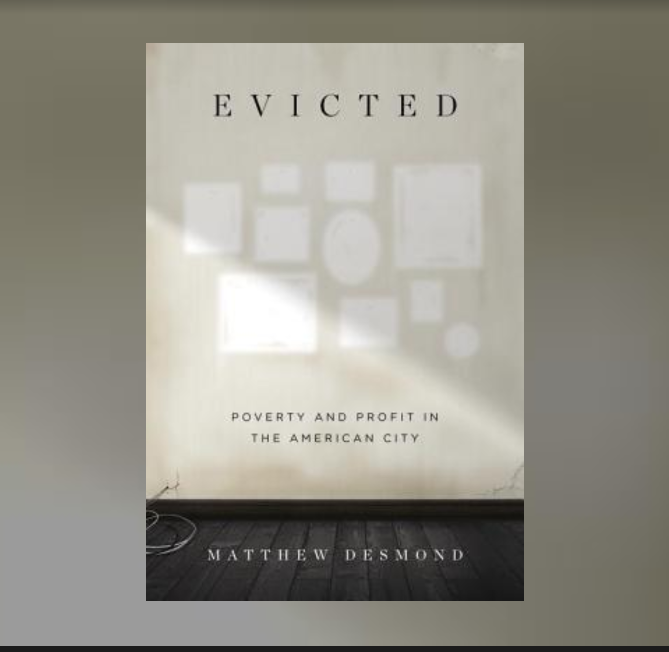
Evicted: Poverty and Profit in the American City by Matthew Desmond**
Just Mercy by Bryan Stevenson**
The Midnight Feast by Lucy Foley**

In case you are interested, here is a list of the top 10 books I read in 2024:

Yellowface by R.F. Kuang
Cloud Cuckoo Land by Anthony Doerr
The Goldfinch by Donna Tartt
The Dutch House by Anna Patchett
The Paris Agent by Kelly Rimmer
The Women by Kristin Hannah
The House of Eve by Sadeqa Johnson
The Lovely War by Julie Berry
The Night Tiger by Yangsze Choo
Here One Moment by Laine Moriarty

Personally, I prefer to I borrow the books I read from the library, but when I do buy books I like to check out Thriftbooks.com

Laura lookingjoligood.wordpress.com

**An affiliate link is a unique URL provided by an affiliate program or network to their partners, such as bloggers or website owners. When someone clicks on an affiliate link and makes a purchase or completes a desired action, the affiliate partner earns a commission or other form of compensation. These links are specifically tracked to attribute sales or conversions generated through the partner’s promotional efforts. In summary, an affiliate link is a specialized link that allows partners to earn commissions by driving traffic and sales to a particular product or service.**

Lifestyle

Housing as a Human Right: Maslow’s Hierarchy Meets Matthew Desmond’s Evicted: Poverty and Profit in the American City

From Pages to Purpose: How Evicted Transformed My View of Public Health | lookingjoligood.blog

As I wrote in a previous post, Matthew Desmond’s Evicted: Poverty and Profit in the American City is a powerful exploration of housing insecurity and its far-reaching effects on individuals and families. Through his ethnographic study of eight families in Milwaukee, Wisconsin, Desmond captures the relentless struggles of people trying to secure the most basic human necessity: a home. As I have finished reading this book for a second time, I continue to think about how it provides more than just a window into their lives; it underscores a broader truth about the foundational role housing plays in human well-being. As I think about the families in this book, I keep coming back to thoughts outlined in Maslow’s Hierarchy of Needs. By examining the interplay between housing insecurity and Maslow’s framework, it becomes evident that stable housing is essential not only for survival but also for achieving higher levels of personal and societal development.

Maslow’s Hierarchy of Needs, a psychological theory proposed by Abraham Maslow, is often depicted as a pyramid with five levels. The first two levels, physiological needs (such as food, water, and shelter) and safety needs (security, stability, and protection), form the foundation. These must be met before individuals can focus on higher-level needs, including belongingness, esteem, and ultimately, self-actualization. Desmond’s work reveals how housing insecurity disrupts this progression, trapping individuals and families in a cycle where they can barely address their basic needs, let alone aspire to personal growth and fulfillment.

Looking at the pyramid of Maslow’s Hierarchy of Needs, the families featured in Evicted are constantly battling to meet their physiological and safety needs. For Arleen, a single mother, the inability to secure stable housing means frequent moves and evictions, which prevent her from providing consistent shelter for her children. Her story highlights how the lack of a stable home undermines even the most fundamental aspects of life. When people are consumed with finding their next place to sleep, other needs—such as nutrition, employment, and education—are often neglected. As Desmond points out, the loss of housing creates a ripple effect, leading to job loss, health crises, and educational disruptions, further destabilizing families and communities.

“You can only say ‘I’m sorry, I can’t’ so many times before you begin to feel worthless, edging closer to the breaking point. so you protect yourself, in a reflexive way, by finding wayto to say”No, I won’t.’ I cannot help you. So, I will find you unworthy of help.” (Desmond, 2016, p 241)

In Evicted, housing insecurity is shown to have a profound impact on Arleen Bell’s young son, Jafaris, and his asthma. Maslow’s hierarchy of needs emphasizes the importance of stable, safe living conditions for meeting basic physiological and safety needs. Frequent moves, exposure to substandard housing, living in shelters, and the stress associated with housing instability significantly exacerbate his Jafaris’s asthma. Poor living conditions, such as mold or poor ventilation, contribute to environmental triggers, while disrupted routines and limited access to healthcare prevent effective asthma management. Additionally, the loss of Jafaris’s breathing machine due to the family’s unstable situation delays and prevents timely treatment, further complicating his condition. This cycle of instability highlights how unmet basic needs can lead to worsened health outcomes, particularly for vulnerable children like Jafaris.

Safety needs, the second level in Maslow’s hierarchy, are also profoundly compromised by housing instability. Many tenants in Evicted live in fear of landlords, eviction notices, and the threat of homelessness. Arleen living in dilapidated conditions, exemplifies how the lack of secure housing erodes a sense of safety and control. Without a stable environment, individuals cannot establish the security necessary to build relationships, pursue goals, or maintain mental well-being. Desmond’s research illustrates how eviction and housing insecurity perpetuate chronic stress, which has long-term implications for physical and mental health.

Maslow’s Hierarchy of Needs | lookingjoligood.blog

Arleen’s struggles provide another poignant example of how housing insecurity disrupts the hierarchy of needs. Arleen, struggling with poverty and homelessness, sometimes lashed out at her children. The book describes instances where she became short-tempered and even cruel, often blaming them for her own frustrations and the hardships they faced. Desmond suggests that Arleen’s harsh behavior stemmed from her own despair and the overwhelming burden of poverty.It was easier for her to direct her anger toward her children than to confront the harsh realities of their situation, the lack of resources, and the constant struggle to survive. This dynamic highlights how unmet physiological and safety needs can compromise an individual’s ability to meet emotional and relational needs, such as providing love and support to their family. When basic survival consumes all of a person’s energy, nurturing relationships and emotional stability often fall by the wayside. Over time, this neglect can perpetuate a generational cycle, as children raised in such environments may struggle to develop the emotional resilience and resources needed to break free from the same patterns of instability and deprivation. This underscores the profound impact of systemic poverty and housing insecurity on both immediate family dynamics and long-term generational outcomes.

Beyond the immediate impact on physiological and safety needs, housing instability also obstructs progress toward higher-level needs such as belongingness and esteem. Maslow’s theory emphasizes the importance of social connections and community for emotional well-being. However, frequent evictions and transience sever ties to neighborhoods, schools, and support networks. Arleen’s repeated displacements make it difficult for her children to form lasting friendships or excel in school, denying them a sense of belonging. Meanwhile, the stigma associated with eviction and poverty diminishes self-esteem, leaving individuals feeling marginalized and powerless.

The pinnacle of Maslow’s hierarchy, self-actualization, remains out of reach for those mired in housing insecurity. Self-actualization involves achieving one’s full potential and engaging in creative, meaningful pursuits. For the families in Evicted, however, the constant struggle to meet basic needs leaves little room for personal growth or self-discovery. Desmond’s narrative makes it clear that systemic barriers, such as exploitative landlord practices and inadequate housing policies, prevent individuals from escaping the cycle of poverty and realizing their potential.

There is no one-stop easy solution to the housing crisis. Desmond’s proposed solution—a universal housing voucher program—aligns with Maslow’s framework by addressing the foundational needs of shelter and safety. By ensuring access to stable and affordable housing, such a program would create the conditions necessary for individuals and families to focus on higher-level needs. Stable housing not only provides a physical structure but also fosters a sense of security, community, and dignity, enabling people to pursue education, build relationships, and achieve their aspirations.

Evicted serves as a poignant reminder that housing is far more than a physical structure; it is the cornerstone of human well-being. Maslow’s Hierarchy of Needs provides a valuable lens through which to understand the profound impact of housing insecurity on every aspect of life. Desmond’s work challenges readers to consider the moral and societal imperative of addressing housing inequality, not just as a matter of policy but as a matter of human dignity. By recognizing the essential role of stable housing in fulfilling human potential, we can take meaningful steps toward a more equitable and compassionate society.

Reference:

Desmond, M. (2016). Evicted: Poverty and profit in the American city. Crown Publishers.

Maslow, A. H. (1954). Motivation and personality. Harper & Row.

Click HERE to order your own copy of  Evicted: Poverty and Profit in the American City**

Laura lookingjoligood.wordpress.com

**Affiliate link HERE

Non affiliate link click HERE

**An affiliate link is a unique URL provided by an affiliate program or network to their partners, such as bloggers or website owners. When someone clicks on an affiliate link and makes a purchase or completes a desired action, the affiliate partner earns a commission or other form of compensation. These links are specifically tracked to attribute sales or conversions generated through the partner’s promotional efforts. In summary, an affiliate link is a specialized link that allows partners to earn commissions by driving traffic and sales to a particular product or service.**