
Finding Faith Following Fundamentalism · Love and Life

Zero Sum Game Belief: A Paradigm Worth Challenging

Abstract/TL;DR: The zero-sum game belief is the mindset that assumes resources and opportunities are fixed, leading to a competitive and scarcity-based mentality. However, not everything is a zero-sum game, and positive-sum thinking offers a more empowering alternative. Positive-sum outcomes occur when everyone involved can benefit, and collaboration leads to innovative solutions. Overcoming the zero-sum game belief involves awareness, cultivating abundance and gratitude, adopting a growth mindset, building trust, and surrounding oneself with positive-sum thinkers. This shift in mindset can enhance decision-making, relationships, and overall outlook on life.

zero-sum game belief | lookingjoligood.blog

I wanted to share something fascinating that I recently learned and it completely changed my perspective on decision-making and how I perceive opportunities and life situations in general. It’s all about this concept called the “zero-sum game belief.”

You know how sometimes we tend to think that if someone else gains something, it automatically means that we lose out? Well, that’s what the zero-sum game belief is all about. It’s this mindset where we assume that resources are fixed, opportunities are limited, and that success for one person must come at the expense of another.

But here’s the mind-blowing part, it turns out that not everything is truly a zero-sum game. While there are situations where this dynamic exists, like in competitive sports or specific economic transactions, it doesn’t hold true for every aspect of life.

I’ve come to realize that this belief can be quite limiting. It can lead us to view everything as a competition, constantly comparing ourselves to others and feeling threatened by their successes. It creates a sense of scarcity and fosters an environment where collaboration and cooperation take a backseat. (Us vs them mindset)

There’s an alternative mindset called positive-sum thinking, and it’s incredibly empowering. Positive-sum outcomes occur when everyone involved can benefit, and the total gains surpass the total losses. It’s about recognizing that resources can be created, opportunities can be expanded, and collaboration can lead to innovative solutions that benefit all parties involved.

Let’s look at a situation from my own life that I have previously spoken about:

In my former community, there was a woman who, driven by her own struggles with competitiveness, insecurities, and social awkwardness, viewed my friendly nature and ease in social situations, among other things, as a threat. It is important to note that I, too, had my own zero-sum game mindset at that time. I saw her as competition and believed that for me to win, she had to lose. This mindset only fueled the negativity and tension between us.

Instead of embracing the opportunity to learn from one another and grow together, we both fell into a pattern of undermining each other’s confidence and trying to make the other feel inadequate. It was a toxic cycle that fed off our insecurities and created a hostile environment.

zero-sum game belief | lookingjoligood.blog

Looking back, I realize that had we both let go of our zero-sum game thinking, our interactions could have been so different. We could have supported and uplifted each other, celebrating our unique strengths and learning from our differences. We might have even been able to stay friends, finding common ground and helping each other overcome our respective struggles.

It’s a lesson I’ve learned since then, recognizing the destructiveness of a zero-sum game mindset and striving to approach relationships and interactions with a more collaborative and supportive mindset.

By embracing positive-sum thinking, we open ourselves up to a world of possibilities. Instead of feeling threatened by others’ successes, we can focus on our own growth and development. We can seek out opportunities for collaboration, tap into collective strengths, and create win-win situations.

So how do we overcome this zero-sum game belief? It starts with awareness. We need to recognize when we’re falling into that mindset and consciously challenge it. We can question the assumptions that everything is limited and that someone else’s success automatically means our failure.

zero-sum game belief | lookingjoligood.blog

We can cultivate a sense of abundance and gratitude for what we have, appreciating the opportunities available to us. Instead of seeing setbacks or challenges as failures, we can view them as opportunities for growth and learning. We can adopt a growth mindset, where we believe that our success is not dependent on someone else’s failure, but rather on our own efforts and continuous improvement.

Building trust and fostering positive relationships are also key. When we trust others and believe in their good intentions, collaboration becomes easier. We can work together, combining our strengths and expertise to achieve outcomes that benefit all parties involved.

Lastly, surrounding ourselves with people who embrace positive-sum thinking can have a profound impact. When we engage in conversations, read books, or listen to podcasts that promote a growth mindset and collaboration, it reinforces our own mindset shift. I’m really excited about this new perspective, and I believe it has the potential to enhance my decision-making, relationships, and overall outlook on life.

lookingjoligood.wordpress.com

I would love for you to follow me on InstagramTwitterPinterest, and Facebook. You can find me as Looking Joli Good on all four.

Lifestyle · Love and Life

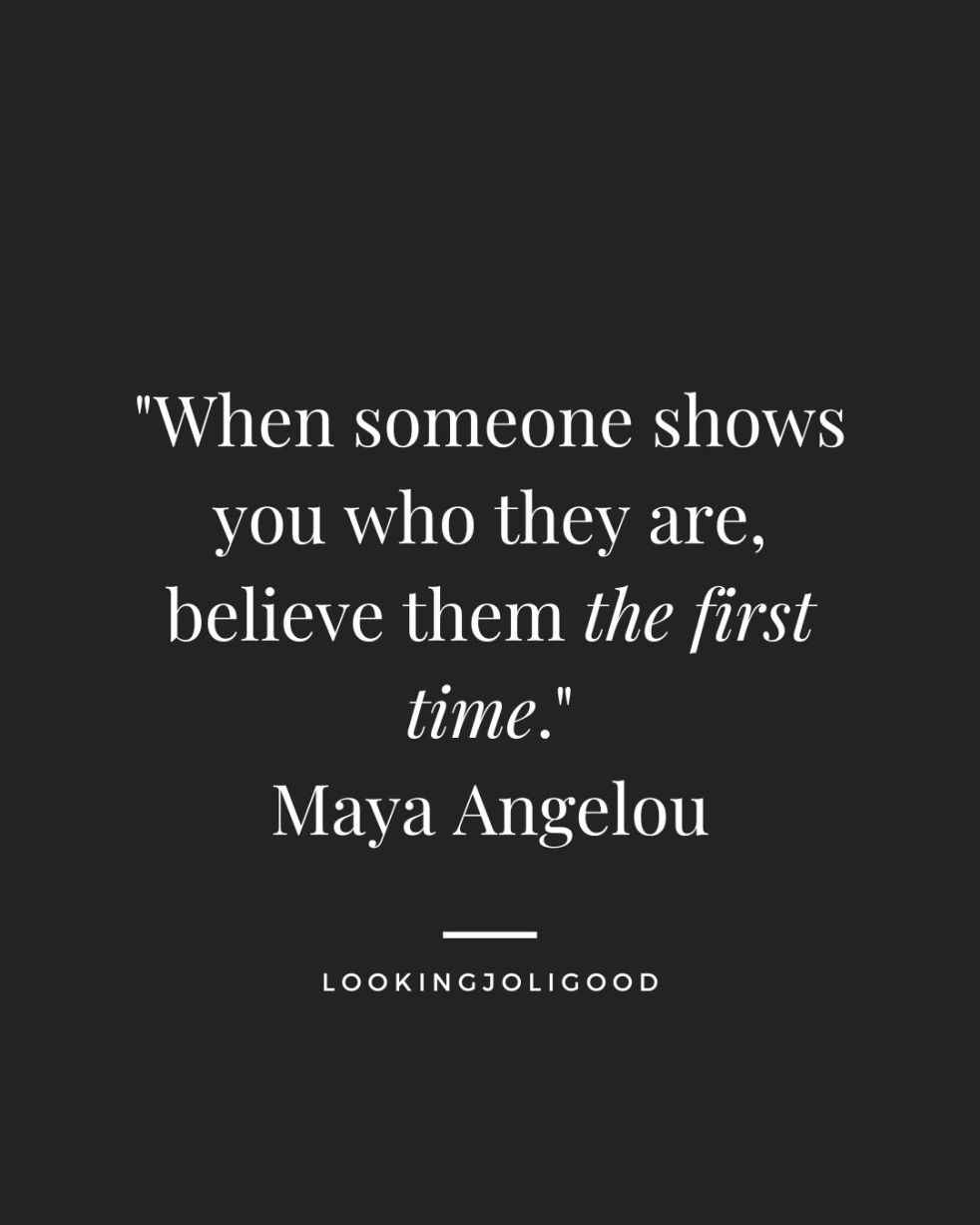
“When someone shows you who they are, believe them the first time.” How Maya Angelou Lead Me To Setting Boundaries

Maya Angelou said, “When someone shows you who they are, believe them the first time.” I am all for giving people the benefit of the doubt and giving them second chances, I’m thankful for the second chances I have been given, but if someone consistently displays negative traits or hurts us with their actions, we shouldn’t ignore the signs or make excuses for them. Trusting their true nature can save us from unnecessary pain and help us make healthier choices in our relationships.

I have had many personal experiences where I have learned the hard way about the importance of this quote. Let me share one in particular. Initially, the person I spent time with seemed genuinely nice and friendly, however, as time passed, they continuously asked more and more from me. They made requests I didn’t want to fulfill, and it seemed like they didn’t truly value my time or our friendship; it felt as though I was more of an unpaid employee than a friend. Despite their actions, I kept giving them second chances, hoping that things would eventually improve. They did not.

maya angelou | lookingjoligood.blog

Sometimes, they showed kindness and thoughtfulness, which added to the confusion. But deep down, my intuition told me something was off. Clear signs of their true nature were evident, yet I brushed them aside, believing I could handle their behaviors. While they weren’t a bad person, our priorities significantly differed. I began to feel overwhelmed whenever I knew I’d be interacting with them.

Then, something happened that was the last straw. The constant drip, drip, drip of disappointments and hurtful actions reached its peak. It was as if all the warning signs were shouting at me, urging me to believe what I had seen from the beginning. I finally realized that Maya Angelou was right all along. I had seen who they really were from the beginning, but I chose not to believe it. I kept holding onto the hope that things would change, but it wasn’t meant to be.

I must acknowledge that I wasn’t blameless in this situation. Dealing with an overwhelming amount of difficult life circumstances at the time, I’m certain I didn’t handle everything in the best way possible. My own struggles and emotions influenced how I reacted to the events around me. While it doesn’t excuse the hurtful behavior I experienced, it’s essential for me to take responsibility for my part in the dynamics of that relationship. Recognizing my own flaws and learning from those experiences has been an important step in my personal growth and in navigating healthier connections in the future.

After that experience, I learned to trust my gut and pay attention to people’s actions. I don’t rush to judge anyone, but I’ve become more cautious about who I let into my life. If someone consistently shows me that they can’t be trusted or that they don’t value our relationship, I take it seriously.

This quote from Maya Angelou serves as a reminder to respect ourselves and our feelings. It’s okay to let go of toxic relationships, even if it hurts at first. We deserve to be surrounded by people who truly care about us and show it through their actions. So, now I try my best to believe people when they show me who they are, without ignoring the warning signs. It’s a lesson I won’t forget, and it has helped me grow and find more meaningful connections in my life.

After that experience, I realized the importance of setting boundaries in my relationships. It was an important lesson I learned, and it changed the way I approached my connections with others. Setting boundaries means knowing and communicating what’s acceptable and what’s not in our relationships, and it’s essential for maintaining our well-being and self-respect.

Sometimes we end up letting ourselves get hurt and upset because we care deeply about not hurting or upsetting others. We want to be kind and avoid conflicts, so we end up putting our feelings aside. Possibly we don’t want to rock the boat and keep everything smooth and peaceful. But the thing is, holding back our emotions can take a toll on us, and we might end up feeling neglected or unimportant. Finding the courage to express how we feel without being confrontational is important for our well-being. We need to remember that our feelings matter too, and it’s okay to let others know what’s going on with us. Striking that balance between being considerate of others and taking care of ourselves is worth undertaking for healthier relationships and our own happiness.

boundaries | lookingjoligood.blog

A book that has been instrumental in helping me set healthy boundaries is incidentally called “Boundaries” written by Dr. Henry Cloud and Dr Townsend. Reading this book was absolutely an eye-opener for me. Their insights and practical advice really resonated with my own experiences, and it helped me see the importance of defining healthy limits in all aspects of my life.

The book highlights the significance of recognizing our personal limits and how it’s okay to say “no” when something doesn’t align with our values or makes us uncomfortable. It gave me the courage to put myself and my family first and prioritize my well-being without feeling guilty about it.

Learning about setting boundaries also allowed me to understand that it’s not only about protecting myself from harmful relationships but also about adopting healthier and more meaningful connections. By setting clear boundaries, I found that I could build trust and respect with the people who truly valued and understood my needs.

This book offered practical tips on how to communicate boundaries effectively and how to handle situations when others might push back. It taught me that it’s okay to stand firm in my boundaries, even if it means walking away from toxic relationships.

maya angelou | lookingjoligood.blog

Combining the wisdom from Maya Angelou’s quote, the lessons from “Boundaries,” and my own personal life experiences, I started to approach my relationships with a more confident and self-aware mindset. I’ve become better at recognizing when someone’s actions don’t align with their words, and I’m more assertive in communicating my boundaries.

Setting boundaries is not about attempting to control another person’s actions. Instead, it’s about making a conscious choice regarding what I am willing to accept concerning those actions. By establishing clear boundaries, I define the limits of what is acceptable and what is not in our relationship. It’s a way of prioritizing my own well-being and self-respect without seeking to impose my will on others. Boundaries enable me to communicate my needs and values, encouraging healthier connections and mutual understanding.

“The people who get upset when you set boundaries are the ones who benefited from you having none.” This quote emphasizes that when we establish boundaries in our relationships, especially with people who were used to taking advantage of our lack of boundaries, they might react negatively or feel upset about the change. Setting boundaries can disrupt the dynamics that allowed them to benefit from our lack of limits, and they may not be comfortable with this shift. However, despite their reaction, it’s important to prioritize your well-being and maintain healthy boundaries for ourselves.

Setting boundaries has not only improved my relationships but has also helped me grow personally. It’s empowering to know that I have control over who I let into my life and how I let them treat me. I’m grateful for the lessons learned and for the tools I gained from the book Boundaries, as they’ve been instrumental in creating healthier, more fulfilling connections with others.

Laura lookingjoligood.wordpress.com

Disclaimer: I am still a work in progress. As I navigate through life, I acknowledge that I have areas to improve, particularly when it comes to setting boundaries and trusting my instincts. I recognize that I am not perfect, and the people I interact with and build relationships with are also on their own journeys of growth and progress. As we all continue to learn and evolve, I am committed to being more self-aware and open to understanding my own limitations and flaws. My aim is to grow healthy connections, while also allowing room for understanding and compassion for both myself and others, as we each strive to become the best versions of ourselves.

boundaries | lookingjoligood.blog
Finding Faith Following Fundamentalism · Love and Life

A Lightbulb Moment: Do Not Let Others Diminish Your Worth, Refusing to Accept Projected Negativity.

TL;DR: When someone offers you a gift and you choose not to accept it, the gift remains with the giver. Similarly, when someone tries to bring you down with their negativity and you don’t allow it to affect you, their negativity remains theirs. By refusing to internalize their toxic energy, you retain control over your emotions and maintain your self-worth. Taking responsibility for our own behavior and creating a positive space is essential in dealing with destructive emotions like jealousy and fostering unity and trust.

I recently had a significant realization, a true lightbulb moment, and I’m excited to share it with you! It’s something I’ve learned that has made a profound impact on me: When someone gives you a gift and you choose not to accept it, the gift still belongs to the person who offered it. By declining the gift, you are indicating that you do not wish to possess or take ownership of it. Therefore, the gift remains the property of the giver unless they decide to offer it to someone else or take it back.

The same is true when someone tries to bring you down with their negativity and you don’t allow it to affect you, the impact and ownership of their negativity remain with them. By refusing to internalize their negative words or actions, you are essentially declining to accept their toxic energy. Just like the unaccepted gift, their negativity continues to belong to them. It doesn’t become a part of you or define your worth. Instead, they are left holding onto their own negativity, while you retain control over your own emotions and maintain a sense of self-worth independent of their attempts to bring you down.

light bulb moment | lookingjoligood.blog

Let me share an example from my own life as I understand the situation. In my former community, there was a woman who, driven by her own struggles with competitiveness, insecurities, and social awkwardness, viewed my friendly nature and ease in social situations, along with other things, as a threat. In response, she attempted to undermine my confidence and make me feel inadequate for possessing these positive qualities that came naturally to me.

While I was initially unaware of her feelings, unfortunately, her jealousy began to seep into her interactions with me and she also actively attempted to negatively alter others’ perception of me. This occurred during a particularly rough period of my life, reflecting on that challenging time, I must honestly admit that I didn’t respond with the maturity and kindness that I should have. I have to take ownership of my own shortcomings in this situation. However, as I look back, I realize that had I simply refused to internalize her attempts to make me feel bad about myself, she alone would have been left with the negativity she intended to impose on me.

Looking back with this new perspective, had I rejected their toxic energy, and maintained control over my emotions and preserve my sense of self-worth I could have saved myself a lot of heartache and frustration. This experience sheds light on the destructive nature of jealousy, revealing its ability to erode unity and trust among peers.It’s important for me to remember that I am not responsible for the negative actions of others. However, I recognize the need to take responsibility for my own behavior and contribute to establishing a positive space for myself and those around me.

Disclaimer: It is important to understand that hurt people often have a tendency to hurt others. While this statement provides some insight into certain behaviors, it does not excuse or justify any form of harm inflicted upon others. It serves as a reminder to approach individuals with compassion and empathy, recognizing that their actions may stem from their own unresolved pain and struggles. Nonetheless, it is crucial to prioritize the well-being and safety of oneself and others, promoting healing and fostering healthy relationships.

Laura lookingjoligood.wordpress.com
Finding Faith Following Fundamentalism · Love and Life

Abuse of Power Dynamics and Spiritual Manipulation at Places of Worship

Abstract/TL;DR: Power dynamics in churches can influence interactions and decisions within the community. When power is misused, it can lead to negative actions and behaviors, including spiritual manipulation and abuse. Victims may hesitate to speak out due to fear and the culture of secrecy within the church. Recognizing and addressing power dynamics, manipulation, and abuse is essential for creating safe and supportive church communities that prioritize the well-being of all members. Restoring the true values and teachings of love and respect is crucial for healing and justice.

*Please note the disclaimer below

Content WarningI may not cover all of these things in detail, you might feel triggered by the content of this post.
CW: religious trauma, spiritual abuse, physical abuse, SA, guilt and shame, emotional manipulation, loss of community, and fear of rejection

Whether we are discussing the Catholic church, Mark Driscoll and Mars Hill, Bill Gothard and the ILBP, the Southern Baptist Convention, or any one of the several Hillsong church scandals, or, in my experience, within the Independent Fundamental Baptist (IFB) religious institution, it is unfortunate that the subject of church leaders abusing their congregants has become so prevalent in the news.

Let’s start by talking about what power dynamics mean: Power dynamics determine who has power and control in relationships and social settings. Understanding them helps us see how power affects interactions and decisions. It shows how power can be used positively or negatively and its impact on individuals and communities.

In a church, power dynamics also involve spiritual control and authority. Leaders like pastors or priests hold significant power, making important decisions and guiding the church. Other influential people within the church community may include board members, deacons, elders, and Sunday school teachers. Power distribution can vary among churches, with some emphasizing equal sharing of power among members and others having a more centralized power structure.

Power dynamics in churches can be complex and complicated. While not all churches operate in the same way, I can share from my personal experience that power dynamics within a churches can sometimes lead to negative actions and behaviors, especially when combined with spiritual manipulation. This occurs when individuals in positions of authority misuse their power to control or exploit others. They may manipulate religious beliefs, practices, or teachings to influence people’s thoughts, actions, or emotions for their own benefit.

This behavior is deeply concerning because it not only affects people’s emotional well-being but also undermines the trust we place in the church, and the very foundation of our faith and belief system. When power is misused in this way, it can create confusion, guilt, and even lead to the loss of faith for some individuals.

In some cases, power dynamics within the church can discourage questioning or challenging authority, creating an environment where abusive behavior can occur. Perpetrators may exploit their position of authority to exert control over others, enabling them to engage in abusive actions. Victims often hesitate to speak out or report the abuse due to fears of potential consequences, such as social exclusion or disbelief. This fear-induced silence allows the abusers to continue their harmful behavior without facing accountability.

The power imbalance exacerbates the potential for abuse, as victims may feel intimidated or believe it is inappropriate to question those in positions of power. Abusers may distort or misuse religious teachings to justify their abusive actions or manipulate victims into compliance. They might manipulate religious beliefs, such as emphasizing forgiveness or submission, to silence victims or discourage them from seeking help.

Power imbalances can lead to a culture of secrecy and protection within the church. Leaders or community members might prioritize maintaining the reputation of the church or protecting the abuser over the well-being and safety of victims. This can prevent the disclosure of abuse and hinder the process of seeking justice.

Though it is important to note that not all religious leaders are abusers, the actions of those who engage in abusive behavior can unfortunately tarnish the reputation of the entire community.

In my experience within IFB religious institutions, I have witnessed how power dynamics can have detrimental effects. Within the church hierarchy, certain individuals hold positions of authority and control, which can lead to a misuse of power. This manipulation can result in hurt and harm to those within the community. For instance, I have seen church leaders use their authority to silence dissenting voices, discourage critical thinking, and enforce strict legalistic adherence to their interpretations of doctrine. This not only stifles individual autonomy but also creates an environment where questioning or expressing concerns is discouraged. As a result, manipulation and hurt can thrive, leaving many feeling marginalized and voiceless within the community they once trusted.

One significant issue I’ve observed is the breach of confidentiality within trusted counseling relationships. It is disheartening to witness people who are sought for guidance and support betray the trust placed in them by sharing confidential information. This breach of confidentiality not only undermines the sense of safety and privacy that should accompany counseling, but also leads to a breakdown in trust within the community. Such actions further perpetuate a cycle of manipulation, hurt, and a reluctance to seek help when it is truly needed. It is imperative that religious institutions emphasize and uphold the ethical standards of confidentiality, ensuring that individuals can confide in trusted counselors and leaders without fear of their personal struggles being divulged to others.

Recognizing and addressing power dynamics, spiritual manipulation, and abuse within religious institutions is crucial for fostering healthy, inclusive, and supportive communities. We need to create places where everyone feels safe to talk about their concerns and hold leaders responsible, and prioritize the well-being and integrity of everyone in the church community.

We should always focus on taking care of each other and treating everyone with respect. By shining a light on these problems, we can work towards healing, justice, and a restoration of the true values and teachings that are supposed to guide us, such as the greatest commandment to love God and love others as ourselves.

If you or someone you know is experiencing physical or sexual abuse, please reach out for help. There are organizations and helplines dedicated to providing support, guidance, and resources to those in need. No one should have to endure abuse, and seeking assistance is a crucial step towards safety and healing.

Click HERE for a list of helpful resources.

Help! | lookingjoligood.blog

resources for assistance with abuse.

Here are a few of the most well-known organizations and helplines:

The National Sexual Assault Hotline (RAINN): 1-800-656-HOPE (4673)

The National Domestic Violence Hotline (The Hotline): 1-800-799-SAFE (7233)

The National Coalition Against Domestic Violence (NCADV) 800.799.SAFE (7233)

Childhelp USA (Childhelp): 1-800-422-4453

The National Human Trafficking Hotline (NHTH): 1-888-373-7888

The National Center for Missing and Exploited Children (NCMEC): 1-800-THE-LOST (843-5678)

If you have access to a SAFE computer:

The National Coalition Against Domestic Violence (NCADV) https://www.thehotline.org/ provides information and resources on domestic violence, including a state-by-state directory of domestic violence organizations.

Internet usage can be monitored and is impossible to erase completely. If you’re concerned your internet usage might be monitored, call them at 800.799.SAFE (7233). Learn more about digital security and remember to clear your browser history after visiting their website.

The National Center for Victims of Crime (NCVC) provides information and resources on a variety of crime victim issues, including physical and sexual abuse. https://victimsofcrime.org/

The Rape, Abuse & Incest National Network (RAINN) https://www.rainn.org/ also has a number of online resources, including a chat hotline, a library of information, and a blog.

These are just a few of the many organizations and helplines that can provide support to victims of physical and sexual abuse.

In addition to these organizations, there are also many local resources available. You can contact your local police department, hospital, or mental health clinic for more information. If you have access to a safe computer you can also search online for “domestic violence resources” or “sexual assault resources” in your area.

You are not alone. There are people who care about you and want to help. Please reach out for help if you are being abused.

Laura lookingjoligood.wordpress.com

Disclaimer: The experiences shared in this post are based on my personal perspective. While I chose to leave the IFB to find a more gracious and loving community, it is important to acknowledge that individuals may have different experiences and find happiness within the IFB or any other religious institution. My decision to leave the IFB does not imply a loss of faith, as faith is a deeply personal and subjective matter. It is essential to respect and recognize the diversity of experiences and perspectives within religious communities. The content shared is for informational purposes only and should not be construed as professional advice, guidance, or a universal representation of the IFB or any religious organization. It is recommended to seek guidance, conduct research, and consider multiple perspectives when making personal decisions or exploring matters of faith.While I speak from personal experience and perspective, I want to acknowledge that I come from a place of extreme privilege. I understand that I have the means and support to change my situation, which may not be the case for everyone. It is important to recognize that each individual’s circumstances vary, and not everyone has the same resources available to them.

References

Abuser database. (n.d.). https://www.preacherboyspodcast.com/abuser-database#Australia

DeGroat, C. (2022). When narcissism comes to church: Healing Your Community From Emotional and Spiritual Abuse. InterVarsity Press.

Lucey, C. (2021). What is Spiritual Abuse and How Do We Recognize It? Christianity.com. https://www.christianity.com/wiki/church/what-does-spiritual-abuse-within-a-church-look-like.html

Finding Faith Following Fundamentalism · Love and Life

Speak From the Scar, Not the Wound

Abstract/TL;DR: Scars are not just blemishes to be hidden, but reminders of strength and resilience. Speaking from the wound addresses immediate pain but may perpetuate negativity. Speaking from the scar reflects healed wounds, growth, and the ability to overcome adversity. Sharing our stories from a place of healing inspires and uplifts others, offering comfort and guidance. Triumph and growth allow us to find meaning in our suffering.

I recently read a saying “Speak from the scar, not the wound.” These simple yet profound words carry a deep message about resilience, healing, and the power of our experiences.

Sometimes when I see my reflection in the mirror, I can’t help but feel a tinge of pride towards the scars that I see on my body. Each mark tells a unique story— skin stretched and cut for two babies, moments of vulnerability and mistakes, a reminder of the pain endured, a wound healed. I know that these scars are proof that I have lived a life full of meaning and resilience. Scars should not be a source of shame, but rather reminders of strength and resilience.

In life, we inevitably encounter pain and adversity. We face heartbreak, disappointment, loss, and countless challenges that leave us wounded and vulnerable. These wounds may be physical, emotional, or even spiritual, and they can leave lasting marks on our being. However, it is how we choose to approach and navigate these wounds that determines the course of our healing.

Recently while talking with a friend she pointed out something that struck a chord with me. She observed that my words have transformed, that I had ceased speaking from a wounded place and had begun to speak from the wisdom etched within my scars. I have thought about her words since then. I realized that my scars were not just life’s blemishes to be hidden, but rather markers of growth and strength that has the power to inspire and uplift others.

Speaking from the wound signifies addressing our pain in its immediate aftermath when emotions are raw and hurt is fresh. It may involve expressing anger, frustration, or despair. While acknowledging and processing these initial emotions is important, solely speaking from the wound can be impulsive and perpetuate negativity. I’m sad to say that I’ve often been guilty of this.

Speaking from the scar carries a different tone. Scars symbolize healed wounds, resilience, growth, and the ability to overcome adversity. It means drawing on past experiences, lessons learned, and gained wisdom. Speaking from the scar involves reflection, offering insights from a place of strength and healing.

When we speak from the scar, our words carry the weight of resilience and depth of understanding. We empathize and show compassion, having walked the painful path ourselves. Our scars inspire others facing similar struggles.By sharing our stories from a place of healing, we can provide comfort, guidance, and hope to those who are still navigating their wounds.

We are not defined by our wounds but by the strength we have shown in overcoming them. Our wounds, though painful, can serve as catalysts for personal growth and transformation. By sharing our experiences, we give purpose to our pain, as it becomes a source of inspiration for others. Triumph and growth allow us to find meaning in our suffering.

Laura lookingjoligood.wordpress.com

Scars

Scars speak tales of strife and grace,
Lessons learned in life’s embrace.
From wounds to scars, we grow anew,
Speak from their depths, let wisdom ensue.

Finding Faith Following Fundamentalism · Love and Life

There’s More to Life Than Just Looking Good

lokingjoligood.blog

AbstractTL;DR: The pursuit of external beauty consumed me for years, but I’ve come to realize that true beauty extends beyond appearances. Despite societal pressures, I’ve learned that kindness, love, and genuine connections hold far more significance. Embracing my imperfections and celebrating my uniqueness has allowed me to break free from comparisons and love myself fully. While I still have moments of doubt, personal growth and stepping out of my comfort zone are integral parts of embracing life’s beauty. Lasting fulfillment comes from nurturing our inner selves, cultivating meaningful relationships, and pursuing personal growth.

You might find yourself a little confused after reading the title of this post. Perhaps you’re thinking, “What do you mean there’s more to life than just looking good!? But your blog is called ‘Looking Joli Good,’ so isn’t that your main focus?”

In a world fixated on appearances, it’s hard to grasp that life extends far beyond looking good. I’ve personally experienced the weight of this societal pressure, constantly stressing myself out in the shallow pursuit of external beauty and striving for unattainable perfection.

In a world consumed by comparisons and beauty standards, it’s vital to grasp that true inner beauty shines brightest when we stop comparing ourselves to others. Embracing our unique qualities and recognizing our own worth allows us to fully appreciate and nurture the beauty within. It’s like a breath of fresh air, freeing ourselves from comparison and wholeheartedly embracing and loving who we are.

Inner beauty | lookingjoligood.blog

I used to be a part of a religious community that placed a lot of importance on outer appearance and beauty. I felt this constant pressure to always look and dress a certain way. I felt as if my worth was solely determined by my outer appearance. It has taken me forty years, but I’ve come to realize that true beauty goes way beyond what meets the eye. It’s about the kindness we show, the love we spread, and the genuine connections we form. It is about empathy, resilience, and gratitude. It’s about embracing our imperfections and celebrating the uniqueness that makes us who we are.

I must confess, there are occasions when I regress into my old way of thinking. Forty years of ingrained thoughts cannot be switched overnight. However, the important thing is not lingering on those thoughts. Personal growth is a big part of life’s beauty too! Stepping out of our comfort zones, embracing new experiences, and learning from both successes and failures.

While looking good can certainly boost confidence, true fulfillment and happiness stem from nurturing our inner selves, cultivating meaningful relationships, and pursuing personal growth. While external appearances offer fleeting enjoyment, inner peace and beauty bring lasting fulfillment.

lookingjoligood.wordpress.com

Look beyond the surface, don’t be misled,
True beauty resides where kindness is spread.
In a world obsessed with looks, let’s be understood,
There’s more to life than just looking (joli) good.

Love and Life

The Emotional Toll of Watching a Loved One Grow Old and Frail

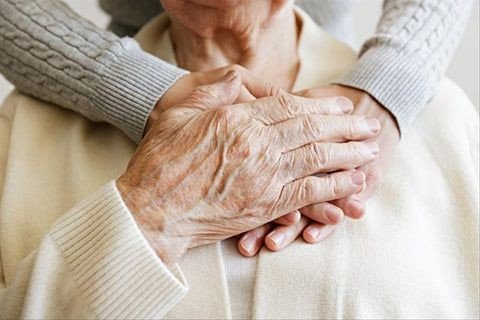
It is painful to see my grandmother failing. She was always such a strong and classy woman, always wearing high heels, hair perfectly curled, lipstick on, ready for a full day of shopping. But now, things have changed. Her health has deteriorated, and she can no longer live on her own.

The Emotional Toll of Watching a Loved One Grow Old and Fail | lookingjoligood.blog

It breaks my heart to see her confined to a nursing home, surrounded by unfamiliar faces and the constant reminder of her limitations. The once vibrant and lively woman has become frail and dependent on others for even the simplest tasks.

Every time I visit her, it’s a bittersweet experience. On one hand, I’m grateful that she’s receiving the care she needs and that there are professionals looking after her. But on the other hand, it’s tough to witness her struggle with her physical and mental decline. I can see the frustration in her eyes when she tries to do something and realizes she can’t.

I try my best to bring some joy into her life during my visits. We reminisce about old times, sharing stories that bring a smile to her face. I bring her favorite donut and coffee, hoping to provide some comfort and familiarity. But deep down, I know that these small gestures can never fully make up for the loss she feels.

nursing home | lookingjoligood.blog

It’s not just the physical decline that hurts; it’s also the realization that she has slowly lost her independence and the life she once knew. The nursing home may be equipped with caring staff and necessary facilities, but it can never replace the warmth and familiarity of her own home, where she lived for decades.

Despite the pain and sadness that comes with witnessing her decline, I am determined to be there for my grandma. I will continue to visit her, hold her hand, and remind her that she is loved and cherished. Even if she may not fully comprehend it, I hope that deep down, she feels the warmth and love that surrounds her. And for as long as she is with us, I will treasure every moment and make sure she knows that she is not alone in this journey. It’s a reminder that we must cherish the moments we have with our loved ones and make the most of the time we have together.

Laura lookingjoligood.wordpress.com
Lifestyle · Love and Life

Navigating the Fine Line Between Sharing Personal Lessons, Reflections, and Connections and Staying Silent

In a world filled with constant communication and a multitude of platforms to express ourselves, finding the right balance between keeping our thoughts to ourselves and sharing them with others can be a real challenge. It’s a struggle I often grapple with. I’ve always found myself caught in a bit of a balancing act when it comes to sharing my thoughts and experiences and holding back for fear of judgment.

It can be incredibly disheartening when someone has tried to diminish our voice or make us feel small. It’s natural to develop a sense of hesitation and reluctance to share our thoughts and experiences after going through such an experience. When someone tries to undermine our voice, it can make us question our own worth and the value of what we have to say. We might start doubting ourselves, thinking that our thoughts aren’t important or that they won’t be well-received by others. It’s a tough situation to be in, and it’s completely valid to feel hesitant about sharing after such an experience.

However, it’s important to remember that the opinions and actions of a few people don’t define the worth of your voice. My thoughts, feelings, and experiences matter, and they have the potential to make a positive impact on others. I won’t let one negative group discourage me from sharing and connecting with others.

I believe that if my own struggles can help someone else feel validated or less alone, then it’s absolutely worth opening up and being vulnerable. After all, what’s the point of going through tough times if we can’t learn from them and lend a helping hand to others? When I’m faced with that decision of whether or not to share, I always ask myself if it can make a positive impact on someone else’s life. I’m not doing it for attention or sympathy; it’s about creating connection and empathy.

Sharing our vulnerabilities can create this beautiful space where others feel safe enough to open up too. It’s all about fostering a sense of community and supporting one another through the ups and downs of daily life.

Finding the right balance between what’s personal and what’s meant to be shared isn’t always easy. It’s a bit like walking a tightrope. I’m learning to listen to my instincts and figure out which stories are meant only to be written down and worked through on the pages of my journal and which ones are meant to be shared with the world. It’s an ongoing journey of self-discovery and learning to trust my own voice.

At the end of the day, I value both my privacy and the opportunity to connect with others. There’s something incredible about knowing that our struggles aren’t isolated incidents. By sharing our experiences, we can create a sense of solidarity and hope. It’s like shining a light on the path for someone else who might be going through a similar journey.

So, as I continue navigating this delicate balance, I hold onto those moments of self-reflection and solitude, where I find calm in the pages of my journal. And at the same time, I embrace the chance to reach out, lend an ear, and remind others that they’re not alone. Because together, we can make the world a little brighter and the struggles a little easier to bear. Thanks for being here to listen to what I choose to share.

lookingjoligood.wordpress.com

I would love for you to follow me on InstagramTwitterPinterest, and Facebook. You can find me as Looking Joli Good on all four.
Lifestyle · Love and Life

Love in Action: The Defining Proof of Genuine Faith

“Your LOVE for one another will PROVE to the world that you are my disciples.” John 13:35

The Bible verse John 13:35 carries a powerful message, it emphasizes the essential aspect of being a disciple of Christ: the demonstration of love towards one another. Love that transcends political affiliations, levels of conservativeness, pro-life stances, fashion choices, or any external characteristics that may divide us.

In today’s world, where divisions and differences seem to abound, it is easy to lose sight of the core principles that Jesus taught. He emphasized the importance of love as a defining characteristic of his followers. Love is meant to be the distinguishing mark of Christians, the evidence that we are truly walking in the footsteps of Jesus.

It is a love that mirrors the selfless and sacrificial love demonstrated by Jesus himself. This love is not selective, only extended to those who share our beliefs or align with our perspectives. It extends to all people, regardless of their backgrounds, beliefs, or appearances.

By loving one another, we display the transformative power of Christ’s teachings. This love speaks louder than political debates, ideological differences, or personal preferences. It breaks down barriers, builds bridges, and brings people together in a profound way.

Our love should be evident in our actions and attitudes. It should be expressed through compassion, kindness, forgiveness, and a genuine desire to help and serve others. It involves treating everyone we encounter with dignity, respect, and empathy. It means actively seeking opportunities to uplift, support, and encourage those around us.

When we choose to love unconditionally, we bear witness to the transformative love of Jesus. Our love should inspire others, drawing them closer to the truth and goodness found in Christ. It should be a beacon of hope in a world that often seems divided and filled with animosity.

The verse reminds us that our love for one another is a reflection of our relationship with Jesus. It is a tangible demonstration of the faith that we profess. Love becomes our testimony, speaking volumes about the transformative power of Christ’s teachings.

Let’s not allow our differences to define us or overshadow the love that we are called to demonstrate. Instead, let’s focus on emulating the love of Jesus, allowing it to radiate through our words, actions, and interactions with others. May our love for one another be a powerful testament to the world, serving as proof that we are truly following in the footsteps of our Savior.

Last week I posted about my frustration with finding a lack of love in the church. If you want to read more about that you can click HERE.

lookingjoligood.wordpress.com

If you like what you have read here sign up to receive LookingJoliGood posts by email. I would love for you to follow me on InstagramTwitterPinterest, and Facebook. You can find me as Looking Joli Good on all four.

LOVE is all you need, ALL you need is LOVE | lookingjoligood.blog
LOVE is all you need, ALL you need is LOVE
Lifestyle · Love and Life

Where Is The Love, The Love, The Love?!

If the title doesn’t immediately make you start singing the 2003 Black Eyed Peas song, then I don’t know if we can be friends.

For the last several years I’ve been on a personal spiritual journey. I’ve been discovering what I believe and why I believe what I do. Spurred on by finding myself frustrated by different difficult situations in my church community, I found myself constantly asking, “Where is the love? Where is the love?…WHERE IS THE LOVE?!

The church is comprised of individuals who, despite their best intentions, are prone to shortcomings and failings. While love is a central principle throughout the Bible, I recognize that people within the church can still display flawed behaviors and attitudes that contradict the essence of love and compassion.

Conflicts and divisions can arise within any community, even including the church. Varying perspectives, beliefs, and personal preferences can lead to disagreements and misunderstandings, hindering the authentic expression of love. When this happens, it can be disheartening and easy to perceive a lack of love within the church.

1 Corinthians 13:1-3 specifically speaks about what happens when things are done without love…

If I speak with human eloquence and angelic ecstasy but don’t love, I’m nothing but the creaking of a rusty gate. If I speak God’s Word with power, revealing all his mysteries and making everything plain as day, and if I have faith that says to a mountain, “Jump,” and it jumps, but I don’t love, I’m nothing. If I give everything I own to the poor and even go to the stake to be burned as a martyr, but I don’t love, I’ve gotten nowhere. So, no matter what I say, what I believe, and what I do, I’m bankrupt without love. (The Message Bible: emphasis added by me)

Through my own Bible reading and study, I’ve spent time getting to know who Jesus is and what He taught. During his ministry, Jesus constantly taught the importance of showing love and kindness towards those around us. He acknowledged those shunned by society. He was a friend to the outcasts. A dinner companion to the sinner. A healer of the sick. A comfort to the hurting. The more I read about Jesus, the more I love Him. My faith and trust in God, Jesus, and the Holy Spirit have only increased along this journey.

I acknowledge that I have not always exemplified love in the past, I recognize that there have been moments when I’ve succumbed to pettiness, unkindness, and an unloving attitude. Regrettably, there have been instances where I have responded with unkindness to those who treated me poorly. While I cannot alter the actions of others or the way I reacted in the past, I am resolutely choosing to embrace a loving approach in the future.

My quest to discover “Where is the love?” constantly leads me back to Jesus. I find myself consistently drawn back to Him. I have come to realize that even in situations where love appears to be absent, He remains present.

When asked which commandment is the most important, Jesus answered “Love the Lord your God with all your heart and with all your soul and with all your mind. ‘ This is the first and greatest commandment. And the second is like it: ‘Love your neighbor as yourself. ‘ All the Law and the Prophets hang on these two commandments.” Simply put, Love God, Love Others.

Following in the footsteps of Jesus, I have the capacity to become a friend to those who feel alone, a source of encouragement to those who are disheartened, and a warm smile for those who find themselves isolated. I can extend compassion and recognition to those who are marginalized by society. Through consciously choosing to care for and wholeheartedly love individuals who cannot repay me, provide personal gain, or offer anything in return, I have the opportunity to manifest the love of Jesus. In each decision I make, I can be the embodiment of the love that someone else needs.

With each choice I make I can show the love of Jesus.

Be the love | lookingjoligood.blog

Love never gives up. Love cares more for others than for self. Love doesn’t want what it doesn’t have.Love doesn’t strut, Doesn’t have a swelled head, Doesn’t force itself on others, Isn’t always “me first,” Doesn’t fly off the handle, Doesn’t keep score of the sins of others, Doesn’t revel when others grovel, Takes pleasure in the flowering of truth, Puts up with anything,Trusts God always, Always looks for the best, Never looks back, But keeps going to the end. 1 Corinthians 13 4-7

Where there is no love… Be the love!

Despite moments when the actions of the church and its leaders have left me bewildered, causing me to question, “Where is the Love?”, I firmly believe that regardless of any circumstances, I can always discover love in God.

lookingjoligood.blog

I would love for you to follow me on  Twitter and Facebook. You can find me as Looking Joli Good.  Stop by and visit my Instagram page as well @lookingjoligood. Generally, I post pictures of food, plants and puppies, but there are pictures of makeup and beauty products as well.

People killin’, people dyin’
Children hurt, hear them cryin’
Can you practice what you preach
Or would you turn the other cheek?

Father, Father, Father, help us
Send some guidance from above
‘Cause people got me, got me questionin’
Where is the love (love)

Where is the love? (The love)
Where is the love, the love, the love?