Smooth, creamy, and irresistible—this is the ultimate treat for special occasions! I discovered this recipe years ago and first made it for a church function, it was a crowd pleaser. Having a sweet tooth, I instantly fell in love with how rich and creamy it was! Since then, I’ve made it many times, and it’s always a hit. This drink is so indulgent it can even double as a dessert. If you prefer, you can use decaf coffee to make it.Make your punch bowl look extra festive by drizzling chocolate and or caramel syrup along the inside before adding the coffee punch.
1 (2-ounce) jar instant coffee granules (e.g., Nescafe®)
1 gallon 2% milk
½ gallon vanilla ice cream
½ gallon chocolate ice cream
Instructions
Prepare the Coffee Base In a large bowl, combine the boiling water, sugar, and instant coffee granules. Stir until the sugar and coffee are fully dissolved. Refrigerate for at least 30 minutes or up to overnight to chill.
Assemble the Punch Transfer the chilled coffee mixture to a large punch bowl. Add the milk, vanilla ice cream, and chocolate ice cream.
Mix and Serve Gently stir the punch until the ice cream starts to melt, creating a creamy and frothy consistency. Serve immediately.
Enjoy this crowd-pleasing, indulgent coffee punch at your next gathering!
Last Christmas, my mother-in-law served this Million Dollar Dip, and it was an instant hit. My kids loved it so much that they not only ate a ton of it on Christmas day, they now ask me to make it regularly. It has quickly become a favorite! The original recipe is from Better Homes and Gardens.
Prepare the Creamy Base In a large mixing bowl, beat the softened cream cheese on low speed until smooth. Add the sour cream, mayonnaise, garlic powder, and onion powder, and continue mixing until well combined.
Incorporate the Mix-Ins Reserve 1–2 tablespoons each of bacon, green onions, and almonds for garnish. Add the remaining bacon, green onions, almonds, and shredded cheddar cheese to the creamy mixture. Stir until everything is evenly distributed.
Toast the Almonds (Optional) To toast the almonds, heat a dry skillet over medium heat. Add the slivered almonds and cook for 5–7 minutes, stirring frequently, until they turn golden brown and release a nutty aroma.
Finish and Serve Transfer the dip to a serving dish and sprinkle the reserved bacon, green onions, and almonds on top for added texture and flavor. Serve with crackers, corn chips, pretzel chips or cut up veggies.
Storage Tips Store leftover dip in an airtight container in the refrigerator for up to 3 days. Freezing is not recommended, as it may alter the dip’s texture.
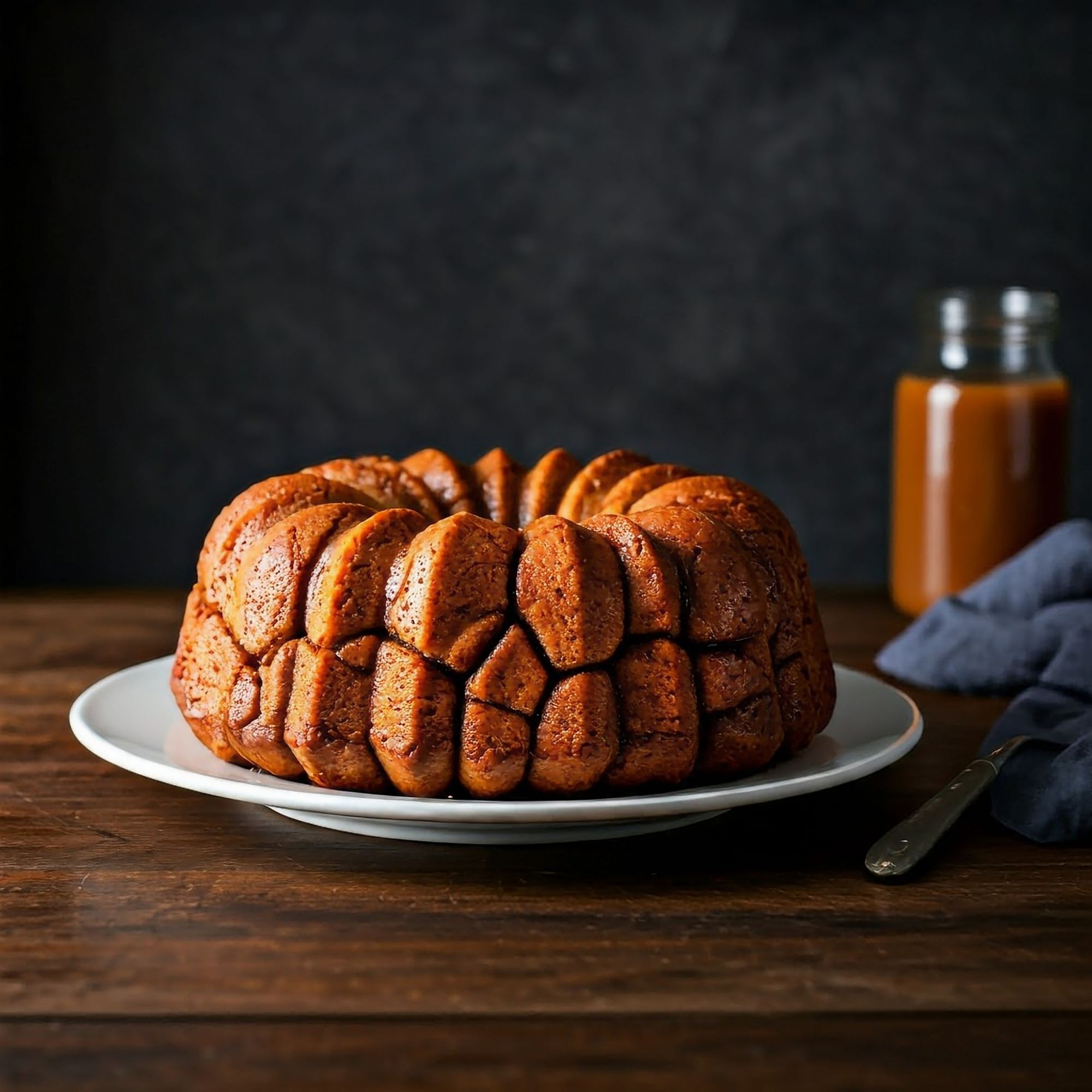
This easy Monkey Bread is a delicious, pull-apart treat that combines the sweetness of cinnamon and sugar with buttery biscuit dough. This monkey bread is perfect for breakfast, brunch, or as a sweet snack, and it’s sure to be a hit with everyone! Here’s how to make it using Pillsbury refrigerated biscuits.
Ingredients
1/2 cup granulated sugar
1 teaspoon ground cinnamon
2 cans (16.3 oz each) refrigerated Pillsbury™ Grands!™ Flaky Layers Original Biscuits (8 count)
3/4 cup packed brown sugar
1/2 cup butter or margarine, melted
Instructions
Preheat the Oven: Preheat your oven to 350°F (175°C). Generously grease a 12-cup fluted tube pan (Bundt pan) with cooking spray.
Prepare the Cinnamon Sugar: In a large plastic food storage bag, combine the granulated sugar and ground cinnamon.
Cut the Biscuits: Separate the biscuit dough into individual biscuits. Cut each biscuit into quarters.
Coat the Biscuit Pieces: Add the quartered biscuit pieces to the bag with the cinnamon sugar mixture. Seal the bag and shake until all pieces are well coated.
Layer in the Pan: Arrange the coated biscuit pieces in the prepared pan, layering them evenly.
Make the Butter and Brown Sugar Mixture: In a small bowl, mix together the melted butter and packed brown sugar until well combined. Pour this mixture evenly over the biscuit pieces in the pan.
Bake: Bake in the preheated oven for 30 to 40 minutes or until golden brown and no longer doughy in the center.
Cool and Serve: Allow the monkey bread to cool in the pan for about 5 minutes. Carefully invert it onto a heatproof plate or serving platter. Serve warm, pulling apart pieces to enjoy!
Several years ago, I had a version of these cookies while my sister-in-law’s mother was visiting for Christmas. They left such an impression that I’ve thought about them often ever since. Recently, I decided to track down the recipe and give it a try.
Trust me, if you make these Ooey Gooey Butter Cookies, you’re going to have a hard time resisting them. They’re soft, chewy, and bursting with a rich buttery flavor that makes them absolutely irresistible. Perfect for any occasion, they’re the kind of treat that disappears as soon as they hit the plate.
I found this recipe on the Betty Crocker site and wanted to share it with you. I’ve included the link to their recipe and video guide below—happy baking! And don’t say I didn’t warn you—they’re dangerously good!
Ingredients
1 package (8 oz) cream cheese, softened
½ cup unsalted butter, softened
1 egg
1 teaspoon vanilla extract
1 box Betty Crocker™ Super Moist™ Yellow Cake Mix
1-2 cups powdered sugar (for rolling)
Instructions
Preheat the Oven: Heat your oven to 350°F (175°C).
Mix Wet Ingredients: In a large mixing bowl, combine the softened cream cheese and butter. Use an electric mixer to beat until smooth. Then add the egg and vanilla extract, mixing until well blended.
Add Cake Mix: Gradually stir in the yellow cake mix until fully combined. The dough will be thick and slightly sticky.
Chill the Dough: Cover the bowl with plastic wrap and refrigerate the dough for at least 30 minutes. This step makes it easier to handle.
Form Cookie Balls: Once chilled, scoop out small portions of the dough and roll them into balls about 1 inch in diameter.
Coat in Powdered Sugar: Roll each ball in powdered sugar until fully coated.
Bake: Place the cookie balls on ungreased cookie sheets, spaced about 1 inch apart. Bake for 9 to 11 minutes or until the edges are set but the centers remain soft.
Cool and Serve: Allow the cookies to cool on the baking sheet for about 2 minutes before transferring them to a wire rack to cool completely. Optionally, you can sprinkle more powdered sugar on top before serving.
Tips
For variations, consider using different cake mixes like chocolate or lemon.
Ensure all ingredients are at room temperature for better mixing.
Store leftover cookies in an airtight container at room temperature for up to three days (there is no way these cookies are still going to be around three days later. 😉)
Enjoy these delicious gooey butter cookies that are sure to be a hit with family and friends!
Yesterday I shared a recipe for Dr. Pepper and Pineapple Glazed Ham. Leftover ham doesn’t have to be boring! Transform it into a delicious appetizer or lite meal with these easy ham and cheese sliders. Perfect for parties or a quick weeknight dinner, these little bites of deliciousness will disappear fast!
Ingredients:
1 loaf of slider rolls
1/2 pound sliced ham
1 cup shredded cheddar cheese
1/4 cup mayonnaise
1/4 cup Dijon mustard
1/4 teaspoon garlic powder
1/4 teaspoon onion powder
Instructions:
Preheat oven to 350°F (175°C).
Prepare the rolls: Cut the slider rolls in half horizontally.
Mix the spread: In a small bowl, combine mayonnaise, Dijon mustard, garlic powder, and onion powder.
Assemble the sliders: Spread the mixture on the bottom half of each roll. Top with ham and cheese.
Bake: Place the sliders on a baking sheet and bake for 10-12 minutes, or until the cheese is melted and bubbly.
I’m in the mood for holiday food. Over the next few days I am going to be sharing some holiday recipes. I love gingerbread cookies! These classic gingerbread cookies are perfect for decorating and gifting during the holidays.
Ingredients:
1 cup (2 sticks) unsalted butter, softened
1 cup granulated sugar
1/2 cup packed light brown sugar
1 large egg
1/4 cup molasses
3 1/2 cups all-purpose flour
1 teaspoon baking soda
1 teaspoon ground ginger
1 teaspoon ground cinnamon
1/2 teaspoon ground cloves
1/4 teaspoon salt
Royal icing (for decorating)
Instructions:
Preheat oven to 375°F (190°C). Line baking sheets with parchment paper or foil.
Cream butter and sugars: In a large bowl, cream together the butter and sugars until light and fluffy. Beat in the egg, then stir in the molasses.
Combine dry ingredients: In a separate bowl, whisk together the flour, baking soda, ginger, cinnamon, cloves, and salt. Gradually add the dry ingredients to the wet ingredients, mixing until1 just combined.
Roll and cut: Roll out the dough on a lightly floured surface to 1/4-inch thickness. Cut out shapes using cookie cutters.
Bake: Place the cookies on the prepared baking sheets. Bake for 8-10 minutes, or until the edges are lightly browned. Let cool on the baking sheets for a few minutes before transferring to a wire rack to cool completely.
Decorate: Once cooled, decorate the cookies with royal icing and sprinkles.
Royal Icing:
3 cups powdered sugar
2-3 tablespoons meringue powder*
1 teaspoon vanilla extract
5-6 tablespoons water
Combine all ingredients in a bowl and beat with a mixer until smooth and spreadable.
*If you need a substitute for meringue powder, you can use an equal amount of reconstituted egg white powder mixed with water, a slightly smaller amount of aquafaba (the liquid from a can of chickpeas), or a gelatin mixture made with warm water and gelatin powder – just be sure to adjust the liquid content accordingly depending on the substitute you choose.
Enjoy these festive treats with a cup of hot cocoa, glass of milk, coffee, or tea!
Christmas has always been one of my favorite times of the year because it’s a season filled with warmth, connection, and traditions that bring people together. From the twinkling lights and festive decorations to the joy of giving and reflecting on the year, the Christmas music and cookies, get togethers and gift exchanges, it’s a time that feels both magical and meaningful.
Growing up as part of the Independent Fundamental Baptist (IFB) church, the holiday season was packed with traditions that filled every corner of my life. From the moment Thanksgiving ended, the church sprang into a whirlwind of festive activities, each designed to foster connection, celebrate the season, and, of course, glorify God. For years, these moments were not just traditions—they were my foundation for what Christmas was supposed to look and feel like.
I loved decorating the church. It was a group effort, a tradition that kicked off the holiday season. Members of the congregation gathered together to hang garlands, string lights, and place nativity scenes just so. The sanctuary, usually simple and bare, transformed into a glowing reflection of the holiday spirit, and the work itself was as much a joy as the finished product. It wasn’t just about the decorations; it was the fellowship, the laughter, and the shared excitement for the season.
Each year there was a Christmas cantata. Whether I was performing as a character in the play portion, singing in the choir or helping behind the scenes, they always brought a sense of purpose and joy. The cantata had a special way of connecting the church body, weaving together stories that aimed to remind us of the true meaning of Christmas and songs that were fun to sing and listen to. From memorizing lines to rehearsing songs, the entire process felt sacred, like we were preparing a gift not just for the congregation but for God Himself.
And then there was caroling as a child . Every December, groups from the church would bundle up and head to local nursing homes to sing Christmas hymns. It was a humbling, heartwarming experience to see the smiles of residents who often didn’t have visitors. The songs were simple, but their impact was profound, and there was something deeply fulfilling about spreading a little joy during what could otherwise be a lonely season for some.
Christmas Eve services were a big part of our Christmas tradition. The stillness, the reverence, the candle lit service of the familiar readings of the Christmas story from the book of Luke—it all felt so important. I can still picture the warm glow of candlelight filling the sanctuary during the singing of the Christmas hymns. It was a moment of awe and connection, a reminder of why we celebrated in the first place. We were all about to go off and celebrate with our separate families, but for that moment with our voices rising together in unison we were all a close community celebrating together.
But now, for me, all of that is gone. Leaving the IFB community changed the way I experience Christmas. It’s not that I don’t still find joy in the holiday season—I absolutely do—but there’s an undeniable gap where those traditions used to be. Decorating my home with my family is enjoyable, but it is not the same as the camaraderie of decorating the church with dozens of others. Watching holiday movies or singing along to Christmas carols is one of my favorite things to do. And while I still attend Christmas Eve services at a different church, the experience feels different from what I knew all of those years. The people around me are kind and welcoming, but it’s not the same deep-rooted community I grew up with.
Over time, I’ve started creating new traditions. I’ve discovered the beauty of a quiet Christmas morning, sipping coffee by the tree while reflecting on the year. I’ve found joy in hosting small gatherings with friends, making space for authentic connection without the pressure of perfection. And while it’s taken time, I’m beginning to see that Christmas isn’t about where or how you celebrate—it’s about the love, peace, and joy you carry with you, no matter where life takes you.
Still, there are moments when the ache of what’s been lost resurfaces. I think that’s part of the process—learning to hold space for both gratitude and grief. While the traditions I once knew may no longer be part of my life, they shaped who I am and how I celebrate today. And as I continue to navigate this new chapter, I’m reminded that Christmas, at its core, is about hope—a hope that remains, even as the seasons of life change.
This gap is more than just nostalgia—it’s a reminder of the relationships and shared experiences that were intertwined with my faith. It’s not just about missing the activities; it’s about missing the sense of belonging, the feeling that I was part of something bigger. For years, Christmas was inseparable from the church, and without that framework, I’ve had to learn how to rebuild my holiday traditions in a way that feels meaningful to me without the church.
Thankfulness is more than just saying “thank you” or “I am thankful.” It’s a way of seeing the world that can change how we experience life. I’ve come to realize that being thankful isn’t just something you do when things are going well—it’s a practice that can bring peace and perspective even when life feels hard and heavy. Gratitude is about pausing to appreciate what you have, the people around you, and even the lessons hidden in the difficulties and challenges. It’s not always easy, but it’s always important.
For me, thankfulness often starts with the small things: the cozy warmth of my home, the sound of laughter from my kids, cuddling with my sweet dog, dinner time around the table with my family, or even the simple comfort of a quiet moment after a busy day. These aren’t extraordinary things, but they’re what make everyday life full and enjoyable. When I take time to notice them, I find myself feeling lighter, happier, and better able to face whatever’s ahead. Gratitude reminds me that joy doesn’t have to come from big achievements or perfect circumstances—it’s already right here, waiting to be noticed and appreciated.
I’ve learned that being thankful for the people in my life strengthens my connections with them. Whether it’s taking a moment to thank my kids for their kindness or letting a friend know how much their support means to me, gratitude deepens relationships. It helps me focus on what’s good about the people I care about instead of dwelling on little frustrations. And the more I express my gratitude, the more it seems to grow—like a habit that gets easier and more natural over time.
There have been moments in my life when gratitude felt far away—times when grief, stress, or disappointment seemed to overshadow everything else. But looking back, I’ve found that looking for something to be thankful for, no matter how small, makes a difference. It might be the kindness of a stranger, a supportive word from someone I trust, or just the reminder that hard times don’t last forever. Gratitude doesn’t erase pain, but it does give me something steady to hold onto. Being thankful can act as a light guiding me through the dark times.
Being thankful has taught me to slow down, to look for the good in my life and the people around me, and to trust that even hard moments have their place. It’s not always easy, and I don’t always get it right—but when I practice gratitude, life feels richer, and I feel more connected to what really matters.
So often, it’s easy to focus on what’s wrong or what’s missing. But when I choose to focus on what’s right, even in the smallest ways, I notice how much I already have. Thankfulness has become more than just a reaction to the good moments—it’s a way of living that makes every moment more meaningful.
I am sharing this recipe again this year because it is my favorite holiday side dish. I just finished preparing it for our dinner tomorrow and I cannot wait to eat it along with the other delicious thing we will be having for Thanksgiving dinner tomorrow.
Ingredients
4 cups sweet potato, cubed*
1/2 cup white sugar
2 eggs, beaten
1/2 tsp cinnamon
1/2 teaspoon salt
4 tablespoons butter, softened
1/2 cup milk
1/2 teaspoon vanilla extract
1/2 cup packed brown sugar
1/3 cup all-purpose flour
3 tablespoons butter, softened
1/2 cup chopped pecans
Directions
Preheat oven to 325 degrees F (165 degrees C). Put sweet potatoes in a medium saucepan with water to cover. Cook over medium-high heat until tender; drain and mash. (or use canned yams and skip this step altogether.)
In a large bowl, mix together the sweet potatoes, white sugar, eggs, cinnamon, salt, butter, milk and vanilla extract. Mix until smooth. Transfer to a 9×13 inch baking dish.
In a medium bowl, mix the brown sugar and flour. Cut in the butter until the mixture is coarse. Stir in the pecans. Sprinkle the mixture over the sweet potato mixture.
Bake in the preheated oven 30 minutes, or until the topping is lightly brown.
*If you’re using fresh sweet potatoes, you’ll need four to six sweet potatoes to get four cups, depending on their size. One 15-ounce can of sweet potatoes is equal to one cup of fresh sweet potatoes.
If you try it, please let me know! I have a feeling that you will love it too!
For much of my life, I found peace and comfort in my Christian faith and the community my church provided. The people I worshipped with, those I prayed beside and shared fellowship with, were not just friends; they were my spiritual family. Together, we espoused values that were at the core of Christianity—compassion, love, humility, and integrity. These teachings gave me a sense of purpose and direction, and I believed that the people I shared my faith with were living examples of these principles.
However, something began to shift. As Donald Trump rose to political power, I watched with growing confusion as the very same people who preached Christ’s message of love and humility embraced someone who so starkly embodied the opposite. The teachings of kindness and decency that I had been raised on seemed to dissolve as the community around me—people I once trusted—bent over backward to excuse behavior that was undeniably cruel, divisive, and dishonest. It was through this stark contrast that I began to see things in a new light. Ironically, Trump and the fervent MAGA movement served as a catalyst for my personal awakening.
The Values I Once Held Dear
Growing up, I was taught that following Christ meant living a life grounded in love, service to others, and personal integrity. We were called to love our neighbors, show kindness to the stranger, and be humble in all things. These values were repeated from the pulpit, ingrained in Bible studies, and echoed in countless conversations. I held tightly to the belief that my Christian community shared these core principles, that we were all striving to embody the teachings of Jesus.
We weren’t perfect, but for a long time, I believed we were trying our best to be like Christ. In the church, we spoke passionately about loving the poor, protecting the vulnerable, and upholding truth. I trusted the people around me because they shared these values, and I never imagined a day would come when I would question them. But then came the 2016 election, and suddenly everything felt different.
The Conflict with Trump’s Behavior
Donald Trump’s candidacy and subsequent presidency presented a deep moral challenge for me. His rhetoric, behavior, and policies were not aligned with the values I had been taught in church. Whether it was his dismissiveness toward marginalized groups, his bullying of those who disagreed with him, or his flagrant disregard for honesty, Trump’s behavior stood in stark contrast to the teachings of Christ. I was shocked to see someone so openly boastful, selfish, and hostile be embraced by people who had once taught me that humility and kindness were non-negotiable Christian values.
Yet, instead of condemning these traits, many of the Christians I knew defended and excused them. They rationalized his actions in the name of political expediency, often stating that they didn’t “like the man,” but supported his policies. It was as though all the values I had been taught were suddenly negotiable—if the political stakes were high enough. I couldn’t reconcile how the same people who once preached about truth and love could so easily dismiss Trump’s lies, cruelty, and arrogance. I was confused by the double standard.
The Hypocrisy of Blind Support
The more I listened to the people around me defend Trump, the more I realized that something was deeply wrong. It wasn’t just about Trump’s behavior; it was the way my Christian community blindly followed him that shook me to my core. They made excuses for him, citing his stance on abortion or religious freedom, as if these issues justified everything else. When confronted with his blatant disregard for truth or his demeaning treatment of others, they shifted the conversation, pointing to political gains as if those alone absolved any wrongdoing.
I started to see the hypocrisy clearly. The people I had trusted to uphold the teachings of Jesus were no longer prioritizing compassion or truth. Instead, they were prioritizing political power and influence. It was disillusioning, but more than that, it was heartbreaking. Everything I had once believed about my community’s commitment to Christian values crumbled before my eyes.
The Turning Point
The breaking point came when I could no longer listen to the justifications. I had begun to question what these people really stood for. Were they more concerned with maintaining control than with living out the values they preached? Was their loyalty to Christ or to a political figure and party? These questions nagged at me, until I realized that staying in this community meant compromising my own integrity. I couldn’t pretend anymore.
Leaving wasn’t easy. It meant walking away from the only spiritual home I had ever known. It meant feeling lost for a while, unsure of where to turn. I was let down by people I once looked up to and respected. But leaving also gave me the space to think critically, to reflect on what I truly believed, and to break free from the limitations that had been placed on my thinking.
Finding Freedom in Critical Thinking
Stepping away from that environment was liberating. For the first time, I felt free to ask questions, to challenge assumptions, and to form my own beliefs. I no longer had to accept the contradictions and hypocrisy that had suffocated me. In leaving, I found the freedom to align myself with the values I truly held dear—compassion, integrity, and authenticity. I realized that true faith, for me, meant questioning, doubting, and seeking out truth, rather than blindly following the status quo.
In a strange twist, I owe this personal freedom, in part, to Trump and the MAGA movement. Their rise to power exposed the cracks in my community, the hypocrisies that had always been there but were now glaringly obvious. By forcing me to confront those contradictions, they gave me the courage to walk away.
So yes, I am thankful to Trump and the MAGA movement, but certainly not for the reasons they might expect. I’m not grateful for their policies or their political vision. I’m grateful because they exposed the hypocrisy within my Christian community, and in doing so, they pushed me to leave. That departure was the beginning of my journey toward critical thinking, toward embracing a faith that is truly my own, and toward living out the values I believe in—without compromise.
You don’t have to compromise your values in the voting booth. Voting for a Democrat is not a sin, despite what some might claim. What is wrong, however, is compromising your values to support someone as morally corrupt and divisive as Trump. Choosing to align yourself with someone who consistently acts in ways that contradict core Christian teachings—who lies, demeans, and fosters division—cannot be justified by any political gain. It’s important to remember that standing up for truth and integrity is what matters most. Voting in a way that aligns with your true values, even if it goes against the grain of your community, is the right thing to do. In the end, it’s better to be on the right side of history, standing for compassion and justice, rather than blindly following someone who undermines those very principles.







































 Looking Joli Good
