

Every Good Thing About You Is Actually Just Filthy Rags…Or Is That Just What You Have Been Told?
Isaiah 64:6 (KJV) But we are all as an unclean thing, and all our righteousnesses are as filthy rags; and we all do fade as a leaf; and our iniquities, like the wind, have taken us away.
This verse is often used in high-demand religious environments to emphasize human depravity and unworthiness, even in the face of sincere effort or goodness. It can shape a person’s view of themselves in profoundly damaging ways—especially when it’s repeated without context or nuance.
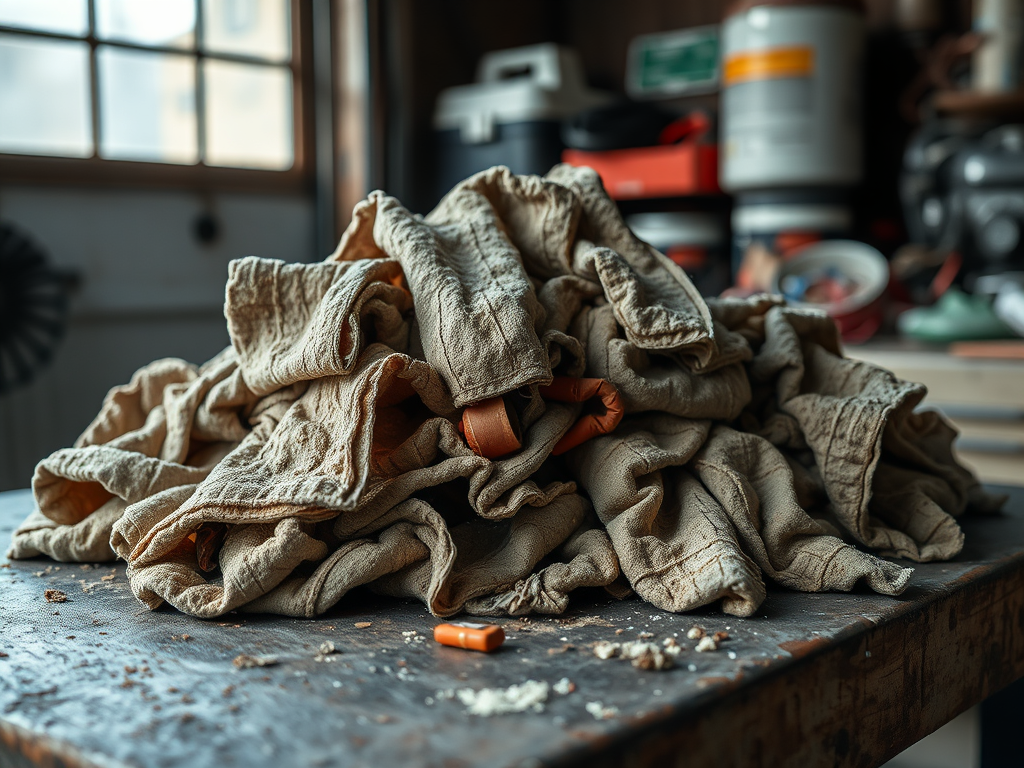
Growing up in a high-control religious environment, I heard Isaiah 64:6 quoted more times than I can count:
“All our righteous acts are like filthy rags.”
The verse was always delivered with a certain weight, like a warning: Don’t think too highly of yourself. Don’t get too proud. Even your best efforts are garbage in God’s eyes. I internalized this message deeply, not just as theology, but as identity. It told me I was inherently unworthy, even when I was trying to be good.
When I heard “filthy rags,” I didn’t picture ancient fabrics or ceremonial metaphors. I pictured the greasy, oil-soaked rags used in a mechanic’s garage. I remembered the sharp smell of gasoline, the black stains that never washed out, the way those rags were always tossed in the corner when they’d outlived their usefulness. That was the image I attached to my best efforts. I could almost smell the verse. My good works didn’t matter, I believed. They were dirty, offensive, worthless. Like a mechanic’s rag, used up and discarded.
This interpretation shaped how I saw myself and others. If nothing I did was ever truly good, then what was the point of trying? And worse, it made me suspicious of anything that felt like confidence, self-trust, or joy. I was taught that trusting myself was prideful. That doing something kind or brave or meaningful didn’t count unless it fit into the narrow definition of righteousness handed down by my church. The message was clear: Don’t trust your instincts. Don’t celebrate your goodness. You are broken. God may love you, but only in spite of who you are, never because of it.
But as I grew older, I started to question that interpretation. Not just because it made me feel small and ashamed, but because it didn’t align with the God I was coming to know, a God of mercy, justice, creativity, and love. I began to dig deeper into the context of the verse that had haunted me for so long.
Isaiah 64 is a chapter of communal lament. It wasn’t written to tell every individual in every generation that their best efforts are trash. It was a confession spoken by a people in exile, grieving their collective failures, longing for restoration. The “filthy rags” metaphor was a symbolic acknowledgment of how far they had strayed, not a universal doctrine of human worthlessness. The Hebrew word used for “filthy” likely refers to ritual impurity, not moral disgust. In context, the people were saying, Even the things we think are good are contaminated by how disconnected we’ve become from our purpose.
That’s a far cry from the message I received growing up.
What I’ve come to believe is this: my goodness is not garbage. My instincts are not inherently wicked. My efforts to love, create, comfort, and show up for others matter. They are not oil-soaked rags to be tossed aside, they are part of my humanity, and they are sacred. Yes, I am imperfect. But I am also capable of kindness, wisdom, and truth. And that capacity is not something I need to be ashamed of. It’s something to be honored.
When someone uses Isaiah 64:6 to shame others or keep them dependent on religious authority, it’s not about humility, it’s about control. Because when people doubt their own goodness, it becomes easier to manipulate them. If I believe I am inherently broken, I’m more likely to defer to someone else to tell me what’s right. I’m more likely to stay in toxic systems, harmful relationships, and spiritual environments that keep me small.
But I don’t believe that’s what God wants. I don’t believe that was ever the point.
So now, when I think of that verse, I still sometimes picture the rags from the garage. But I don’t smell shame anymore. I remember how those rags were used to fix things, to clean up messes, to tend to engines, to keep things running. They weren’t worthless. They were tools. Necessary. Valuable.
Just like me.

Disclaimer: The personal experiences shared in this post are based on my personal perspective. While I chose to leave the IFB to find a more gracious and loving community, it is important to acknowledge that individuals may have different experiences and find happiness within the IFB or any other religious institution. The decision to leave the IFB does not imply a loss of faith, as faith is a deeply personal and subjective matter. It is essential to respect and recognize the diversity of experiences and perspectives within religious communities. The content shared is for informational purposes only and should not be construed as professional advice, guidance, or a universal representation of the IFB or any religious organization. It is recommended to seek guidance, conduct research, and consider multiple perspectives when making personal decisions or exploring matters of faith.































 Looking Joli Good