I remember that I was so excited to share what I had learned with my church ladies Bible study group. I had spent hours studying the book and passages and thinking about how to explain them in a way that would encourage discussion. As I began to speak, I noticed two women exchanging quiet glances. Their laughter was soft at first, barely audible, but it carried a weight that made me tense. Every word I spoke felt like a high-stakes examination where failure was not just an error, but a reflection of my character. They were intent on catching me in a mistake. When one of them finally asked a loaded question, not seeking clarity but looking to prove a point, I answered as best I could, keeping a practiced smile on my face. That night, I lay awake, replaying the interaction over and over, convinced I had failed not just as a person, but as a leader, and as a Christian. In the rigid world of the high-control church, where failure was treated as sin, being wrong was never seen as a chance to learn. Any mistake was seen as evidence of spiritual weakness. This mindset, which equates human error with moral failure is corrosive!
I think back to the years when the fear of failure felt completely normal. I was always trying so hard to get everything perfectly right. Whether it was in church, at work, in my marriage, and even in motherhood, I measured my worth by how successfully I could avoid mistakes. I didn’t realize it then, but this crippling self-assessment had deep roots in the high-control environment where failure was constantly treated as sin. It wasn’t until I recently read the words, “When you treat failure as information, not shame, you turn every loss into a stepping stone,” that I felt something seismically shift inside me. It was such a simple idea, yet one that felt almost revolutionary after a lifetime in an environment that did not allow room for failure. In the high-control IFB world, failure was often equated with sin. Mistakes were not opportunities to learn or grow; they were moral shortcomings that required repentance and often brought judgment or exclusion.
Looking back, I can see how deeply this mindset affected me. I learned to fear missteps, to hide imperfection, and to measure my worth by how well I appeared to uphold every rule and expectation. The problem was that this kind of life left no space for grace. It taught me to equate being human with being wrong, and it made growth nearly impossible. When failure is viewed as sin, curiosity and creativity shrink. People become afraid to try, afraid to question, and afraid to be honest about their struggles.
Now that I am outside that environment, I can see that failure is not a spiritual flaw but part of being alive. In fact, it is one of the most powerful teachers we have. Failure gives us data. It helps us see what does not work, what we might try differently next time, and where our true strengths lie. When we approach failure with curiosity instead of condemnation, we move closer to wisdom and compassion, both for ourselves and for others.
God’s grace is not conditional on perfection. If anything, grace assumes imperfection. The difference between shame and truth and growth is that one crushes the spirit, while the other restores it.
Even now, years later, the memory of that Bible study, with the exchanged glances, shared snickers, and the pointed question, still carries a faint sting. The difference is that I no longer replay the conversation to find the moment I “failed” as a leader or a Christian. Instead, I see that moment not as evidence of my spiritual weakness, but as an illustration of the corrosive power of a system that equated humanity with deficiency. My shame has been replaced by a sense of compassion for those two women, who were and still are trapped in the same rigid mindset. They were merely following the rules of a game we had all been taught to play, desperately measuring their own worth by the errors they could expose in others and the mistakes they could avoid. When we refuse to internalize judgment, we find the grace to extend it outward. Failure no longer defines me; it refines me.
Now, I try to live in a way that honors learning over fear. I still struggle with trying to be perfect, I still make mistakes, but instead of hiding them, I try to ask, “What can I learn from this?” Every time I do, I feel freer. Failure no longer defines me; it refines me. And that, I believe, is where grace truly begins.
Disclaimer: The personal experiences shared in this post are based on my personal perspective. While I chose to leave the IFB to find a more gracious and loving faith, it is important to acknowledge that individuals may have different experiences and find happiness within the IFB or any other religious institution. The decision to leave the IFB does not imply a loss of faith, as faith is a deeply personal and subjective matter. It is essential to respect and recognize the diversity of experiences and perspectives within religious communities. The content shared is for informational purposes only and should not be construed as professional advice, guidance, or a universal representation of the IFB or any religious organization. It is recommended to seek guidance, conduct research, and consider multiple perspectives when making personal decisions or exploring matters of faith.
Looking back, I had what I would describe as an ideal childhood! Two parents who loved me and each other. A home where I felt safe, loved, and free to be myself. I spent hours playing outside, exploring the world around me, and letting my imagination turn ordinary spaces into magical places. I was able to have a childhood that gave me confidence, joy, and the foundation to grow into who I am today.
A large part of my childhood was surrounded by the church we attended. I loved going to church, memorizing verses in Sunday School, singing hymns in the services, and being part of a close-knit community where everyone seemed to care about one another. We had all kinds of fun activities and traditions that I always looked forward to. Whether it was Vacation Bible Time in the summer or Christmas programs in the winter, there was always something exciting going on. I interacted with kind people who loved and cared about me. Our Pastor was a gentle, meek, kind man who exuded the love of Christ. Church was the center of my world, and at the time, it felt safe and familiar.
It wasn’t until I was older and the church leadership changed, that I started to struggle. I began to recognize how deeply the teachings of the high control religion I was born into had shaped my view of myself and the world around me. What once felt like a loving, faith-filled environment had quietly molded my personality around fear, guilt, and the constant need for perfection and approval, both from both God and those who claimed to speak for Him.
For children born into and raised in high control religions like the Independent Fundamental Baptist (IFB) churches, the idea of God is often presented through a lens of high stakes and conditional love. God is portrayed as watching every thought and action, keeping a record of failures, and ready to withdraw His blessing at the first sign of disobedience. This version of faith teaches children that the world is divided into two categories: the righteous and the wicked, the obedient and the rebellious. They are taught that one misstep could place them on the wrong side of God’s favor. The pressure to please an all-seeing, easily angered deity can quietly shape every part of a child’s development, leading to anxiety, perfectionism, and a lifelong struggle trying to feel “good enough.”
Verses like Romans 3:23, “For all have sinned, and come short of the glory of God,” and Jeremiah 17:9, “The heart is deceitful above all things, and desperately wicked: who can know it?” were often used to remind us of our unworthiness. We were told that our hearts could not be trusted, that our own instincts would lead us astray, and that obedience, no matter how uncomfortable, was the only path to righteousness. Isaiah 64:6 was another commonly cited verse: “But we are all as an unclean thing, and all our righteousnesses are as filthy rags.” (read more about what I have to say about this by clicking HERE) This teaching instilled the belief that even our best efforts were worthless in God’s eyes, leaving little room for grace or self-compassion.
This kind of theology makes it nearly impossible for children to develop a healthy sense of self. Instead of learning that God’s love is constant and unconditional, many grow up believing that His affection must be earned through fear, submission, and perfection. Being taught that we’re saved by grace through faith, not works, but then told our “fruit” must prove it, leaving many of us feeling like grace is never quite enough. It’s a worldview that can warp how the children relate to others as well: teaching them to equate authority with truth, to suppress doubt, and to see failure as moral weakness rather than part of being human.
The emotional consequences of this run deep. Many adults who grew up in high control religions now struggle with chronic guilt, spiritual anxiety, and difficulty trusting their own intuition. When you are taught that questioning is rebellion and that your own thoughts cannot be trusted, you learn to silence your inner voice, the very voice that helps you discern right from wrong, safety from danger, and love from manipulation! It also creates a warped image of God. An image that is more like a harsh taskmaster than a loving creator.
Children raised under this high-stakes faith often become adults who either live in constant fear of disappointing God or walk away from faith altogether, unsure if the God they were taught about is worth knowing. A theology built on fear can produce temporary obedience, but it rarely nurtures true love. When the foundation of faith is fear rather than trust, it leaves lasting scars on the soul.
True faith, the kind that brings peace and healing, does not thrive in an atmosphere of control or shame. It grows in the freedom to question, to wrestle, and to learn that being loved by God does not depend on perfection. Breaking free from the high-stakes view of God isn’t rebellion, it’s recovery! It’s rediscovering that a relationship with God was never meant to be about fear, but about love, compassion, and grace.
Disclaimer: The personal experiences shared in this post are based on my personal perspective. While I chose to leave the IFB to find a more gracious and loving faith, it is important to acknowledge that individuals may have different experiences and find happiness within the IFB or any other religious institution. The decision to leave the IFB does not imply a loss of faith, as faith is a deeply personal and subjective matter. It is essential to respect and recognize the diversity of experiences and perspectives within religious communities. The content shared is for informational purposes only and should not be construed as professional advice, guidance, or a universal representation of the IFB or any religious organization. It is recommended to seek guidance, conduct research, and consider multiple perspectives when making personal decisions or exploring matters of faith.
Yesterday, social media was flooded with memes about yet another prediction for the rapture. Years ago, this would have sent me spiraling into fear. I grew up with rapture anxiety, a constant dread that at any moment Jesus might return and I would be left behind. Movies like A Thief in the Nightetched terrifying images into my mind, convincing me that the only way to be safe was to be as perfect as I could without question and never fall short of what was expected of me. That kind of fear doesn’t fade easily; it lingers in the body and the mind, causing anxiety long after belief has shifted.
The yearly prophecy conferences at my church were especially difficult. While others around me seemed enthralled, scribbling notes, nodding along, and eagerly discussing timelines of Christ’s return, I sat in silent dread. I knew I was saved and firmly believed I couldn’t lose my salvation, yet the images painted from the pulpit, wars, destruction, demonic forces, and the terror of being left behind, left me petrified.
The fear wasn’t just about the end times themselves; it was about the way I had been taught to absorb everything preached without question. In that environment, blind belief was equated with faithfulness, and doubt was seen as rebellion. So even when the messages triggered panic, I told myself the problem was with me, not with the teaching. Everyone else seemed captivated, excited even, about what was coming, while I carried the unbearable weight of anxiety and dread.
Looking back, I see how those prophecy conferences weren’t really about preparing people spiritually, they were about control. By keeping us terrified of what might come, leaders ensured our compliance in the present. The constant reminder that “Jesus could come back at any moment” kept members in line. It wasn’t about living with hope or peace but about living with fear. A stray doubt, a rebellious choice, or even just a moment of questioning authority could be framed as evidence that you weren’t “ready.” And the threat of “maybe you aren’t really saved” menat being “left behind” was the ultimate punishment.
This obsession with the rapture also gave leaders and members alike a convenient way to shirk responsibility for the world around them. Why worry about climate change if Christ is returning soon? Why address poverty, systemic injustice, or even church abuse if the world is just a temporary holding place about to be destroyed? The doctrine was twisted into a shield against accountability, both spiritual and social. It excused inaction and gave cover for negligence.
But here’s the irony: the Bible never presents the return of Christ as a reason to withdraw from responsibility. Instead, it calls believers to watchfulness expressed through justice, compassion, and care for creation. Yet in fundamentalist spaces, rapture teaching was less about preparing hearts for love and service, and more about controlling behavior through fear.
Looking back, I see that my rapture anxiety wasn’t really about God at all! It was about the human systems that benefited from keeping me afraid. Fearful people are easier to control. Fearful people don’t ask hard questions. Fearful people keep obeying, hoping they won’t be the ones left behind.
Now, when I see rapture predictions making the rounds online, I don’t feel the same panic. Instead, I feel sadness for those still trapped in that cycle of fear. I feel frustration at the way leaders continue to wield this doctrine as a weapon rather than a source of hope. Breaking free from that fear is breaking free from control. And once the fear is gone, the manipulation no longer works.
PS: What I have learned from studying and reading the Bible for myself:
The Bible describes the gathering of believers to Christ, but it doesn’t clearly support the popular evangelical notion of a pre-tribulation rapture where Christians vanish before catastrophic events. (Matthew 24:29-31, 1 Thessalonians 4:16-17, 1 Corinthians 15:51-52)
Historically, the idea of a sudden “secret rapture” is relatively modern and not rooted in early Christian teaching. The modern, popular version of the rapture is not an ancient belief. It was systematically developed in the early 19th century, spread widely in the early 20th century through a single influential Bible, and then became a dominant cultural narrative through books and films in the late 20th century. Most of these verses are taken out of historical and literary context, combined across books, or interpreted through a modern dispensationalist lens. The pre-tribulation rapture is not explicitly taught in Scripture, yet it has been presented as a controlling fear tactic in some fundamentalist settings.
Verses often cited for the rapture are sometimes taken out of context or combined in ways the original texts did not intend. Check out these rapture verses for yourself:
Disclaimer: The personal experiences shared in this post are based on my personal perspective. While I chose to leave the IFB to find a more gracious and loving faith, it is important to acknowledge that individuals may have different experiences and find happiness within the IFB or any other religious institution. The decision to leave the IFB does not imply a loss of faith, as faith is a deeply personal and subjective matter. It is essential to respect and recognize the diversity of experiences and perspectives within religious communities. The content shared is for informational purposes only and should not be construed as professional advice, guidance, or a universal representation of the IFB or any religious organization. It is recommended to seek guidance, conduct research, and consider multiple perspectives when making personal decisions or exploring matters of faith.
“The heart is deceitful above all things, and desperately wicked: who can know it?” — Jeremiah 17:9 (KJV)
This verse is commonly quoted in high-control religious environments to discourage trust in one’s own feelings, thoughts, or intuition. It’s often used to justify external control or authority, implying that people must not trust themselves and must instead rely entirely on religious leaders or teachings.
For much of my life, I wanted to trust myself. I longed to believe that my instincts, my thoughts, and my judgment were worthy of trust. But growing up in a high-demand religious environment, I was constantly told otherwise. I was taught that my heart was “desperately wicked,” that my desires and feelings were unreliable, and that the only path to righteousness was through unquestioning submission to external authority. I was taught to doubt myself, to suppress my own intuition in favor of what others dictated, and to believe that my worth was defined not by my own choices but by how well I adhered to a prescribed set of rules. It wasn’t just that I couldn’t trust myself; I was made to believe that to do so was wrong.
Slowly, quietly, and often painfully, I began to unlearn that lie. And in its place, a simple but radical truth emerged: I can trust myself.
Learning to trust myself didn’t happen overnight. It came with listening to the gut feelings I chose to honor, boundaries I dared to set, emotions I allowed myself to feel without shame. At first, it felt like betrayal. I had been conditioned to believe that to trust myself was to rebel against God, authority, or tradition. But I began to see that trusting myself was not an act of defiance, it was an act of integrity.
To trust myself is to believe that I am capable of making good decisions, even if they don’t look like what others expect. It’s believing that I know when something isn’t right, even if I can’t explain it in a way that satisfies everyone. It’s allowing myself to change, to grow, to evolve, even when others prefer the version of me that was easier to control.
Trusting myself means recognizing that my intuition is not a liability, it’s a compass. That my needs are not inconveniences, they’re signals. That my story matters, not just the polished version, but the messy, honest, human one.
I no longer outsource my truth to people who think they know me better than I know myself. I am not perfect, and I will make mistakes, but that doesn’t mean I’m untrustworthy. It means I’m human. And the more I’ve learned to listen to my own voice, the more I’ve discovered that it was never trying to lead me astray, it was trying to lead me home.
When a pastor or spiritual leader consistently uses your “heart is deceitful and desperately wicked” as a tool to discourage self-trust, question your instincts, or dismiss your emotions, that’s spiritual manipulation, not biblical teaching in good faith.
If every thought, emotion, or gut feeling is immediately suspect, then there’s no room for spiritual maturity or emotional intelligence to develop. Healthy spiritual leaders encourage you to grow in discernment and critical thinking, not silence your voice in the name of obedience. Even Scripture affirms the need to “test the spirits” (1 John 4:1) and that wisdom is available to those who ask (James 1:5). If a pastor discourages testing his spirit, if questioning him is equated with rebellion, that’s a red flag.
A spiritual leader who uses this verse repeatedly to shut down questions or enforce conformity is saying, “You can’t trust yourself, only me.” That’s not biblical authority, that’s authoritarianism.
Believing that your inner voice is inherently wicked can severely damage your relationship with both yourself and God. You may begin to mistrust your own experiences, dismiss legitimate concerns, and remain in harmful situations because you’ve been taught to confuse control with care. Over time, this mindset erodes your ability to distinguish between the voice of God and the voice of whoever claims to speak on His behalf, leaving you spiritually disoriented and emotionally disconnected.
When we are taught to distrust our own hearts, we are not being protected, we are being controlled. True spiritual growth does not come from silencing ourselves in fear, but from learning to discern wisely and walk in truth. A healthy relationship with God invites self-awareness, honesty, and the courage to listen inwardly with grace, not suspicion. Reclaiming trust in ourselves is not rebellion, it’s restoration. It’s the beginning of a faith that is lived, not imposed.
“The heart is deceitful above all things, and desperately wicked: who can know it?” — Jeremiah 17:9 (KJV)
This verse is frequently quoted in isolation. But when we look at the historical and literary context, we gain a clearer understanding of what it’s actually addressing. A healthier interpretation might say, “You can learn to trust yourself while also practicing discernment.” If you are interested in learning more about what I have discovered about the historical and literary context you can check out this post from September 2023 by clicking HERE or below
Disclaimer: The personal experiences shared in this post are based on my personal perspective. While I chose to leave the IFB to find a more gracious and loving community, it is important to acknowledge that individuals may have different experiences and find happiness within the IFB or any other religious institution. The decision to leave the IFB does not imply a loss of faith, as faith is a deeply personal and subjective matter. It is essential to respect and recognize the diversity of experiences and perspectives within religious communities. The content shared is for informational purposes only and should not be construed as professional advice, guidance, or a universal representation of the IFB or any religious organization. It is recommended to seek guidance, conduct research, and consider multiple perspectives when making personal decisions or exploring matters of faith.
For much of my life, I found peace and comfort in my Christian faith and the community my church provided. The people I worshipped with, those I prayed beside and shared fellowship with, were not just friends; they were my spiritual family. Together, we espoused values that were at the core of Christianity—compassion, love, humility, and integrity. These teachings gave me a sense of purpose and direction, and I believed that the people I shared my faith with were living examples of these principles.
However, something began to shift. As Donald Trump rose to political power, I watched with growing confusion as the very same people who preached Christ’s message of love and humility embraced someone who so starkly embodied the opposite. The teachings of kindness and decency that I had been raised on seemed to dissolve as the community around me—people I once trusted—bent over backward to excuse behavior that was undeniably cruel, divisive, and dishonest. It was through this stark contrast that I began to see things in a new light. Ironically, Trump and the fervent MAGA movement served as a catalyst for my personal awakening.
The Values I Once Held Dear
Growing up, I was taught that following Christ meant living a life grounded in love, service to others, and personal integrity. We were called to love our neighbors, show kindness to the stranger, and be humble in all things. These values were repeated from the pulpit, ingrained in Bible studies, and echoed in countless conversations. I held tightly to the belief that my Christian community shared these core principles, that we were all striving to embody the teachings of Jesus.
We weren’t perfect, but for a long time, I believed we were trying our best to be like Christ. In the church, we spoke passionately about loving the poor, protecting the vulnerable, and upholding truth. I trusted the people around me because they shared these values, and I never imagined a day would come when I would question them. But then came the 2016 election, and suddenly everything felt different.
The Conflict with Trump’s Behavior
Donald Trump’s candidacy and subsequent presidency presented a deep moral challenge for me. His rhetoric, behavior, and policies were not aligned with the values I had been taught in church. Whether it was his dismissiveness toward marginalized groups, his bullying of those who disagreed with him, or his flagrant disregard for honesty, Trump’s behavior stood in stark contrast to the teachings of Christ. I was shocked to see someone so openly boastful, selfish, and hostile be embraced by people who had once taught me that humility and kindness were non-negotiable Christian values.
Yet, instead of condemning these traits, many of the Christians I knew defended and excused them. They rationalized his actions in the name of political expediency, often stating that they didn’t “like the man,” but supported his policies. It was as though all the values I had been taught were suddenly negotiable—if the political stakes were high enough. I couldn’t reconcile how the same people who once preached about truth and love could so easily dismiss Trump’s lies, cruelty, and arrogance. I was confused by the double standard.
The Hypocrisy of Blind Support
The more I listened to the people around me defend Trump, the more I realized that something was deeply wrong. It wasn’t just about Trump’s behavior; it was the way my Christian community blindly followed him that shook me to my core. They made excuses for him, citing his stance on abortion or religious freedom, as if these issues justified everything else. When confronted with his blatant disregard for truth or his demeaning treatment of others, they shifted the conversation, pointing to political gains as if those alone absolved any wrongdoing.
I started to see the hypocrisy clearly. The people I had trusted to uphold the teachings of Jesus were no longer prioritizing compassion or truth. Instead, they were prioritizing political power and influence. It was disillusioning, but more than that, it was heartbreaking. Everything I had once believed about my community’s commitment to Christian values crumbled before my eyes.
The Turning Point
The breaking point came when I could no longer listen to the justifications. I had begun to question what these people really stood for. Were they more concerned with maintaining control than with living out the values they preached? Was their loyalty to Christ or to a political figure and party? These questions nagged at me, until I realized that staying in this community meant compromising my own integrity. I couldn’t pretend anymore.
Leaving wasn’t easy. It meant walking away from the only spiritual home I had ever known. It meant feeling lost for a while, unsure of where to turn. I was let down by people I once looked up to and respected. But leaving also gave me the space to think critically, to reflect on what I truly believed, and to break free from the limitations that had been placed on my thinking.
Finding Freedom in Critical Thinking
Stepping away from that environment was liberating. For the first time, I felt free to ask questions, to challenge assumptions, and to form my own beliefs. I no longer had to accept the contradictions and hypocrisy that had suffocated me. In leaving, I found the freedom to align myself with the values I truly held dear—compassion, integrity, and authenticity. I realized that true faith, for me, meant questioning, doubting, and seeking out truth, rather than blindly following the status quo.
In a strange twist, I owe this personal freedom, in part, to Trump and the MAGA movement. Their rise to power exposed the cracks in my community, the hypocrisies that had always been there but were now glaringly obvious. By forcing me to confront those contradictions, they gave me the courage to walk away.
So yes, I am thankful to Trump and the MAGA movement, but certainly not for the reasons they might expect. I’m not grateful for their policies or their political vision. I’m grateful because they exposed the hypocrisy within my Christian community, and in doing so, they pushed me to leave. That departure was the beginning of my journey toward critical thinking, toward embracing a faith that is truly my own, and toward living out the values I believe in—without compromise.
You don’t have to compromise your values in the voting booth. Voting for a Democrat is not a sin, despite what some might claim. What is wrong, however, is compromising your values to support someone as morally corrupt and divisive as Trump. Choosing to align yourself with someone who consistently acts in ways that contradict core Christian teachings—who lies, demeans, and fosters division—cannot be justified by any political gain. It’s important to remember that standing up for truth and integrity is what matters most. Voting in a way that aligns with your true values, even if it goes against the grain of your community, is the right thing to do. In the end, it’s better to be on the right side of history, standing for compassion and justice, rather than blindly following someone who undermines those very principles.
As my time talking about my experience being part of a high-control religious group is winding down, I feel as if I have discussed many topics that have been important to my personal growth. The remaining few are the most challenging and time-consuming to articulate.
The Spirit of Fear within the the Independent Fundamental Baptist (IFB) church is a topic that has taken significant introspection and courage to work through. Exploring the complexities of fear, its origins, and its impact within this religious context requires a delicate examination of personal experiences and communal dynamics. Nevertheless, shedding light on these aspects is important for encouraging understanding, empathy, and initiating conversations that contribute to healing and growth within and beyond the IFB community.
While I am not inherently a fearful person, delving into the intricate layers of fear within the context of the IFB church has compelled me to confront my own vulnerabilities and uncertainties. Unraveling the influence of fear on both individual beliefs and the dynamics of a religious community necessitates a candid exploration of personal experiences and the broader cultural context. This endeavor has not only deepened my understanding of the diverse dimensions of fear but has also reinforced my commitment to navigating the intricate paths of faith and personal growth.
Growing up I remember being taught 2 Timothy 1:7 from the King James Version (KJV), “For God hath not given us the spirit of fear, but of power, and of love, and of a sound mind.” This verse emphasizes that fear is not a gift from God but rather something contrary to the attributes bestowed by a divine spirit, which includes power, love, and self-discipline. Despite the comforting message of this verse, my experience within the group was characterized more by fear than the promised assurance it suggests.
In my years within the church, there was a constant dichotomy between the soothing promises of peace and comfort and the underlying current of fear and dread. The teachings centered on the idea that following the prescribed path would lead to tranquility, but in reality, it often felt like navigating a minefield. The fear of misstepping, of inadvertently deviating from the established norms, cast a long shadow over the promised peace.
Instead of finding peace, I found myself in a perpetual state of vigilance. Every decision, every action, carried the weight of potential consequences. The fear wasn’t just a theoretical concept; it was a palpable force that shaped daily life. The teachings spoke of a loving and forgiving God, but the atmosphere was often one of judgment and condemnation. From the time I was a child I was indoctrinated with the belief that my every action, or inaction, might determine whether those around me find themselves in Hell or not.Let that sink in, even as a young child the literal weight of another persons eternal damnation was on my shoulders.I found myself dwelling on it constantly whenever I met new people.
In this environment, the promised comfort seemed elusive, drowned out by the drumbeat of anxiety. It left me questioning the authenticity of the teachings and whether the prescribed path truly led to the promised serenity. The dissonance between the spoken assurances and the felt experience became a defining aspect of my spiritual journey.
High-control/demand religious groups often employ fear as a powerful tool to maintain control over their members. The fear instilled is not just a random emotion; it’s carefully crafted to manipulate individuals into compliance. Whether through the threat of eternal damnation, ostracization from the community, or other dire consequences, fear becomes a pervasive force. The teachings might emphasize love and salvation, but the underlying message is one of constant vigilance and potential punishment. This fear creates a psychological and emotional dependency, making it difficult for individuals to question or leave the group, as the consequences are portrayed as too severe. It’s a tactic that goes beyond spiritual guidance, extending into the realms of spiritual and psychological manipulation and control.
Fear can be a powerful motivator, but if one claims to embody the love of God, relying on fear seems contradictory. The contrast between the professed message of love and the use of fear tactics raises questions about the sincerity of the teachings and the motives behind such approaches. It prompts reflection on whether a message of love should be more inspiring than fear-inducing. Shouldn’t a message of love inspire rather than instill fear? The tension between these concepts speaks to the complex nature of religious dynamics and the impact they can have on individuals seeking guidance and connection.
According to 2 Timothy 1:7, fear is not of God, yet it seems the church consistently relies on fear as a means of control. This contradiction is something I grapple with regularly. I still find myself wrestling with more questions than answers most days. Despite this, I recognize that I can’t live in a constant state of fear. While I may not have all the answers, I’m determined not to let fear dictate my path forward. It’s an ongoing process of sorting through teachings and understanding faith beyond the confines of fear.
In no particular orderhere are some things that I was taught to be afraid of during my time in the IFB:(Keep in mind I am painting with a broad brush)
Worldly Influences: Fear of secular ideas, entertainment, and cultures outside the IFB circle is instilled to maintain a distinct separation.
Backsliding: There’s a fear of spiritual regression, where members are taught to be constantly at church and church activities to be vigilant against falling away from the faith. You can read more about this topic in my post called Three To Thrive: Controlling Time (In more ways than one)
Divergence from Doctrine: There’s a fear of questioning or deviating from the established doctrines, creating an atmosphere of conformity. (You can read more about this topic in my post called Can We Just Agree to Disagree? Or Not?)
Non- King James Version Modern Bible Translations: Some IFB churches prefer only the KJV translations and express concerns about the accuracy or perceived liberal bias in other modern translations. In my personal opinion, it seems that IFB pastors may prefer the KJV of the Bible because of its archaic language, making it potentially more challenging for congregants to understand without guidance. This deliberate choice could create a dynamic where congregants rely heavily on the pastor’s interpretation and explanation of the scripture, creating a dependence on the pastor for understanding God’s word. In my personal experience when I began reading a translation that was more accessible and easier to comprehend, it became evident that the teachings from the pulpit did not always align with the straightforward message of the Bible. This shift allowed me to form a more direct and personal connection with the scriptures, highlighting the importance of personal understanding and interpretation in one’s relationship with God.
While the majority of the verses I have “hidden in my heart” are from the KJV, my approach to studying and understanding the word of God takes me beyond the KJV. When delving into the scriptures for deeper comprehension, I prefer translations that offer linguistic clarity and a contemporary context. This choice allows me to grasp the intended meanings without the linguistic barriers often associated with the archaic language of the KJV. Exploring various translations has enriched my understanding of the Bible, enabling a deeper connection with the timeless truths it conveys. In embracing diverse translations, I find a broader perspective that contributes to a more well-rounded interpretation and understanding of God’s word.
False Salvation: An instilled fear that any misstep or failure to adhere to their standards could mean that one didn’t experience true salvation. (You can read more about this topic in my post called The Pressure of Perfection Growing Up Fundamentalist)
Hellfire and Damnation: IFB often emphasizes the fear of eternal punishment for those who don’t adhere to their specific doctrines.
Cultural and Social Changes: IFB adherents may be taught to fear societal changes and evolving cultural norms, portraying them as threats to faith.
Interfaith Dialogue: Fear of engaging in open discussions with individuals from different faiths or belief systems.
Rock Music: those rebellious beats and non-traditional lyrics are just too much for their refined taste. After all, who needs a bit of rhythm and beats when you can stick to hymns? Don’t get me wrong, I love some of the classic hymns, but if Don’t Stop Me Now by Queen is wrong, then I just don’t know if I want to be right.
Personal Autonomy: Members may be discouraged from thinking for themselves and encouraged to rely heavily on the pastor and church for guidance and decision-making in all areas of their lives. (You can read more about this topic in my post called Abuse of Power Dynamics and Spiritual Manipulation at Places of Worship)
Democrats: Specifically democratic women like Kamala Harris: Vice President of the United States Nancy Pelosi: Former Speaker of the House of Representatives Hillary Clinton: Former Secretary of State and presidential candidate Elizabeth Warren: U.S. Senator from Massachusetts Stacey Abrams: Former Georgia gubernatorial candidate and founder of Fair Fight Action Alexandria Ocasio-Cortez: U.S. Representative from New York
Some fundamentalists may be concerned about policies that they perceive as conflicting with their religious beliefs, such as abortion rights or same-sex marriage. However, it’s important to remember many Democrats also have strong religious beliefs.
Feminism: Especially those women who dare to speak up and speak out and challenge traditional gender roles within the family and church. (See “Democrats” for specific examples)
Abortion: The IFB typically oppose abortion, viewing it as morally wrong and against their pro-life stance.
LGBTQ+ Rights: The IFB community traditionally holds conservative views on issues related to the LGBTQ+ community. They often oppose movements advocating for LGBTQ+ rights and same-sex marriage.
Secularism and Atheism: IFB followers are concerned about the rise of secularism and atheism, viewing these as threats to their religious values.
Globalism: Seen as a threat to national identity and traditional values. IFB adherents may express discomfort with cultural shifts that they perceive as moving away from conservative principles.
Non IFB Churches/Other IFB churches: The IFB community, being deeply rooted in its own interpretation of Christianity, views religious pluralism as a challenge to their exclusive theological beliefs. They love to view themselves as up against the world. (You can read more about this topic in my post called The Pressure of Perfection Growing Up Fundamentalist)
Environmentalism: Some within the IFB community might be skeptical of environmental movements, viewing them as distracting from what they consider more pressing spiritual matters. IFB churches that heavily focus on “End Times” teachings tend to feel that there is no need to take care of the earth and environment due to Christ’s return being imminent. (You can read more about this topic in my post called Happy Halloween: The Scariest Movies I Have Ever Seen)
Secular Education: Some within the IFB community may be wary of secular education systems, expressing concerns about the influence of non-religious ideologies on children. Many in the IFB choose to homeschool their children.
Higher education institutions, specifically, are often viewed as potential avenues for exposure to secular influences. The process of education encourages independent thinking, encouraging an ability to critically evaluate information. Within high-demand and controlling religious contexts, there can be apprehension towards individuals thinking independently, as it poses a potential risk of uncovering shortcomings in both leadership and theological doctrines.
Drug and Alcohol: Growing up I believed that if I ever had even one sip of alcohol that I would immediately become and alcoholic and my life would be in ruins!
Healthcare Practices: Views on certain healthcare practices, especially those related to reproductive health, and more recently vaccinations, might be shaped by religious beliefs. As a health care professional, I have sooooo many opinions about this topic. I will be sharing my viewpoint in future non-IFB related posts. Long story short: I am a huge advocate for personal liberty and choice, but letting your pastor and church think for you is neither. Vaccinations are a life saving privilege! Prevention is priceless!
Immigration: Views on immigration can vary, but some IFB churches and members overly express concerns about the impact of immigration on cultural and national identity. Typically, IFB churches that strongly align with Trump’s views often exhibit opposition to immigration.
This could/should be it’s own post, but I will briefly share my thoughts on this here…The Bible offers a multifaceted perspective on immigrants and foreigners. It emphasizes the importance of welcoming the stranger, practicing justice and fairness, and recognizing the challenges involved in integrating newcomers into society. Here are some Bible passages to back up this statement (all shared verse are KJV):
Leviticus 19:34: “The stranger that dwelleth with thee within your gates, shall be unto you as one born among you, and thou shalt love him as thyself; for ye were strangers in the land of Egypt: I am the LORD your God.” This verse emphasizes the importance of treating foreigners with respect and compassion, remembering their own experience of being strangers.
Deuteronomy 10:19: “And thou shalt shew love unto the stranger, as he that was a stranger thyself in the land of Egypt.” This verse reiterates the call for hospitality and kindness towards immigrants, reminding readers of their own history as refugees.
Exodus 23:22:”Thou shalt not afflict a stranger, nor deal hardly with him: for ye were strangers in the land of Egypt.” This verse specifically prohibits oppressing or mistreating foreigners, emphasizing the need for justice and fairness.
Deuteronomy 24:14-15: “Thou shalt not defraud the hired labourer, that is poor and needy, whether he be of thy brethren, or of thy strangers that are in thy land within thy gates: At his day shalt thou give him his hire, neither shalt thou let it remain with thee until the morning. For thou wast a bondservant in the land of Egypt, and the LORD thy God redeemed thee thence.” This verse highlights the importance of fair treatment for all workers, including immigrants, and reminds readers of their own history as slaves.
Matthew 25:31-46: This parable of the sheep and the goats presents a challenge to distinguish between those who welcomed and cared for strangers and those who did not. It emphasizes the importance of compassion and action in response to the needs of immigrants.
Romans 13:1-7: This passage encourages obedience to authorities, which could be interpreted as applying to immigration laws and regulations. However, it’s important to note that this passage also emphasizes the importance of justice and fairness within the legal system.
Matthew 25:35-40: “For I was hungry and you gave me food, I was thirsty and you gave me drink, I was a stranger and you invited me in, I was naked and you clothed me, I was sick and you visited me, I was in prison and you came to me. Then the righteous will answer him, ‘Lord, when did we see you hungry and feed you, or thirsty and give you drink? And when did we see you a stranger and invite you in, or naked and clothe you? And when did we see you sick or in prison and visit you?’ And the King will answer them, ‘Truly, I say to you, as you did it to one of the least of these my brothers, you did it to me.’”
Based on Matthew 25:35-40, which emphasizes compassion and care for those in need, Jesus would express a concern about the potential lack of empathy or hospitality in the views of Christian nationalists regarding immigration. Jesus, in these verses, identifies himself with the hungry, thirsty, strangers, and those in need, emphasizing that acts of kindness towards the marginalized are akin to showing kindness to Him.
In the context of immigration, Jesus would encourage a perspective that reflects compassion, understanding, and a willingness to welcome strangers. He would emphasize the importance of seeing the humanity in all individuals, including immigrants, and extending a helping hand to those in vulnerable situations. The passage suggests a call to treat others with love and kindness, especially those who may be considered strangers or outsiders.
Breaking free from these ingrained fears instilled by past beliefs and community teachings is liberating! By challenging and questioning these fears, I empower myself to embrace a broader understanding of the world, diverse perspectives, and my own ever growing and evolving beliefs. Releasing the grip of fear allows me to engage in open-minded connections with a diverse range of people and ideas. As I break free from the constraints of preconceived notions, I become unencumbered by the limitations of fear. This transformative process enables me to navigate the complexities and fears and anxieties of life with a newfound sense of confidence to embrace each experience I come upon.
Disclaimer:It’s important to acknowledge that this is my opinion based on my own life experiences. It’s essential to recognize that not all people within IFB churches function in a state of constant fear. Some may be more openminded and respectful of differing viewpoints, acknowledging that genuine faith can coexist alongside diverse beliefs.People have diverse experiences and perceptions, and some may genuinely enjoy and benefit from their involvement in the IFB. I may disagree, but unlike what I experienced while in the IFB I do not intend to diminish or invalidate those positive experiences but rather seeks to highlight the complexities of personal perspectives and their role in shaping our understanding of the world.
“Your LOVE for one another will PROVE to the world that you are my disciples.” John 13:35
The Bible verse John 13:35 carries a powerful message, it emphasizes the essential aspect of being a disciple of Christ: the demonstration of love towards one another. Love that transcends political affiliations, levels of conservativeness, pro-life stances, fashion choices, or any external characteristics that may divide us.
In today’s world, where divisions and differences seem to abound, it is easy to lose sight of the core principles that Jesus taught. He emphasized the importance of love as a defining characteristic of his followers. Love is meant to be the distinguishing mark of Christians, the evidence that we are truly walking in the footsteps of Jesus.
It is a love that mirrors the selfless and sacrificial love demonstrated by Jesus himself. This love is not selective, only extended to those who share our beliefs or align with our perspectives. It extends to all people, regardless of their backgrounds, beliefs, or appearances.
By loving one another, we display the transformative power of Christ’s teachings. This love speaks louder than political debates, ideological differences, or personal preferences. It breaks down barriers, builds bridges, and brings people together in a profound way.
Our love should be evident in our actions and attitudes. It should be expressed through compassion, kindness, forgiveness, and a genuine desire to help and serve others. It involves treating everyone we encounter with dignity, respect, and empathy. It means actively seeking opportunities to uplift, support, and encourage those around us.
When we choose to love unconditionally, we bear witness to the transformative love of Jesus. Our love should inspire others, drawing them closer to the truth and goodness found in Christ. It should be a beacon of hope in a world that often seems divided and filled with animosity.
The verse reminds us that our love for one another is a reflection of our relationship with Jesus. It is a tangible demonstration of the faith that we profess. Love becomes our testimony, speaking volumes about the transformative power of Christ’s teachings.
Let’s not allow our differences to define us or overshadow the love that we are called to demonstrate. Instead, let’s focus on emulating the love of Jesus, allowing it to radiate through our words, actions, and interactions with others. May our love for one another be a powerful testament to the world, serving as proof that we are truly following in the footsteps of our Savior.
Last week I posted about my frustration with finding a lack of love in the church. If you want to read more about that you can click HERE.
If you like what you have read here sign up to receive LookingJoliGood posts by email. I would love for you to follow me on Instagram, Twitter, Pinterest, and Facebook. You can find me as Looking Joli Good on all four.
If the title doesn’t immediately make you start singing the 2003 Black Eyed Peas song, then I don’t know if we can be friends.
For the last several years I’ve been on a personal spiritual journey. I’ve been discovering what I believe and why I believe what I do. Spurred on by finding myself frustrated by different difficult situations in my church community, I found myself constantly asking, “Where is the love? Where is the love?…WHERE IS THE LOVE?!
The church is comprised of individuals who, despite their best intentions, are prone to shortcomings and failings. While love is a central principle throughout the Bible, I recognize that people within the church can still display flawed behaviors and attitudes that contradict the essence of love and compassion.
Conflicts and divisions can arise within any community, even including the church. Varying perspectives, beliefs, and personal preferences can lead to disagreements and misunderstandings, hindering the authentic expression of love. When this happens, it can be disheartening and easy to perceive a lack of love within the church.
1 Corinthians 13:1-3 specifically speaks about what happens when things are done without love…
If I speak with human eloquence and angelic ecstasy but don’t love, I’m nothing but the creaking of a rusty gate. If I speak God’s Word with power, revealing all his mysteries and making everything plain as day, and if I have faith that says to a mountain, “Jump,” and it jumps, but I don’t love, I’m nothing.If I give everything I own to the poor and even go to the stake to be burned as a martyr, but I don’t love, I’ve gotten nowhere. So, no matter what I say, what I believe, and what I do, I’m bankrupt without love. (The Message Bible: emphasis added by me)
Through my own Bible reading and study, I’ve spent time getting to know who Jesus is and what He taught. During his ministry, Jesus constantly taught the importance of showing love and kindness towards those around us. He acknowledged those shunned by society. He was a friend to the outcasts. A dinner companion to the sinner. A healer of the sick. A comfort to the hurting. The more I read about Jesus, the more I love Him. My faith and trust in God, Jesus, and the Holy Spirit have only increased along this journey.
I acknowledge that I have not always exemplified love in the past, I recognize that there have been moments when I’ve succumbed to pettiness, unkindness, and an unloving attitude. Regrettably, there have been instances where I have responded with unkindness to those who treated me poorly. While I cannot alter the actions of others or the way I reacted in the past, I am resolutely choosing to embrace a loving approach in the future.
My quest to discover “Where is the love?” constantly leads me back to Jesus. I find myself consistently drawn back to Him. I have come to realize that even in situations where love appears to be absent, He remains present.
When asked which commandment is the most important, Jesus answered “Love the Lord your God with all your heart and with all your soul and with all your mind. ‘ This is the first and greatest commandment. And the second is like it: ‘Love your neighbor as yourself. ‘ All the Law and the Prophets hang on these two commandments.” Simply put, Love God, Love Others.
Following in the footsteps of Jesus, I have the capacity to become a friend to those who feel alone, a source of encouragement to those who are disheartened, and a warm smile for those who find themselves isolated. I can extend compassion and recognition to those who are marginalized by society. Through consciously choosing to care for and wholeheartedly love individuals who cannot repay me, provide personal gain, or offer anything in return, I have the opportunity to manifest the love of Jesus. In each decision I make, I can be the embodiment of the love that someone else needs.
With each choice I make I can show the love of Jesus.
Love never gives up. Love cares more for others than for self. Love doesn’t want what it doesn’t have.Love doesn’t strut, Doesn’t have a swelled head, Doesn’t force itself on others, Isn’t always “me first,” Doesn’t fly off the handle, Doesn’t keep score of the sins of others, Doesn’t revel when others grovel, Takes pleasure in the flowering of truth, Puts up with anything,Trusts God always, Always looks for the best, Never looks back, But keeps going to the end. 1 Corinthians 13 4-7
Where there is no love… Be the love!
Despite moments when the actions of the church and its leaders have left me bewildered, causing me to question, “Where is the Love?”, I firmly believe that regardless of any circumstances, I can always discover love in God.
I would love for you to follow me on Twitter and Facebook. You can find me as Looking Joli Good. Stop by and visit my Instagram page as well @lookingjoligood. Generally, I post pictures of food, plants and puppies, but there are pictures of makeup and beauty products as well.
People killin’, people dyin’ Children hurt, hear them cryin’ Can you practice what you preach Or would you turn the other cheek?
Father, Father, Father, help us Send some guidance from above ‘Cause people got me, got me questionin’ Where is the love (love)
Where is the love? (The love) Where is the love? (The love) Where is the love, the love, the love?
I have stood before the crosses as we laid a soldier down. They cast a simple shadow upon the upturned ground The bugler sounds taps as each cross its witness bears to the journey of a soldier released from earthly cares. I have stood before the crosses and prayed a lonely prayer, in hopes of some redemption as I struggled to compare My life of long contentment with the soldier’s hallowed call to warrant with his dying breath a better world for all. I have stood before the upturned ground and struggled to compare my courage and my character with the man or woman there. Would I have died a valiant death in a foreign land, upon a distant battlefield, to save my fellow man? I have stood before the crosses as the sun was going down, watching as the shadows faded upon the upturned ground. I have looked upon the hillside of the crosses, row on row, upon the young and brave of heart never to grow old. I have knelt before the crosses at night, before I sleep, and made upon my bended knee a covenant I keep: To live a life of service, to honor all our losses, for those who went before us, those beneath the crosses.
I would love for you to follow me on Twitter, Instagram, and Facebook. You can find me as Looking Joli Good on all three. I would also love to follow you on Instagram and Twitter as well, so let me know your user name in the comment section below!
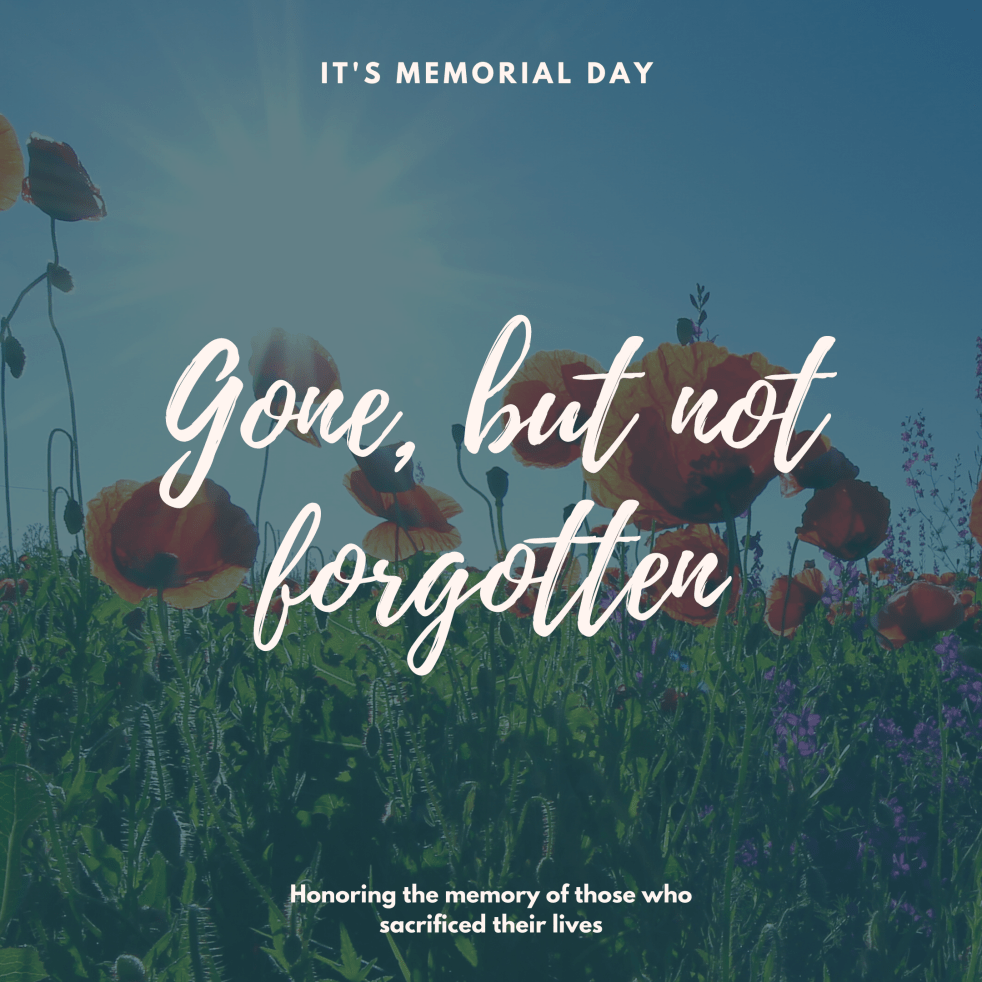
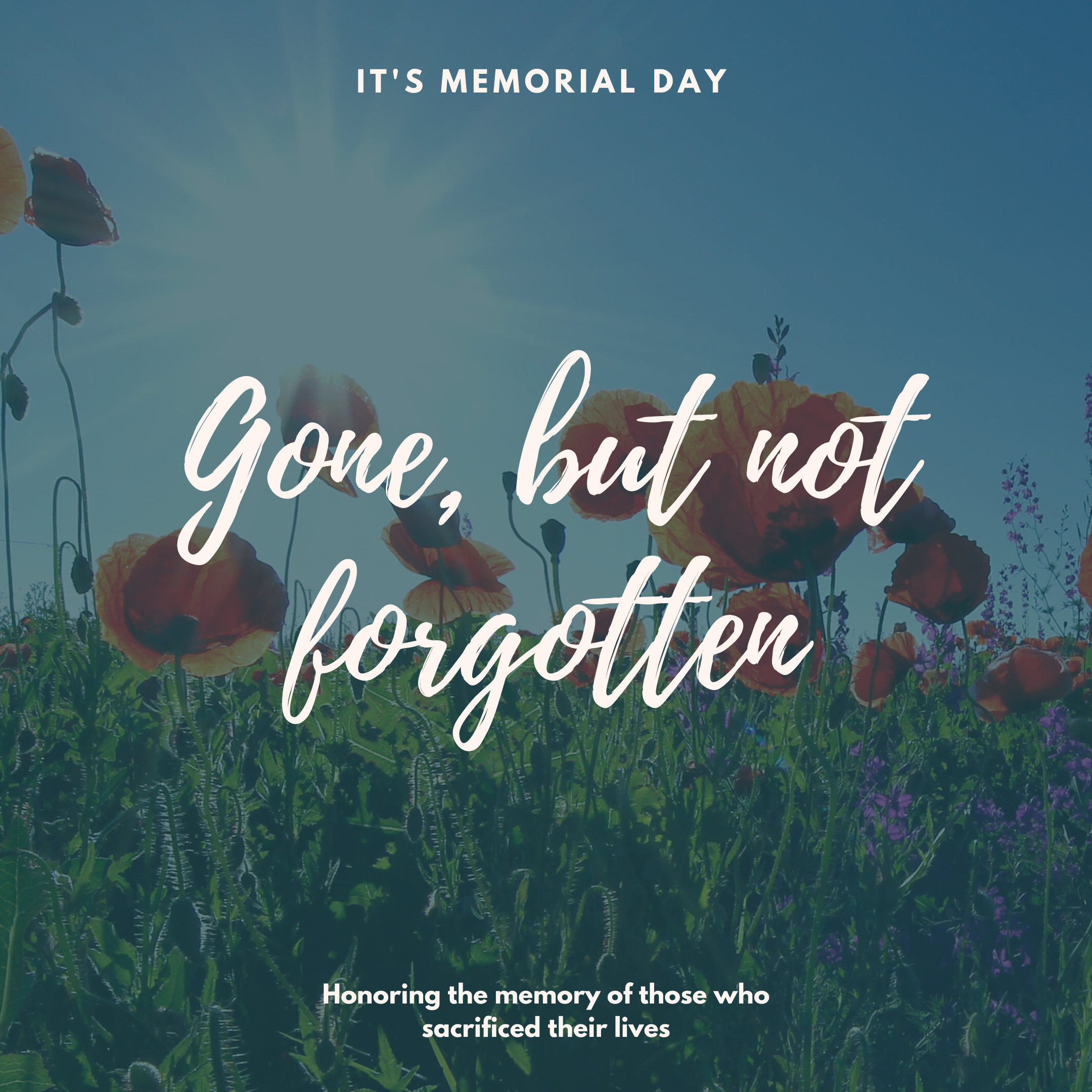
Memorial Day is an American holiday on which those who died in active military service are remembered. It’s a day for honoring and mourning people who’ve died while fighting to keep us safe. It’s a time many visit friends and family who have made the ultimate sacrifice.
Originally known as Decoration Day, it originated in the years following the Civil War and became an official federal holiday in 1971. In 1966 the federal government declared Waterloo, New York, the official birthplace of Memorial Day. It was traditionally observed on May 30 but is now officially observed on the last Monday in May.
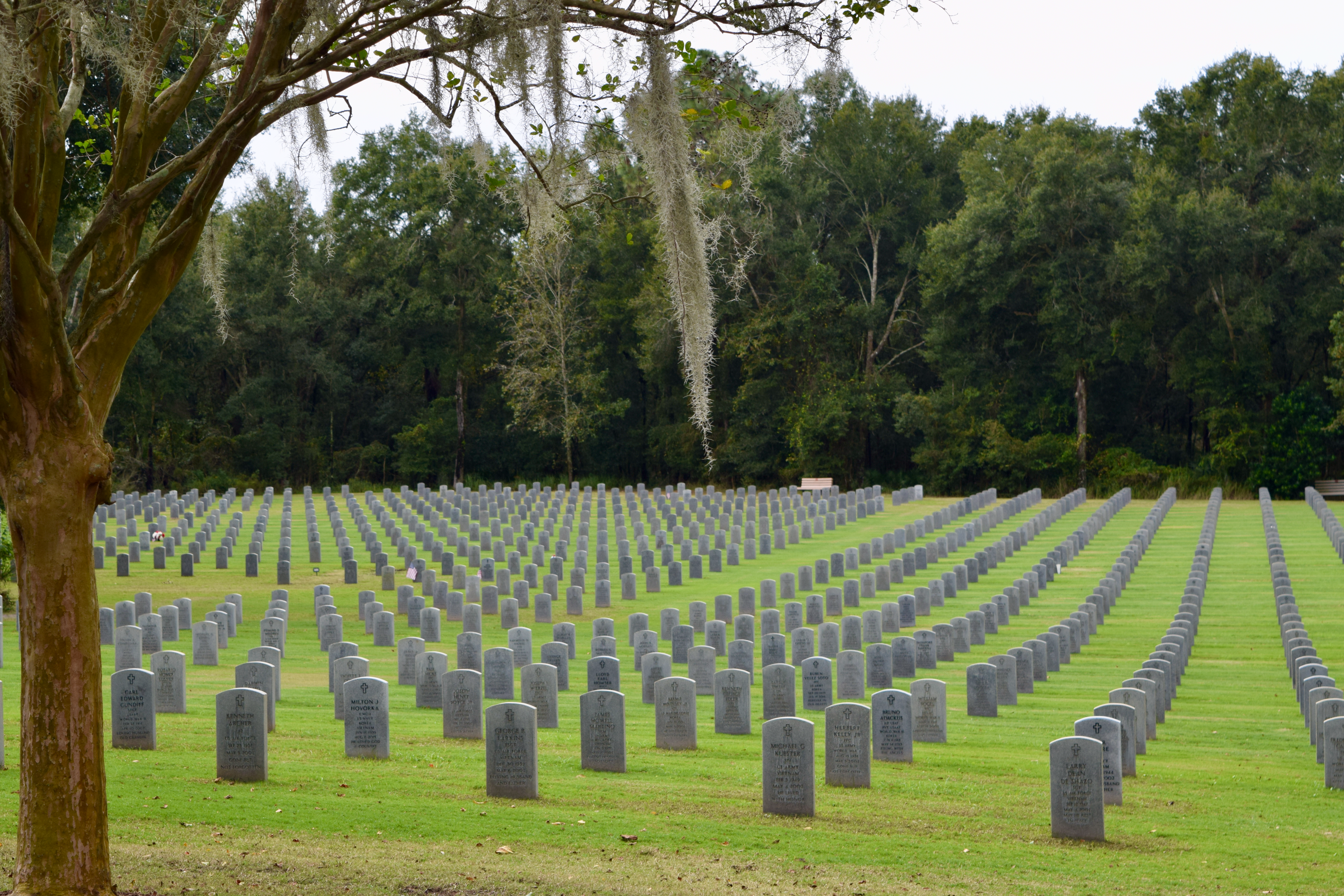
Florida National Cemetery where my grandfather is buried
John McCrae wrote the poem In Flanders Fields in 1915 as a memorial to those who died in a World War I battle fought in a region of Belgium known as the Ypres Salient. McCrae himself treated many of the soldiers injured in that battle and was particularly moved by the death of a close friend, Alexis Helmer. This poem helped popularize the red poppy as a symbol of remembrance.
Gone but not forgotten
In Flanders Fields
BY JOHN MCCRAE In Flanders fields the poppies blow Between the crosses, row on row, That mark our place; and in the sky The larks, still bravely singing, fly Scarce heard amid the guns below.
We are the Dead. Short days ago We lived, felt dawn, saw sunset glow, Loved and were loved, and now we lie, In Flanders fields.
Take up our quarrel with the foe: To you from failing hands we throw The torch; be yours to hold it high. If ye break faith with us who die We shall not sleep, though poppies grow In Flanders fields.
Stop by and visit my Instagram page @lookingjoligood. Generally, I post pictures of food, plants and puppies, but there are pictures of makeup and beauty products as well. I would love for you to follow me on Twitter and Facebook. You can find me as Looking Joli Good. I would also love to follow you on Instagram and Twitter as well, so let me know your user name in the comment section below!
My grandmother receiving the American flag at my grandfather’s funeral in 2018










































 Looking Joli Good