
Finding Faith Following Fundamentalism

Celebrating Christmas Without the Community I Once Knew and Loved

Christmas has always been one of my favorite times of the year because it’s a season filled with warmth, connection, and traditions that bring people together. From the twinkling lights and festive decorations to the joy of giving and reflecting on the year, the Christmas music and cookies, get togethers and gift exchanges, it’s a time that feels both magical and meaningful.

Growing up as part of the Independent Fundamental Baptist (IFB) church, the holiday season was packed with traditions that filled every corner of my life. From the moment Thanksgiving ended, the church sprang into a whirlwind of festive activities, each designed to foster connection, celebrate the season, and, of course, glorify God. For years, these moments were not just traditions—they were my foundation for what Christmas was supposed to look and feel like.

I loved decorating the church. It was a group effort, a tradition that kicked off the holiday season. Members of the congregation gathered together to hang garlands, string lights, and place nativity scenes just so. The sanctuary, usually simple and bare, transformed into a glowing reflection of the holiday spirit, and the work itself was as much a joy as the finished product. It wasn’t just about the decorations; it was the fellowship, the laughter, and the shared excitement for the season.

Each year there was a Christmas cantata. Whether I was performing as a character in the play portion, singing in the choir or helping behind the scenes, they always brought a sense of purpose and joy. The cantata had a special way of connecting the church body, weaving together stories that aimed to remind us of the true meaning of Christmas and songs that were fun to sing and listen to. From memorizing lines to rehearsing songs, the entire process felt sacred, like we were preparing a gift not just for the congregation but for God Himself.

And then there was caroling as a child . Every December, groups from the church would bundle up and head to local nursing homes to sing Christmas hymns. It was a humbling, heartwarming experience to see the smiles of residents who often didn’t have visitors. The songs were simple, but their impact was profound, and there was something deeply fulfilling about spreading a little joy during what could otherwise be a lonely season for some.

Christmas Eve services were a big part of our Christmas tradition. The stillness, the reverence, the candle lit service of the familiar readings of the Christmas story from the book of Luke—it all felt so important. I can still picture the warm glow of candlelight filling the sanctuary during the singing of the Christmas hymns. It was a moment of awe and connection, a reminder of why we celebrated in the first place. We were all about to go off and celebrate with our separate families, but for that moment with our voices rising together in unison we were all a close community celebrating together.

But now, for me, all of that is gone. Leaving the IFB community changed the way I experience Christmas. It’s not that I don’t still find joy in the holiday season—I absolutely do—but there’s an undeniable gap where those traditions used to be. Decorating my home with my family is enjoyable, but it is not the same as the camaraderie of decorating the church with dozens of others. Watching holiday movies or singing along to Christmas carols is one of my favorite things to do. And while I still attend Christmas Eve services at a different church, the experience feels different from what I knew all of those years. The people around me are kind and welcoming, but it’s not the same deep-rooted community I grew up with.

Over time, I’ve started creating new traditions. I’ve discovered the beauty of a quiet Christmas morning, sipping coffee by the tree while reflecting on the year. I’ve found joy in hosting small gatherings with friends, making space for authentic connection without the pressure of perfection. And while it’s taken time, I’m beginning to see that Christmas isn’t about where or how you celebrate—it’s about the love, peace, and joy you carry with you, no matter where life takes you.

Still, there are moments when the ache of what’s been lost resurfaces. I think that’s part of the process—learning to hold space for both gratitude and grief. While the traditions I once knew may no longer be part of my life, they shaped who I am and how I celebrate today. And as I continue to navigate this new chapter, I’m reminded that Christmas, at its core, is about hope—a hope that remains, even as the seasons of life change.

This gap is more than just nostalgia—it’s a reminder of the relationships and shared experiences that were intertwined with my faith. It’s not just about missing the activities; it’s about missing the sense of belonging, the feeling that I was part of something bigger. For years, Christmas was inseparable from the church, and without that framework, I’ve had to learn how to rebuild my holiday traditions in a way that feels meaningful to me without the church.

Laura lookingjoligood.wordpress.com
Lifestyle

Thank You, Trump and MAGA, but Definitely Not for the Reasons You Think

For much of my life, I found peace and comfort in my Christian faith and the community my church provided. The people I worshipped with, those I prayed beside and shared fellowship with, were not just friends; they were my spiritual family. Together, we espoused values that were at the core of Christianity—compassion, love, humility, and integrity. These teachings gave me a sense of purpose and direction, and I believed that the people I shared my faith with were living examples of these principles.

vote | lookingjoligood.blog

However, something began to shift. As Donald Trump rose to political power, I watched with growing confusion as the very same people who preached Christ’s message of love and humility embraced someone who so starkly embodied the opposite. The teachings of kindness and decency that I had been raised on seemed to dissolve as the community around me—people I once trusted—bent over backward to excuse behavior that was undeniably cruel, divisive, and dishonest. It was through this stark contrast that I began to see things in a new light. Ironically, Trump and the fervent MAGA movement served as a catalyst for my personal awakening.

The Values I Once Held Dear

Growing up, I was taught that following Christ meant living a life grounded in love, service to others, and personal integrity. We were called to love our neighbors, show kindness to the stranger, and be humble in all things. These values were repeated from the pulpit, ingrained in Bible studies, and echoed in countless conversations. I held tightly to the belief that my Christian community shared these core principles, that we were all striving to embody the teachings of Jesus.

We weren’t perfect, but for a long time, I believed we were trying our best to be like Christ. In the church, we spoke passionately about loving the poor, protecting the vulnerable, and upholding truth. I trusted the people around me because they shared these values, and I never imagined a day would come when I would question them. But then came the 2016 election, and suddenly everything felt different.

The Conflict with Trump’s Behavior

vote | lookingjoligood.blog

Donald Trump’s candidacy and subsequent presidency presented a deep moral challenge for me. His rhetoric, behavior, and policies were not aligned with the values I had been taught in church. Whether it was his dismissiveness toward marginalized groups, his bullying of those who disagreed with him, or his flagrant disregard for honesty, Trump’s behavior stood in stark contrast to the teachings of Christ. I was shocked to see someone so openly boastful, selfish, and hostile be embraced by people who had once taught me that humility and kindness were non-negotiable Christian values.
Yet, instead of condemning these traits, many of the Christians I knew defended and excused them. They rationalized his actions in the name of political expediency, often stating that they didn’t “like the man,” but supported his policies. It was as though all the values I had been taught were suddenly negotiable—if the political stakes were high enough. I couldn’t reconcile how the same people who once preached about truth and love could so easily dismiss Trump’s lies, cruelty, and arrogance. I was confused by the double standard.

The Hypocrisy of Blind Support

The more I listened to the people around me defend Trump, the more I realized that something was deeply wrong. It wasn’t just about Trump’s behavior; it was the way my Christian community blindly followed him that shook me to my core. They made excuses for him, citing his stance on abortion or religious freedom, as if these issues justified everything else. When confronted with his blatant disregard for truth or his demeaning treatment of others, they shifted the conversation, pointing to political gains as if those alone absolved any wrongdoing.

protest | lookingjoligood.blog

I started to see the hypocrisy clearly. The people I had trusted to uphold the teachings of Jesus were no longer prioritizing compassion or truth. Instead, they were prioritizing political power and influence. It was disillusioning, but more than that, it was heartbreaking. Everything I had once believed about my community’s commitment to Christian values crumbled before my eyes.

The Turning Point

The breaking point came when I could no longer listen to the justifications. I had begun to question what these people really stood for. Were they more concerned with maintaining control than with living out the values they preached? Was their loyalty to Christ or to a political figure and party? These questions nagged at me, until I realized that staying in this community meant compromising my own integrity. I couldn’t pretend anymore.

Leaving wasn’t easy. It meant walking away from the only spiritual home I had ever known. It meant feeling lost for a while, unsure of where to turn. I was let down by people I once looked up to and respected. But leaving also gave me the space to think critically, to reflect on what I truly believed, and to break free from the limitations that had been placed on my thinking.

Finding Freedom in Critical Thinking

government | lookingjoligood.blog

Stepping away from that environment was liberating. For the first time, I felt free to ask questions, to challenge assumptions, and to form my own beliefs. I no longer had to accept the contradictions and hypocrisy that had suffocated me. In leaving, I found the freedom to align myself with the values I truly held dear—compassion, integrity, and authenticity. I realized that true faith, for me, meant questioning, doubting, and seeking out truth, rather than blindly following the status quo.

vote | lookingjoligood.blog

In a strange twist, I owe this personal freedom, in part, to Trump and the MAGA movement. Their rise to power exposed the cracks in my community, the hypocrisies that had always been there but were now glaringly obvious. By forcing me to confront those contradictions, they gave me the courage to walk away.

So yes, I am thankful to Trump and the MAGA movement, but certainly not for the reasons they might expect. I’m not grateful for their policies or their political vision. I’m grateful because they exposed the hypocrisy within my Christian community, and in doing so, they pushed me to leave. That departure was the beginning of my journey toward critical thinking, toward embracing a faith that is truly my own, and toward living out the values I believe in—without compromise.

You don’t have to compromise your values in the voting booth. Voting for a Democrat is not a sin, despite what some might claim. What is wrong, however, is compromising your values to support someone as morally corrupt and divisive as Trump. Choosing to align yourself with someone who consistently acts in ways that contradict core Christian teachings—who lies, demeans, and fosters division—cannot be justified by any political gain. It’s important to remember that standing up for truth and integrity is what matters most. Voting in a way that aligns with your true values, even if it goes against the grain of your community, is the right thing to do. In the end, it’s better to be on the right side of history, standing for compassion and justice, rather than blindly following someone who undermines those very principles.

Laura lookingjoligood.wordpress.com
Love and Life

How Do You Make Others Feel?

You know, it’s funny how life works. We go about our days, having countless conversations, sharing thoughts and ideas with people we meet. But in the grand scheme of things, what really sticks with us are the emotions, the feelings that those interactions leave us with.

friends emotions | lookingjoligood.blog

I’ve often heard the saying, “Someone might not remember what you said, but they will remember how you made them feel.” It’s a powerful truth, one that resonates deeply with me. Think about it for a moment. Think about the people who have made an impact on your life. What is it about them that you remember most vividly? Chances are, it’s not the exact words they used, but the way they made you feel.

So, it begs the question, how do you want to be remembered? What kind of emotions do you want to leave in your wake when you engage with others? Do you want to be remembered as someone who inspired, comforted, or uplifted those around you? Or perhaps as someone who brought laughter and joy into people’s lives?

It’s a wonderful opportunity to shape the memories people will carry of you. Every interaction is a chance to leave a positive mark, to make someone’s day a little brighter, and to create lasting, meaningful connections. So, as you go through life, remember that you have the power to leave a lasting impression through the way you make others feel.

Laura lookingjoligood.wordpress.com
Lifestyle

Can Internal Issues Be Resolved With External Solutions?

Can internal issues be resolved with external solutions? The short answer is no, not fully. While external changes—such as improving your environment, relationships, or circumstances—can provide temporary relief or even create a more supportive space for healing, they rarely address the root cause of internal struggles.

learning | lookingjoligood.blog

Internal issues, like feelings of inadequacy, comparison, or self-doubt, often stem from deeply held beliefs, emotional wounds, or patterns of thinking that require introspection and self-work to resolve. While external solutions might act as a band-aid or a catalyst for growth, the real work involves confronting the internal causes—reassessing your self-worth, processing emotions, and building healthier thought patterns.

Comparison is an internal issue that cannot be fixed with external solutions. True contentment comes from within and requires addressing the underlying insecurities and beliefs that fuel comparison. No amount of external validation or changes in circumstances can fully resolve this internal struggle. It takes introspection, self-compassion, and a shift in perspective to overcome the habit of comparing ourselves to others and find genuine peace and satisfaction in who we are.

Ultimately, lasting change comes from within. It requires a combination of inner healing, self-awareness, and personal growth to address the core of these internal issues. External solutions can support this journey, but they are not the solution on their own.

Laura lookingjoligood.wordpress.com
Finding Faith Following Fundamentalism · Lifestyle

It Was Never About “Her” But Always About Me

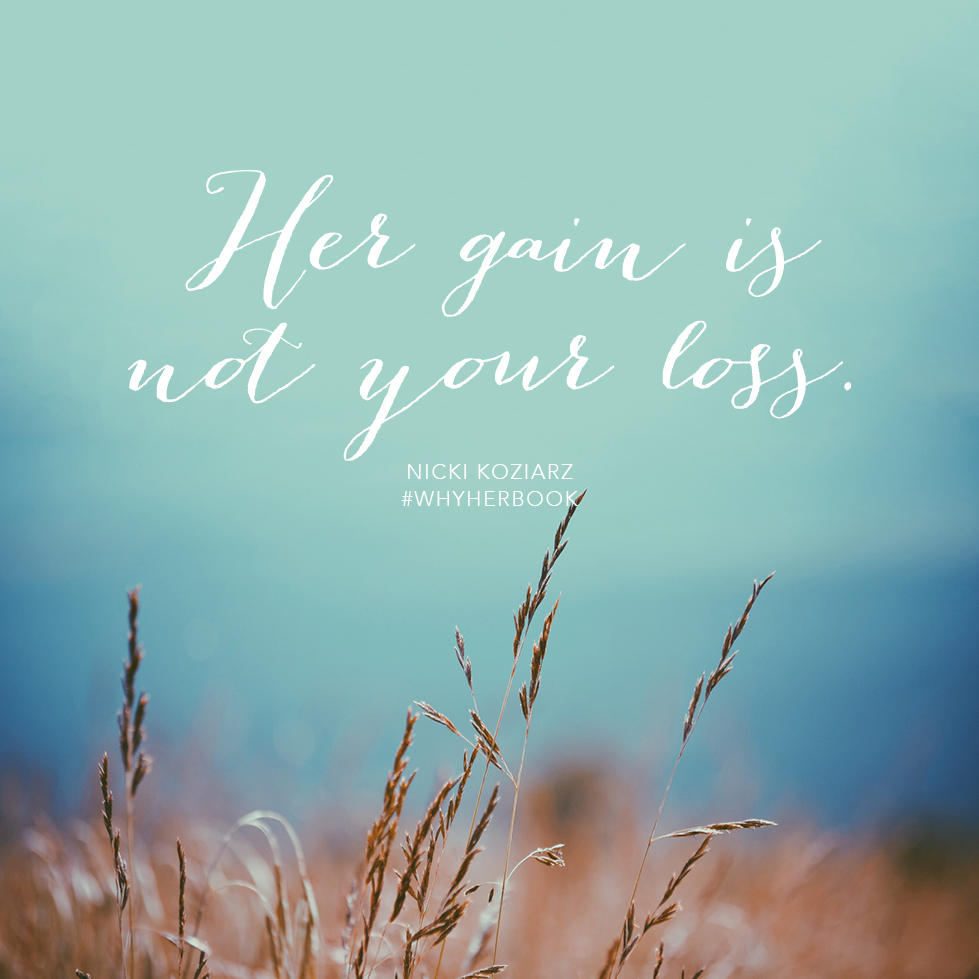
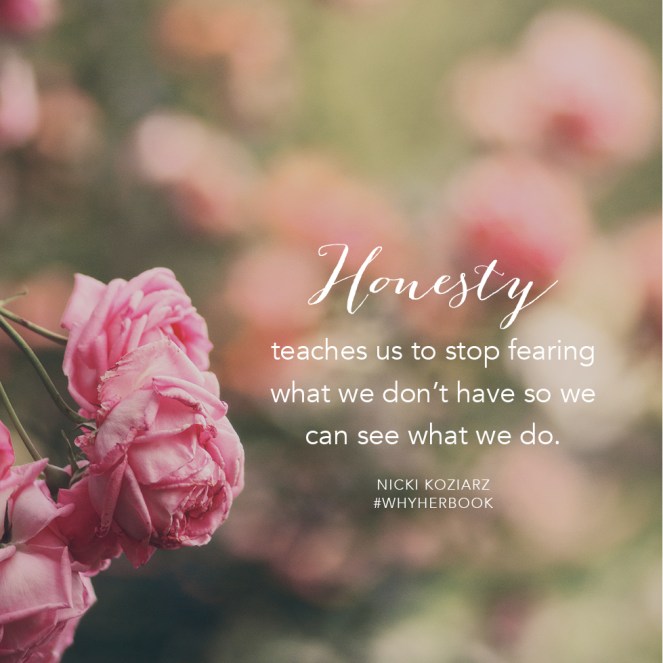
Why Her? 6 Truths We Need to Hear When Measuring Up Leaves Us Falling Behind by Nicki Koziarz | lookingjoligood.blog

Several years ago, I participated in a Bible study using the book Why Her by Nicki Koziarz. The book focuses on the often painful struggle of comparison and provides insights to help women overcome this challenge. While I am generally a content person, different circumstances at that time made me particularly vulnerable to comparison, and I found myself constantly measuring my life against those around me.

At the time, the book was helpful. It offered valuable perspectives and practical advice that provided temporary relief and moments of clarity. However, I have come to realize that the real turning point in my struggle with comparison was not just the insights from a book but removing myself from the environment that was causing so much turmoil in my life.

The high-demand community I was part of created a culture of scrutiny and judgment, which significantly contributed to my feelings of inadequacy and self-doubt. I have written in a previous post that you cannot get well in the same toxic environment that was making you sick. Removing myself from that environment was a crucial first step in my healing process. It allowed me to gain perspective and start prioritizing my own well-being.

Reading my posts it may sound as if I am blaming all my problems on the religious community I was a part of, and while the environment was a factor, it was merely a catalyst for deeper issues. To begin healing, I had to confront and address these underlying problems and take responsibility.

WhyHer Nicki Koziarz | lookingjoligood.blog

Comparison is an internal issue that cannot be fixed with external solutions. True contentment comes from within and requires addressing the underlying insecurities and beliefs that fuel comparison. No amount of external validation or changes in circumstances can fully resolve this internal struggle. It takes introspection, self-compassion, and a shift in perspective to overcome the habit of comparing ourselves to others and find genuine peace and satisfaction in who we are.

Wherever you go, there you are—and if comparison is rooted within you, it will follow. Changing your surroundings won’t silence it; only shifting your mindset and finding contentment in your own journey can truly set you free.

Now, I am content not only with the choices I have made to create a healthier, more positive life, but also with who I am internally and externally, flaws and all. Looking back, I realize that the struggle was never about “her” or anyone else I compared myself to—it was always about me. By focusing on my own choices and well-being, I have found a sense of peace and fulfillment that comparison could never bring.

Laura lookingjoligood.wordpress.com
Finding Faith Following Fundamentalism

Top Ten Lessons I Have Learned In Finding Faith Following Fundamentalism

Last year on July 18, 2023, I posted my first installment in my series called Finding Faith Following Fundamentalism. To be honest, I was so nervous about opening up and posting about my personal growth and decision to leave the church and beliefs that I held for my entire life. At the time I had no idea what the perception or push back might be. Don’t get me wrong, I am not delusional enough to think that this blog would have any major reach, but it still took courage for me to be vulnerable enough to put my thoughts and feelings out into the ether of the internet. Opening up about personal struggles and growth isn’t easy, especially knowing that my words could potentially be seen and judged by others. However, the act of sharing my story, no matter how small the audience, was important to me.

I realize some of you may be new to this blog and wondering what exactly I mean by “Find Faith Following Fundamentalism.” Or maybe you’re interested but don’t want to read a year’s worth of posts. To save you time, I’ve summarized all the posts I’ve shared over the past year into the top ten lessons I’ve learned. (Links are included at the end if your interest is piqued and you want to read more in-depth.)

1. Healing Takes Time

Healing from the scars of fundamentalism is a gradual process. I’ve realized that time and distance are essential for healing wounds. Speaking from a place of healing, rather than raw pain, has allowed me to share my story with more clarity and compassion.

2. Faith is Fluid

Faith, I’ve learned, is not static but dynamic and evolving. This past few years have shown me that it’s okay for my beliefs to change and adapt as I grow and learn. Embracing this fluidity has allowed me to develop a more nuanced, deeper, and resilient faith. Life is not black and white and my faith based beliefs don’t have to be either.

3. The Power of Questioning

question everything | lookingjoligood.blog

One of the easiest parts of being in a Fundamentalist religion is not having to think for yourself. The rigid views tell you what you are supposed to believe and how you are supposed to think. Questioning long-held beliefs was daunting at first, but it has proven to be incredibly liberating. I’ve come to understand that questioning is not a sign of weak faith but rather a path to deeper understanding and growth. Embracing curiosity and critical thinking has enriched my spiritual journey.

4. Embracing Authenticity

I’ve learned the importance of being true to myself. Breaking free from fundamentalism allowed me to explore and define my own beliefs, independent of rigid doctrines. My growth has been about discovering what truly resonates with my own beliefs and morals, leading to a more true and fulfilling spiritual life.

5. The Importance of Grace

Grace Requires Nothing Of Me | lookingjoligood.blog

Grace has been a recurring theme in my reflections through out this process. Extending grace to myself during moments of doubt and uncertainty has been essential. Grace requires nothing of me! Recognizing that I am a work in progress and allowing myself the space to grow and evolve has been a significant lesson. Extending grace to myself in turn has caused me to be more gracious to those around me.

6. Finding Community

Navigating this path alone would have been challenging. I’ve learned the value of finding and connecting with a supportive community that understands and respects my journey. Whether through online communities, podcasts, books, or in person conversations, sharing experiences with others who have undergone similar transformations has been incredibly validating and comforting.

7. The Beauty of Empathy

Empathy has been an important aspect. Understanding that others may have different perspectives and respecting their view point, even if they diverge from mine, has been important. I have discovered the beauty of letting go of judgment, which has been important in building connections and creating mutual respect.

8. Strength in Vulnerability

Sharing my journey has required vulnerability, which I’ve come to see as a strength rather than a weakness. Fundamentalism often promises certainty, but true faith allows for growth and questioning. Opening up and admitting when I’m struggling was (and still is) a big step for me. It shows that I am strong enough to face my doubts and open up to new opportunities and possibilities.

9. Growth

I’ve learned that every struggle and every moment of doubt is an opportunity for growth. Though I will always continue to grow and learn, I am now trying to see challenges as stepping stones toward a deeper faith and fuller life.

10. Gratitude for the Process

Above all, I’ve learned to be grateful. Every step, whether joyful or painful, has contributed to my growth. Embracing change and seeking truth has a transformative power!

And here is one extra lesson for free. Time and Distance Makes a Big Difference!

time | lookingjoligood.blog

Over time and with some distance from difficult situations, I’ve personally found that things do get easier. The weight of emotions lessen, and healing begins. Stepping away physically and emotionally and gaining perspective plays an important role in finding relief and strength. While everyone’s situation is unique, the saying “it gets easier with time and distance” holds some truth.

I shared this poem in my first Finding Faith Following Fundamentalism post. I would like to share it again today because it is still just as true today as when I first shared it.

Growth Lies In Discomfort

In breaking free, I found my voice,
Leaving fundamentalism, my choice.
Some may be upset, emotions may rise,
I share my truth, despite the cries.

For growth lies in discomfort, in open debate,
I embrace the challenge, I will not hesitate.
With understanding, to shed light.
With empathy, I seek to unite,

In sharing my story, my purpose is found.
Though reactions may vary, I hold my ground,
I now speak from a place of relief
My wounds have healed with renewed belief.

Laura lookingjoligood.wordpress.com

Here are links to some of my favorite posts from the last year:

Finding Faith Following Fundamentalism

Speak from the Scars Not the Wound

The Consequences of Being Forced to Make Black and White Choices in a World of Filled with Gray Nuancen

Question Everything!

You Just Want Freedom to Sin…

The Pressure of Perfection Growing Up Fundamentalist (Grace requires nothing of me!)

You Cannot Heal In The Same Toxic Environment That Made You Sick: Ten Tips To Go From Merely Surviving To Thriving

Sure, If That’s What You Want To Believe, Go For It…

Kindness Doesn’t Mean Weakness and Being Rude Doesn’t Imply Strength

The Power Of Taking Responsibly For Yourself

Unraveling the Impact

Does It Ever Get Easier? Do Time and Distance Make a Difference?

What is Behind the Façade?

It’s Not Me, It’s You! What’s The Deal With Hyper-critical People?!

For God Hath Not Given Us the Spirit of Fear, But The Church Definitely Has (Part 1)

For God Hath Not Given Us the Spirit of Fear, But The Church Definitely Has (Part 2)

disclaimer | lookingjoligood.blog

Disclaimer: The personal experiences shared in this post are based on my personal perspective. While I chose to leave the IFB to find a more gracious and loving community, it is important to acknowledge that individuals may have different experiences and find happiness within the IFB or any other religious institution. The decision to leave the IFB does not imply a loss of faith, as faith is a deeply personal and subjective matter. It is essential to respect and recognize the diversity of experiences and perspectives within religious communities. The content shared is for informational purposes only and should not be construed as professional advice, guidance, or a universal representation of the IFB or any religious organization. It is recommended to seek guidance, conduct research, and consider multiple perspectives when making personal decisions or exploring matters of faith.

Finding Faith Following Fundamentalism

What If Churches Did Exit Interviews

What if churches treated departing members as valued stakeholders in their community rather than as a lost cause?

What if exit interviews would become a standard practice, much like they are in the corporate world. When a member decides to leave, they would have the opportunity to sit down with church leadership to discuss their reasons openly and honestly. This could encompass a wide range of topics, from theological differences and personal spiritual growth to issues related to community dynamics or dissatisfaction with the church’s direction.

What if the church would approach these interviews not as a mere formality but as a chance for genuine reflection and improvement. Actively listening, seeking to understand the departing member’s perspective and experiences. The goal wouldn’t be to convince them to stay but to learn from their insights.

Imagine if churches took this feedback to heart, using it as a catalyst for positive change. If patterns of discontent or issues with church culture were identified through exit interviews, leadership could address them proactively. Doctrinal concerns could be discussed openly, leading to more inclusive and understanding theology. If people were leaving due to feeling marginalized or unsupported, the church could work on creating a more compassionate and inclusive environment.

Ultimately, such a practice could help churches evolve and adapt to the changing needs of their congregation. It could encourage a culture of accountability and transparency, where the voices of both current and former members are heard and respected. It would be a powerful step towards ensuring that the church remains a place where people’s spiritual journeys are nurtured and respected, even if they choose a different path.

I have heard more than once from the pulpit, “If you don’t like it, there’s the door.” Perhaps if instead churches had the attitude of embracing departing members as valued stakeholders in their community rather than dismissing them as a lost cause, there wouldn’t be a need for many exit interviews after all.

Laura lookingjoligood.wordpress.com

Disclaimer:It’s important to acknowledge that this is my opinion based on my own life experiences. I fully understand that there are individuals who find genuine fulfillment and happiness within religion and the IFB community. People have diverse experiences and perceptions, and some may genuinely enjoy and benefit from their involvement in the IFB. I may disagree, but unlike what I experienced while in the IFB I do not intend to diminish or invalidate those positive experiences but rather seeks to highlight the complexities of personal perspectives and their role in shaping our understanding of the world.

Finding Faith Following Fundamentalism

The Shape of My Body is Not a Moral Failing

While working on a different post, my mind kept coming back to the thought that the shape of my body is not a moral failing. Let me explain… For years, I internalized the belief that my worth was tied to my appearance, influenced by societal standards and the rigid expectations of the religious community I was once part of. This led to constant self-criticism, punishing myself with excessive exercise for my perceived flaws, and a relentless pursuit of an unattainable ideal.

fitness tracker | lookingjoligood.blog

I fully believe that had I remained in the Independent Fundamental Baptist (IFB) community I was a part of, I never would have made these positive changes in my way of thinking. The rigid expectations and constant scrutiny would have continued to shape my self-perception, trapping me in a cycle of self-criticism and shame.

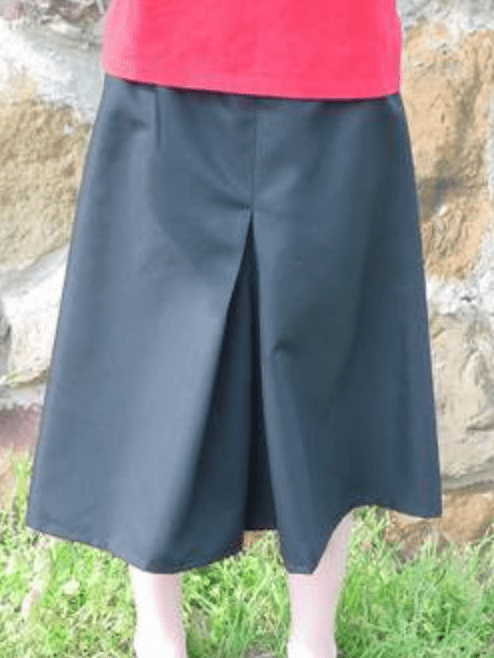
Being part of a high-demand fundamentalist religion, such as the IFB, profoundly shaped my perspective on beauty standards and my body. In these types of religious circles, strict and often unrealistic ideals about physical appearance are enforced, rooted in rigid interpretations of modesty and morality. This environment can create a deeply ingrained sense of body shame, judgment, and self-criticism.

culottes | lookingjoligood.blog

Within these high-demand communities, the shape and appearance of one’s body can be scrutinized as a reflection of moral and spiritual standing. Adherence to specific dress codes and behaviors is seen as evidence of one’s piety and commitment to religious principles. This can create an oppressive atmosphere where any deviation from the norm is judged harshly, leading to a persistent internalization of body shame.

Stepping away from the high-demand religion has allowed me to see that the shape of my body is not a moral failing. Our bodies are diverse, influenced by genetics, health, and a host of other factors that have nothing to do with our character or spiritual worth. Equating body shape with moral value is a flawed perspective that only perpetuates harmful judgment and exclusion.

Rejecting these restrictive beauty standards and embracing body positivity has been crucial for my healing and self-acceptance. It involved challenging deeply ingrained beliefs, celebrating the diversity of human bodies, and learning to love myself as I am. By shifting the focus from rigid conformity to appreciating the uniqueness of each individual, I have learned I can combat the damaging effects of body shaming and promote a more inclusive and compassionate way of thinking.

This mental change hasn’t been easy. It involved unlearning deeply ingrained beliefs and confronting the internalized shame that stemmed from years of conforming to external expectations. But with each step, I’ve grown stronger and more compassionate toward myself. I’ve come to realize that my value isn’t determined by my appearance but by who I am as a person. Our bodies, in all their diversity, deserve respect and kindness.

No act of Kindness is ever wasted | lookingjoligood.wordpress.com

Learning to accept my own body’s perceived flaws has made it easier for me to be kind to myself and, in turn, others. By embracing my imperfections, I’ve cultivated an internal empathy, allowing me to appreciate the uniqueness of myself and others without judgment. This shift in perspective has made me a more compassionate and supportive person, which everyone around me benefits from.

True beauty comes from authenticity and self-acceptance, not from adhering to an unrealistic and narrow set of standards. Everyone deserves to feel confident and valued, regardless of their physical appearance. The shape of my body is not a moral failing; it is a natural and unique expression of who I am. By recognizing this, I have been able to let go of the guilt and shame imposed by unrealistic beauty standards. Embracing my body as it is has allowed me to focus on what truly matters: my health, my happiness, and my overall well-being.

Laura lookingjoligood.wordpress.com
disclaimer | lookingjoligood.blog

Disclaimer: The personal experiences shared in this post are based on my personal perspective. While I chose to leave the IFB to find a more gracious and loving community, it is important to acknowledge that individuals may have different experiences and find happiness within the IFB or any other religious institution. The decision to leave the IFB does not imply a loss of faith, as faith is a deeply personal and subjective matter. It is essential to respect and recognize the diversity of experiences and perspectives within religious communities. The content shared is for informational purposes only and should not be construed as professional advice, guidance, or a universal representation of the IFB or any religious organization. It is recommended to seek guidance, conduct research, and consider multiple perspectives when making personal decisions or exploring matters of faith.

Lifestyle

Don’t Compare Your Insides to Someone Else’s Outside

“Don’t compare your insides to someone else’s outside.”

It’s so easy to fall into the trap of looking at other people’s lives and thinking they have it all together, that everything is perfect for them, and that we somehow fall short in comparison. But the truth is, we often see only what others choose to show us – their “outside” or public face. We rarely get to see the struggles, doubts, and insecurities that go on inside.

We all have our inner battles, our moments of self-doubt, and our personal challenges. It’s a part of being human. So, when we start comparing our own struggles and inner feelings to someone else’s seemingly perfect exterior, we’re not playing a fair game.

Social media, for example, is often just a highlight reel of people’s lives. It’s where they showcase the best moments and hide the rest. But behind those curated posts are real, complex people facing their own set of hurdles, feelings and struggles.

It’s important to be kind to yourself and recognize that you’re doing the best you can with the hand you’ve been dealt. Your life is uniquely yours, and it’s filled with experiences that make you who you are. Don’t be too hard on yourself when you see someone else’s seemingly perfect life. They have their own struggles, insecurities and imperfections too, even if they’re not on display.

In the end, focus on your own progress, your own growth, and your own path. Comparison rarely brings happiness; it often leads to unnecessary stress and anxiety. Embrace your uniqueness, and remember that it’s perfectly okay to have your own set of ups and downs. You are who you are supposed to be just the way you are.

lookingjoligood.blog
Finding Faith Following Fundamentalism

Don’t Throw Good Money After Bad: Why Leaving Can Be The Best Investment

The familiar adage, “Don’t throw good money after bad,” often transcends its financial origins, it extends to our emotional, mental, and spiritual investments too. It offers a simple yet profound lesson that applies to various aspects of life. It particularly resonates when contemplating the decision to remain in a controlling and toxic environment. In this context, the wisdom behind this saying encourages us to reevaluate our commitment to situations that offer little, if any, positive outcomes. When we find ourselves trapped in such an environment, whether it’s a toxic relationship, a stifling community, or an oppressive workplace, the temptation to stay, hoping things will change, can be powerful yet detrimental.

At first, it might seem like sticking it out is the right thing to do, especially if we’ve invested so much of ourselves – our time, energy, and emotions – into it. We believe that if we just try a little harder, endure a little longer, or give it one more chance, things will improve. It’s a natural human inclination to hold onto what we’ve already invested in, fearing that walking away means admitting defeat or failure.

However, as time goes on, we often realize that our investment of “good” – our well-being, peace of mind, and happiness – is only leading to diminishing returns. The toxic environment continues to drain us, leaving us feeling depleted and disheartened. We begin to see that no amount of “good” we pour into it can change the fundamentally toxic nature of the situation.

In such moments, we need to remind ourselves of the wisdom behind the phrase “Don’t throw good money after bad.” It’s a call to recognize when it’s time to cut our losses and redirect our resources, including our most precious ones – our time and emotional energy, towards something that truly nourishes our well-being and personal growth.

In my own personal situation growing up within the Independent Fundamental Baptist (IFB) movement, I initially found comfort in its doctrines and sense of tight knit community. However, as I grew older, I couldn’t ignore the emotional toll it was taking on me. The stifling environment discouraged questions and critical thinking, encouraging control and judgment. The easy thing to do would have been to stay and continue to hope that things would change, or perpetuating the belief that I was deeply flawed, at fault, and needed to change.

Over time, I realized that my continued involvement in that community was akin to throwing “good money” in the form of my time, energy, and emotional well-being “after bad.” The emotional burden of living in a controlling and toxic environment was becoming overwhelming. Leaving that church and way of thinking meant departing from the community I had known for years. Leaving was a necessary step to regain my personal freedom and emotional well-being. In retrospect, the decision to leave was essential for my mental and emotional health, allowing me to explore my faith and values in a more authentic and fulfilling way.

Staying in a toxic environment, hoping it will transform, can be a futile endeavor. It’s not about giving up; it’s about choosing to invest in ourselves, our happiness, and our future rather than continuing to throw “good” into something that’s fundamentally “bad” for us.

Laura lookingjoligood.wordpress.com
disclaimer | lookingjoligood.blog

Disclaimer: The experiences shared in this post are based on my personal experiences and perspective. I am not an expert, but I was part of a high demand community for the majority of my life. I acknowledge that I am on a continuous journey of growth and self-improvement. I am aware that I don’t always respond or behave in the perfect way, as I am only human. While I may stumble along the way, my intention is always rooted in creating positive interactions and demonstrating consideration for others. I hold firm to the belief that treating people with kindness and respect is of utmost importance. While I chose to leave the IFB to find a more gracious and loving path, it is important to acknowledge that individuals may have different experiences and find happiness within the IFB or any other religious institution. The decision to leave the IFB does not imply a loss of faith, as faith is a deeply personal and subjective matter.