Abstract/TL;DR: Exploring why the teachings of the IFB affected me deeply while others seemed to be able to stay or move on easily after leaving the IFB. It’s a complex interplay of personalities, life experiences, and emotional investments. Questioning beliefs led to guilt, fear, and confusion. Different support systems and resilience levels may influence how individuals process their experiences. Healing is unique to each person, and comparing ourselves to others is counterproductive. Seeking support from understanding individuals and acknowledging the impact of the group are essential steps in finding freedom and reclaiming our own beliefs and values. Healing is a gradual process, and it’s okay to take the time needed for self-discovery and growth.
As I have mentioned before, being part of the IFB community was a significant part of my life for many years. It provided a sense of belonging and familiarity, and I cherished the connections I had with many of my fellow church members. However, as time went on, I started to feel the weight of the controlling nature of the group.
I’ve often wondered why the actions and teachings of the group affected me so deeply while others seem to have no issue with staying in the community or moving on without much difficulty. It’s a question that has lingered in my mind for a while now.
The question of why some people are more affected than others by a controlling group like the IFB is complex. While I don’t have all the answers, the response seems to be multifaceted. It likely involves a combination of factors, including personalities, past experiences, commitment, and involvement, all shaping our responses to such environments.
Firstly, I believe part of it has to do with our unique personalities and life experiences. We all process and internalize things differently based on our individual backgrounds and vulnerabilities. Some people may naturally possess a more independent and critical thinking nature, making it easier for them to question and challenge the doctrines presented to them. On the other hand, those who are more trusting or predisposed to seeking authority figures may find themselves more susceptible to the group’s influence.
For me, being part of the group provided a sense of belonging and purpose, but it also meant conforming to strict rules and beliefs that sometimes clashed with my own intuition. As I began to question those beliefs and the control that was imposed, I experienced a whirlwind of emotions. Guilt, fear, and confusion all weighed heavily on my heart. The fear of rejection and judgment from the community kept me bound to its teachings for far too long. As time went on I was deeply affected by being told one thing while I witnessed others acting in the opposite way. (Most would call this hypocrisy. No one likes to be called a hypocrite, but the IFB seems to get especially offended by this label, probably because it hits so close to home and the truth hurts…)
Past experiences can significantly influence our susceptibility to the influence of controlling groups. People who have gone through trauma or emotional vulnerabilities may have a greater inclination to seek a sense of belonging and stability within such communities, even if it means sacrificing some personal agency. The appeal of being part of a group, especially the “inner circle,” can be enticing. In my case, my connection to the group was particularly strong because the majority of my family shared the same beliefs and regularly served and attended the church services.
Conversely, some people might have had different support systems or life circumstances that made it easier for them to detach from the teachings of the controlling group. Their level of emotional investment in the community might not have been as profound, leading to lesser impact on their beliefs and actions.
The depth of impact can also be influenced by the intensity of involvement and the duration spent within the group. The longer and more intensely someone is exposed to the group’s teachings, the more profound its effects can be, both while in the community and even after leaving. Some may be able to stay within the group for years, seemingly unaffected, while others, like me, may need to heal and grow after leaving.
In my case, I was born into this community, and it became the only reality I knew. Throughout my upbringing, my family and I were intricately involved in various church activities. We were always ready to serve and participate, regardless of whether the events directly involved us or not. Choosing to distance myself was a choice to leave everything I had ever known and virtually start over.
After leaving, the process of healing and self-reflection varies significantly from person to person. Some may find peace and healing through supportive relationships, therapy, or their inherent resilience, moving forward with fewer scars. Others may need more time and support to confront the psychological and emotional effects of the group’s teachings and find their path toward growth.
Healing is a personal and individual process, and there’s no right or wrong way to navigate life after leaving a controlling group. Each person’s journey is valid, and comparing ourselves to others can hinder our progress.
Also our ability to heal and self-reflect differs among individuals. Some may naturally possess resilience, allowing them to move on without dwelling in the past. However, for others, like myself, it might require more time and effort to process the emotional baggage left behind by the experience. For instance, my husband, who is strong, sensible, and logical, seemed to work through everything with little turmoil, while three years later, I am still processing certain aspects of my experience.
I don’t have an answer for why I was so affected by the negative actions and teachings of my former church, or why it has taken me so long to process everything. But I have learned that healing after leaving a controlling group or situation is a unique and individual process, and there is no one-size-fits-all approach. Comparing ourselves to others can hinder our progress and growth.
Recognizing that healing is not linear is crucial. Each step we take towards healing and growth, regardless of its pace, is a significant accomplishment. It’s essential to be patient and compassionate with ourselves as we navigate through the complexities of healing.
Acknowledging the impact the group had on me was the first step toward finding freedom and peace in reclaiming my beliefs and values. Healing is a gradual process, slow progress is still progress, and it’s okay to take the time needed to rediscover myself and create a life that aligns with my values and convictions.
Disclaimer: The experiences and reactions described in my personal account are unique to my journey and perspective. While I share my story to provide insight into the impact of the group’s teachings on my life, it is essential to remember that each individual’s experience may vary. Some may find it easier to move on from such experiences, while others, like myself, might require more time and self-reflection to heal from the effects of the teachings. Our responses are shaped by our unique personalities, backgrounds, and support systems. It is crucial to respect and acknowledge the diversity of experiences among individuals who have been part of similar groups or communities. While no longer the case for me, some people find calm and support in groups such as the IFB due to the strong sense of community, shared beliefs, and structured framework that these groups provide. For some people, being part of a close-knit community that shares a common faith can offer a sense of belonging, purpose, and security. The structured rituals, traditions, and moral guidelines offered by such groups may bring a sense of stability and comfort in navigating life’s uncertainties.
Abstract/TL;DR:BIG T/little t Trauma is a psychological framework that distinguishes major traumas from smaller, cumulative stressors. BIG T Trauma involves significant and distressing events like abuse or natural disasters, while little t Trauma refers to ongoing stressors like bullying or family conflict. Both types of trauma can have a profound impact on a person’s well-being, and it’s crucial to recognize and address them for healing and mental health.
Disclaimer: The information provided is based on general knowledge and personal experience and should not be considered as a substitute for professional medical advice or treatment. While I am a registered nurse, I am not your personal healthcare provider. It is advisable for you to consult with your own designated healthcare professional to determine the best course of action for your specific situation for personalized guidance and recommendations tailored to your specific needs.
A papercut is a small, superficial wound that occurs when the sharp edge of a piece of paper or other thin material cuts through the outer layer of the skin. Despite its size, it can be surprisingly painful due to the paper’s edge slicing into sensitive nerve endings. The affected area may become red, and there might be a slight amount of bleeding. The pain can be more intense than one might expect for such a minor injury, and the wound typically heals relatively quickly. Though it may seem insignificant, anyone who has experienced a papercut knows that it can be an irritating and bothersome injury. (I hate papercuts! My toes are curling, I have goosebumps and a shiver down my spine just describing a papercut.)
Just as a paper cut can continue to sting when exposed to irritants at different times before it eventually heals, trauma can also evoke emotional pain when triggered by various factors during the healing process.
When we experience a paper cut, the initial pain may subside, but the wound remains sensitive. Even minor contact with the affected area can trigger a fresh wave of discomfort, making us aware that the healing process is ongoing. Similarly, when we go through trauma, whether BIG T or little t, the initial shock and acute distress might fade with time. However, the emotional wound left behind remains sensitive and can be easily reactivated by different triggers.
For instance, a survivor of a car accident may feel relatively stable in their daily life, but the sound of screeching tires or the sight of a crash on TV could suddenly resurrect feelings of fear and anxiety. Similarly, someone who experienced emotional neglect during childhood might find themselves struggling with feelings of worthlessness or abandonment in certain interpersonal situations.
Both physical wounds and emotional traumas heal at their own pace. While the pain from a paper cut might fade within a few days, emotional healing from trauma can take much longer. Just like a paper cut can leave a scar, trauma can leave lasting emotional imprints that require time, self-compassion, and support to fully recover.
The key is to recognize that both paper cuts and trauma healing are susceptible to reactivation by various triggers. It’s essential to acknowledge and address these triggers, offering ourselves patience and understanding throughout the healing process. By doing so, we can gradually reduce the sensitivity to these triggers and foster resilience in the face of future challenges.
As I look back on my journey through life, I realize that the concept of trauma is not always limited to big, dramatic events that shake us to our core. Instead, it can be a slow and steady erosion of our well-being, a death by a thousand paper cuts so to say . Throughout the years, these seemingly insignificant moments accumulate, leaving deep imprints on our minds, hearts, and souls.
Growing up, as we all do, I faced numerous challenges and hurdles, some of which may have appeared trivial to others, but they left lasting scars on my heart. The constant pressure to conform to societal norms, religious pressure, the relentless comparison with others, and the feeling of not being good enough gnawed away at me like paper cuts, slowly wearing me down. It was the accumulation of these small hurts that took a toll on my mental and emotional health, making it difficult to navigate through life with peace of mind anxiety-free.
The fear of judgment and rejection was a constant companion. While overall I don’t lack self confidence, each disappointment and rejection felt like another paper cut, stinging my confidence causing me to doubt. The weight of these experiences slowly made me withdraw and avoid situations that might trigger more pain. Having been manipulated and hurt by those I thought were close to me, I found it challenging to trust others, to open up, and to let myself be vulnerable, fearing that each interaction might lead to more emotional cuts. I would rather distance myself and not be involved than risk being caught up in hurt, drama, and vulnerability.
The pressure to succeed in my career, the heartbreak of failed relationships, and the feeling of inadequacy in various aspects of life all added to the collection of paper cuts. Each setback felt like a confirmation of my perceived inadequacies, reinforcing the negative self-talk that had become ingrained.
I consistently downplayed my struggles and challenges by comparing them to others who had experienced more severe hardships. I have never endured a major traumatic event, I never suffered a Big T trauma. It took me a long time to recognize the true impact of these accumulated paper cuts. I had to learn that acknowledging and addressing the smaller hurts was just as crucial as dealing with more significant traumas.Self-compassion became a lifeline as I sought to heal from these wounds.
Through intentional personal work and self-reflection, I began to peel back the layers and confront the pain that I had buried for so long. It was a gradual process of acknowledging the hurt and learning to let go of the shame associated with it. I had to remind myself that it was okay to feel hurt by these seemingly insignificant events and that my pain was valid.
Healing from “death by a thousand paper cuts” wasn’t a quick fix, but over time, I started to build healthier boundaries and coping mechanisms and surrounding myself with supportive and understanding people.
Now, as I reflect on my past experiences, I realize that it’s essential to be mindful of the impact of seemingly small events on our mental and emotional well-being. Trauma can take many forms, and healing requires us to extend kindness and understanding to ourselves. By embracing the concept of “BIG T/little t Trauma,” I have learned to treat myself with compassion recognizing that the impact of my experiences, both major life events and smaller, seemingly insignificant moments, shapes who I am today. Understanding that not all traumas are overt or easily identifiable has allowed me to be more gentle with myself, acknowledging that even seemingly small stressors can accumulate and affect my well-being.
Through this awareness, rather than judging myself for my reactions or dismissing my feelings as unwarranted, I now honor them as valid responses to the various events in my life. This newfound compassion has empowered me to give myself the time and space needed to heal and grow from these experiences.
Moreover, embracing the concept of “BIG T/little t Trauma” has helped me acknowledge the importance of self-care and seeking support when needed. I no longer downplay my emotions or convince myself that I should be “stronger” in the face of challenges. Instead, I actively seek out helpful resources to navigate the complexities of my feelings and find healthier ways to cope.
By treating myself with compassion, I have also become more understanding and empathetic towards others’ struggles. Recognizing the varied impacts of trauma in people’s lives has allowed me to be a better friend, wife, mother and member of my community. I now approach interactions with greater sensitivity and kindness, knowing that everyone carries their unique burdens and that a little compassion can go a long way in helping others heal.
Embracing the concept of “BIG T/little t Trauma” has been a transformative journey that has enabled me to treat myself and others with the kindness and understanding that we all deserve. It has taught me that our experiences, no matter how significant they may seem, shape our lives and deserve acknowledgment and compassion.
Here is a bit more information about BIG T/little t Trauma.
BIG T/little t Trauma is a framework used in psychology to differentiate between major traumas and more subtle, everyday experiences that can still have a significant impact on an individual’s well-being. The concept was introduced by psychologist Robert J. Anda and his colleagues in their groundbreaking Adverse Childhood Experiences (ACE) Study. (Felitti et al., 2019)
BIG T Trauma: BIG T Trauma refers to major, highly distressing, and often life-threatening events that can have a profound and immediate impact on a person’s life. These events are usually single incidents or short-term occurrences that involve a significant threat to physical or emotional well-being. Examples of BIG T Trauma include:
Physical or sexual abuse
Natural disasters
Serious accidents
War or combat experiences
Sudden loss of a loved one
Witnessing or experiencing violence
Being forced into a situation in which you have a phobia
These types of traumas are more commonly recognized and acknowledged by society, and the effects are often more evident in the person’s functioning and mental health.
Little t Trauma: On the other hand, little t trauma refers to the accumulation of smaller, less severe, and sometimes chronic stressors that may not appear as traumatic on their own but can have a cumulative impact over time. These experiences are often interpersonal in nature and can affect an individual’s emotional well-being and sense of safety. Examples of little t trauma include:
Bullying or social rejection
Emotional neglect or abandonment
Frequent criticism or humiliation
Subtle or overt racism
Microaggressions, discrimination, and prejudice
Loss of a Pet
Ongoing family conflict
Consistent passive aggression
Being part of a toxic community
Financial instability or poverty
Chronic illness or medical issues
Religious and spiritual manipulation
Academic Stress
Accidents or Injuries
Social Rejection
Loss of a Friendship
Feeling the need to keep a secret or hide something
Public Speaking or Performance Anxiety
Having choices consistently made for you, without your input or agency
While each of these events might not be overwhelming on its own, the repeated exposure to such stressors can wear down an individual’s resilience and lead to emotional distress. The effects of little t trauma may not be immediately apparent but can manifest in various ways, such as anxiety, depression, low self-esteem, relationship difficulties, or coping mechanisms like substance abuse.
Understanding the distinction between BIG T and little t trauma is essential because people who have experienced little t Traumas might not recognize or validate their own pain. These individuals might believe that their struggles are not significant enough to warrant attention or that they should just “get over it.” However, acknowledging and addressing these experiences can be crucial for healing and promoting mental well-being.
Therapy and support can be helpful in processing both BIG T and little t traumas, as well as developing coping strategies and building resilience. Recognizing that both types of trauma can have a significant impact allows for a more comprehensive understanding of a person’s life experiences and emotional struggles.
I would like to add that racism can be both a “little t” and “big T” trauma, depending on the specific experiences and the impact it has on an individual. For some people, experiencing subtle or overt racism throughout their lives can be considered a “little t” trauma. These microaggressions, discrimination, and prejudice can accumulate and result in emotional distress, feelings of marginalization, and a decreased sense of self-worth.
On the other hand, for others, racism can lead to more significant and acute traumas, falling under the category of “big T” trauma. This can include experiences of hate crimes, racial violence, systemic discrimination, or witnessing acts of racism targeted at oneself or others.
It is important to recognize that racism affects individuals and communities differently, and the impact of these experiences can be profound and long-lasting. Regardless of whether racism is considered a “little t” or “big T” trauma, it is crucial to address and combat racism in all its forms and offer support to those who have been affected by it.
Brown, J. E., & Collicutt, J. (2022). Psalms 90, 91 and 92 as a means of coping with trauma and adversity. Mental Health, Religion & Culture, 1–12. https://doi.org/10.1080/13674676.2021.2021873
Felitti, V. J., Anda, R. F., Nordenberg, D., Williamson, D. F., Spitz, A. M., Edwards, V. J., Koss, M. P., & Marks, J. S. (2019). REPRINT OF: Relationship of childhood abuse and household dysfunction to many of the leading causes of death in adults: the Adverse Childhood Experiences (ACE) Study. American Journal of Preventive Medicine, 56(6), 774–786. https://doi.org/10.1016/j.amepre.2019.04.001
Felitti, V. J., Anda, R. F., Nordenberg, D., Williamson, D. F., Spitz, A. M., Edwards, V. J., Koss, M. P., & Marks, J. S. (1998). Relationship of childhood abuse and household dysfunction to many of the leading causes of death in adults. American Journal of Preventive Medicine, 14(4), 245–258. https://doi.org/10.1016/s0749-3797(98)00017-8https://pubmed.ncbi.nlm.nih.gov/9635069/
Lanius, R. A., Frewen, P. A., Vermetten, E., & Yehuda, R. (2010). Fear conditioning and early life vulnerabilities: two distinct pathways of emotional dysregulation and brain dysfunction in PTSD. European Journal of Psychotraumatology, 1(1). https://doi.org/10.3402/ejpt.v1i0.5467
Loewenthal, K. M. (2022). Religious change and post-traumatic growth following EMDR trauma therapy. Mental Health, Religion & Culture, 1–8. https://doi.org/10.1080/13674676.2021.2016668
Napier, T. R., Howell, K. H., Schaefer, L. M., & Schwartz, L. E. (2020). Differentiating the effects of anxious and avoidant attachment on depression and resilience following trauma. Journal of American College Health. https://doi.org/10.1080/07448481.2020.1762605
Ogilvie, L., & Carson, J. (2021). Trauma, stages of change and post traumatic growth in addiction: A new synthesis. Journal of Substance Use, 27(2), 122–127. https://doi.org/10.1080/14659891.2021.1905093
Shafiei, M., Rezaei, F., & Sadeghi, M. (2022). The role of childhood traumas, interpersonal problems, and contrast avoidance model in development of the generalized anxiety disorder: A structural equation modeling. Psychological Trauma: Theory, Research, Practice, and Policy, 14(3), 377–385. https://doi.org/10.1037/tra0001117
I’ve always been a bit of a perfectionist. I like to do things right, and I don’t like to make mistakes. This can be a good thing, but it can also be a bit of a hindrance. Sometimes, I’m so focused on doing things perfectly that I don’t allow myself to learn from my mistakes.
That’s where constructive criticism comes in. Constructive criticism is feedback that is given in a way that is helpful and not hurtful. It’s about pointing out areas where you can improve, without making you feel bad about yourself.
I’ve learned to embrace constructive criticism over the years. I’ve realized that it’s not a personal attack, but rather an opportunity to grow and learn. When I receive constructive criticism, I try to listen to it with an open mind. I ask myself if there’s any truth to what the person is saying, and if there is, I try to figure out how I can improve.
When someone offers me constructive criticism, it’s an opportunity for me to see things from a different perspective. It helps me step outside of my own bubble and gain valuable insights into how I can become better. Instead of feeling defensive or hurt, I try to embrace the feedback with an open mind and a willingness to learn.
Of course, not all criticism is constructive. There’s a fine line between providing helpful feedback and simply being negative. That’s why I value constructive criticism from people who I trust want to help me become a better version of myself. With their help the focus is on identifying areas for improvement while offering practical suggestions for growth. It’s a way of highlighting my strengths and weaknesses without tearing me down.
Constructive criticism has helped me to identify my weaknesses and work on them. It’s also helped me to become more resilient. I’ve learned that it’s okay to make mistakes, as long as I learn from them.
If you’re like me and you’re not always open to constructive criticism, I encourage you to give it a try. It can be a powerful tool for growth and improvement.
Here are some tips I have been working on for receiving constructive criticism in a positive way:
Listen to the feedback with an open mind.
Don’t take it personally.
Ask questions to clarify anything you don’t understand.
Thank the person for their feedback.
Set a goal to improve in the area that was criticized.
Constructive criticism can be a valuable tool for growth and improvement. If you’re willing to listen to it with an open mind, it can help you to become a better version of yourself.
Disclaimer: The information provided is based on my personal experiences, research, and ongoing learning and growth. While I strive to provide accurate and helpful insights, it is important to consult with appropriate professionals or experts for specific advice or guidance. I encourage you to approach the information with a critical mindset and consider your own unique circumstances before making any decisions or taking any actions.
I recently had a conversation with someone who was very passionate about the topic we were discussing. While I wasn’t particularly invested in the subject, I also didn’t agree with their point of view. As they started to get heated, I stated, “Let’s agree to disagree.” They quickly replied, “No, we need to get on the same page on this issue.” I simply stated, “We are not even at the same library, never mind the same book nor page.” They tried to continued the conversation and I stated again, “Let’s agree to disagree.” Once again they declined and continued to debate the topic. I stated, “Whether you agree to disagree or not, that is exactly what we are going to do, because I don’t plan on changing my view to match yours, and I’d rather not argue about it.”
When it comes to human interaction, one of the most fundamental principles is the ability to agree to disagree. This phrase encapsulates the idea that people can maintain amicable relationships and engage in productive conversations, even when they hold opposing viewpoints. (While I was able to keep my cool in the above scenario, that is not always the case when it comes to me agreeing to disagree. I’m sure if I were the one debating about a subject I am passionate about I might have been less inclined to agree to disagree. )
The notion of agreeing to disagree is frequently called upon when people find themselves at odds over certain beliefs, values, or opinions. It is a practical approach to handle disagreements without causing unnecessary conflict or hostility. Instead of engaging in a fruitless battle to convert someone to your viewpoint or shutting down a conversation entirely, this approach encourages mutual respect and creates a peaceful coexistence of differing ideas.
The phrase “agree to disagree” should not be misunderstood as an endorsement of the opposing viewpoint. Rather, it signifies a willingness to coexist with differing opinions, acknowledging the legitimacy of someone else’s perspective while maintaining the integrity of one’s own convictions.
Agreeing to disagree demonstrates tolerance for diversity of thought and respect for individual autonomy. It upholds the principle that people have a right to their own beliefs and that these beliefs should be respected, even if they differ from our own. Engaging in a constant battle to change someone’s viewpoint can be exhausting and counterproductive.
Many issues and ideas are multifaceted and complex, making it unreasonable to expect everyone to share the same perspective. By agreeing to disagree, we recognize that there may be valid reasons for differing opinions and that not all issues can be reduced to a simple right or wrong. When people feel safe to express their opinions without fear of judgment or backlash, it creates open and honest dialogue. This, in turn, can lead to a better understanding of different viewpoints and, on occasion, even a change of mind.(Keep in mind, as discussed in a previous post, your perception is your reality, but just because something is a perceived reality doesn’t mean it is the truth.)
It’s important to distinguish between agreeing to disagree and passive agreement. Passive agreement implies a lack of critical thinking or a willingness to go along with any viewpoint presented, which is not what agreeing to disagree is about. Instead, agreeing to disagree encourages thoughtful reflection and the recognition that people can genuinely hold opposing views based on their unique experiences and perspectives.
The concept of “agree to disagree” is a valuable tool for navigating complex human interactions, especially when confronted with differing opinions. It embodies the spirit of tolerance, respect, and open dialogue while allowing others to maintain their own beliefs and convictions. So, just because someone is not actively disagreeing with you doesn’t mean they agree with you; they may simply be practicing the art of agreeing to disagree.
Now let’s talk about this concept in terms of the high control religious group I grew up in…
Navigating the concept of “agreeing to disagree” within Independent Fundamental Baptist (IFB) communities poses significant challenges. These challenges arise from the strong emphasis placed on doctrinal uniformity and conformity to specific beliefs and practices and behaviors. The IFB’s focus on theological rigidity can make it particularly hard for individuals within these communities to embrace differing viewpoints.
One key factor contributing to this difficulty is the presence of a set of core beliefs within IFB churches that are considered non-negotiable. These beliefs range from strict interpretations of Scripture to moral and ethical codes, and members are expected to adhere to them unquestionably. This strict adherence can create an environment where questioning or expressing alternative beliefs is discouraged.
Additionally, there’s often a fear of potential consequences for those who speak out against established doctrine within IFB communities. These consequences may include social ostracization, expulsion, or being labeled as a rebel. This fear can be a significant deterrent for people considering voicing dissenting opinions.
The close-knit and isolated nature of IFB communities makes it challenging to accept diverse perspectives. This isolation reinforces the belief that their own views are the only correct ones.
The hierarchical structure in IFB churches is a critical factor in the reluctance to embrace the concept of “agreeing to disagree.” In these communities, pastors and church leaders often hold immense authority and power. Challenging established teachings or expressing differing beliefs can be seen not just as questioning doctrine but as challenging the authority of these leaders.
Within IFB churches, questioning authority is often discouraged, if not outright condemned. Pastors are typically regarded as spiritual authorities who have been anointed by God to guide the congregation. This perception of authority is reinforced by the idea that they have a direct line to God’s will and that questioning them is akin to questioning God himself. As a result, congregants may be hesitant to express disagreements or differing beliefs, fearing not only the potential social consequences but also spiritual repercussions.
Furthermore, pastors within IFB communities are often trained in a specific doctrinal framework, which they are expected to uphold and defend. They may not be receptive to alternative viewpoints, as this can be seen as undermining their authority and the doctrinal integrity of the church. This resistance to being disagreed with, combined with the hierarchical structure, further discourages open discussions of differing beliefs and contributes to the overall difficulty of embracing diverse perspectives within IFB churches.
The fear of severe spiritual consequences for straying from established doctrine is a powerful force within IFB communities. This fear encompasses a range of concerns, including the dread of potential damnation or eternal punishment for holding or expressing beliefs that differ from the accepted norms. This fear can be paralyzing, effectively discouraging individuals from openly discussing or even questioning differences in belief. It creates a climate where conformity is not only encouraged but enforced, as any deviation is viewed as a grave risk to one’s spiritual well-being. Consequently, this fear reinforces the existing rigid structures and can be a significant barrier to embracing diverse perspectives within these communities.
Promoting a culture of respectful dialogue and understanding is a positive step toward creating an environment where people can acknowledge and discuss differences without the fear of dire consequences. Changing the deeply ingrained mindset of doctrinal rigidity within some IFB communities may never happen, and in turn, we’ll just have to agree to disagree about it.
Disclaimer:It’s important to acknowledge that this is my opinion based on my own life experiences. It’s essential to recognize that not all people within IFB churches find it impossible to “agree to disagree.” Some may be more open to dialogue and respectful of differing viewpoints, acknowledging that genuine faith can coexist alongside diverse beliefs.People have diverse experiences and perceptions, and some may genuinely enjoy and benefit from their involvement in the IFB. I may disagree, but unlike what I experienced while in the IFB I do not intend to diminish or invalidate those positive experiences but rather seeks to highlight the complexities of personal perspectives and their role in shaping our understanding of the world.
Recently I’ve been thinking about the concept of “your perception is your reality.” While this is absolutely true there is another side to that concept, just because something is a perceived reality doesn’t mean it is the truth. Let me explain…
A little while ago, I found myself in a heated discussion with a friend. We had been discussing a controversial topic, and it seemed like our viewpoints were irreconcilable. I firmly believed I was right, and I felt that my perception of the situation was unquestionably the absolute truth.
As the discussion continued, I became increasingly frustrated. It felt like my friend was intentionally ignoring the facts, and I couldn’t understand how they could be so blind to what I saw as the obvious reality. I even started questioning our friendship, wondering how someone I cared about could hold such misguided beliefs.
Then, during one particularly intense exchange, my friend paused and said something that stuck with me ever since: “I understand where you’re coming from, and I respect your perspective. But remember, your perception is your reality, and so is mine.”
Those words hit me like a revelation. I realized that while I was convinced of the righteousness of my position, my friend was equally convinced of theirs. We were both seeing the same situation through our unique lenses, shaped by our life experiences, values, and beliefs.
After some reflection, I decided to take a step back and consider my friend’s viewpoint more seriously. I began researching the topic from different angles, seeking out various opinions and sources of information. In doing so, I discovered that the issue was far more complex than I had initially thought.
As I gained a deeper understanding of the subject, my perspective started to shift. I saw that my initial perception, while valid in many aspects, was not the whole truth. It was a humbling realization, and it taught me the importance of humility and open-mindedness.
This experience served as a reminder that in our interactions with others and our understanding of the world, it’s essential to acknowledge that our perception is just one piece of the puzzle. Embracing the idea that your perception is your reality, but just because something is a perceived reality doesn’t mean it is the truth has since guided me in approaching disagreements and complex issues with an open mind and willingness to learn. The truth often lies somewhere in the middle, influenced by objective facts and multiple perspectives.
Ultimately, my friend and I didn’t completely agree on the issue, but our friendship remained intact. We had both learned a valuable lesson about the nature of perception and truth. It became clear that while our perceptions were our individual realities, there was often a more nuanced and multifaceted truth that required exploration and empathy.
Just because something feels true doesn’t necessarily make it an absolute truth that applies universally. Our perception is like a filter through which we view the world. It can sometimes distort or color the reality around us. It’s like wearing tinted glasses; the world may look a certain way through them, but that’s not how it appears to someone else with a different pair of glasses. (Occasionally, we wear rose-colored glasses, making it extremely challenging to notice red flags.)
Our beliefs, experiences, and upbringing all come together to create our personal worldview. And there’s nothing wrong with that – it’s a fundamental part of being human. However, true reality often exists beyond our perceptions, influenced by objective facts and varying viewpoints. Recognizing the distinction between our personal reality and the objective truth is essential for open-mindedness, empathy, and personal growth. It reminds us that there’s always room for learning and evolving our understanding of the world.
Imagine a room with people from different backgrounds and experiences. Each person might describe the room differently based on where they’re standing or what they’re focusing on. Their descriptions would be their personal realities, shaped by their unique viewpoints.
Growing up in the Independent Fundamental Baptist (IFB) community, I was surrounded by a set of beliefs and practices that were presented as absolute truth. From a young age, I was taught that our way of life was the only path to righteousness. This community was my entire world, and my perception of reality was shaped by its teachings.
One of the core beliefs in the IFB was the notion that the outside world was a morally corrupt and dangerous place. We were repeatedly told that secular influences were leading people astray, and that our isolation from these influences was crucial for our salvation. This belief was ingrained in me to the point where I viewed the outside world with suspicion and even fear.
As a result, I grew up sheltered from many aspects of the real world. I was discouraged from pursuing friendships with non-believers, and my education was filtered through a strictly religious lens. While I believed that I was living a righteous and protected life, I was also unaware of the diversity of experiences and perspectives beyond my community.
It wasn’t until I was an adult that I began to question my perception of reality. As I ventured into the wider world, I encountered people from various backgrounds and beliefs. I realized that the “dangerous” world I had been warned about wasn’t so perilous after all. People from different walks of life were kind, compassionate, and lived by their own moral codes.
This awakening challenged the core belief I had held for so long: that the perception of reality within the IFB was the only valid one. I began to understand that my upbringing had provided me with a narrow view of the world. While the IFB had taught me that their way was the absolute truth, I came to see that truth is often subjective and influenced by one’s perspective.
The IFB had instilled in me the idea that their perception was the only reality, but leaving the community had shown me that my reality through their view was limited and biased. I learned that just because something is a perceived reality, it doesn’t necessarily equate to the universal truth. This realization encouraged me to be more open-minded, empathetic, and willing to engage with diverse perspectives.
In retrospect, my journey out of the IFB taught me that questioning one’s perception of reality is essential for personal growth. It’s a reminder that our beliefs, no matter how deeply ingrained, should be subject to scrutiny and self-reflection. While my time in the IFB was a part of my reality, it’s not the only truth, and I now embrace a more inclusive and open-minded outlook on the world.
The distinction between our personal reality and objective truth is vital. It reminds us that there’s always more to learn and discover. It encourages us to be open-minded, to listen to others, and to consider alternative perspectives.
Disclaimer:It’s important to acknowledge that this is my opinion based on my own life experiences. While this discussion explores the concept of perception and reality within life and in the context of the IFB, I fully understand that there are individuals who find genuine fulfillment and happiness within religion and the IFB community. People have diverse experiences and perceptions, and some may genuinely enjoy and benefit from their involvement in the IFB. I ay disagree, but unlike what I experienced while in the IFB I do not intend to diminish or invalidate those positive experiences but rather seeks to highlight the complexities of personal perspectives and their role in shaping our understanding of the world.
Like many people, I used to believe that self-care was all about simple acts of treating myself. I enjoy lighting a candle, taking a bath, reading a good book, gratitude journaling, and doing yoga. While these practices are enjoyable and provided a brief escape from the daily grind, I have come to realize that is not enough.
A turning point in my life led me to question the depth of my self-care practices. It was during a particularly challenging period when I found myself overwhelmed constantly prioritizing the needs and wants of others at the expense of my family and my own well-being. During this period of self-reflection, I started to realize the shortcomings of my shallow self-care practices. I couldn’t continue to treat myself poorly all day everyday and expect a Caramel Ribbon Crunch Frappuccino to solve all of my problems.
As I dug deeper into intentional personal growth, my perspective on self-care evolved significantly. It shifted from being solely about momentary relaxation to becoming a continuous dedication to my mental, emotional, and physical well-being. While I still valued lighting a candle and treating myself to a Frappuccino, they were no longer the sole basis of my self-care routine.
Self-care goes beyond lavender baths, candles, and yoga. While gratitude journaling is a positive thing, on it’s own it quite often is not enough. Self-care encompasses the holistic care of your mental, emotional, physical, and spiritual well-being. It’s about tuning into your needs and desires and making choices that prioritize your overall health and happiness.
True self-care, I realized, strikes a delicate balance between the soothing moments of external pampering and the depth of self-compassion and boundary-setting. It is an ever-evolving journey, an exploration of nurturing both the external and internal dimensions of oneself, resulting in lasting change and genuine well-being.
Deeper self-care involves setting boundaries. It means learning to say no to things that don’t align with your values or that you simply don’t have time for. It also entails clear communication of your needs and expectations to others. (You can read more about what I have to say about setting boundaries by clicking HERE)
Setting boundaries became a pivotal aspect of my authentic self-care. I recognized that my habit of consistently saying “yes” to others often meant saying “no” to myself, my family, and my own needs. As I acquired the skill of assertively but kindly setting boundaries, I witnessed transformative changes not only in my relationships but also in how I valued and respected myself and my time.
Another facet is the practice of processing your emotions. This involves allowing yourself to feel the full spectrum of your emotions, both positive and negative, without judgment, giving yourself permission to experience them fully. It’s about recognizing that it’s okay to feel sadness, anger, fear, or any other emotion that arises. Rather than pushing these feelings aside or criticizing yourself for having them, you acknowledge their presence with compassion.
Talking to a therapist or a trusted friend can be immensely helpful, as it provides a safe space to express your emotions, gain insights, and receive support. (I am a verbal processor, it is extremely helpful for me to talk through my emotions with a trusted person. If you have ever been one of these people in my life know that I am forever grateful for you. )
Journaling is another powerful way to process emotions. I’m not talking about jotting down 3 things you are grateful for, but writing down your true inner thoughts and feelings. This allows you to explore and make sense of them. It can be a cathartic experience, helping you gain clarity and perspective on your emotions and the situations that trigger them. (Personally, I didn’t even realize some of my true thoughts and feelings until I started writing them out and working through them while journaling.)
For those inclined toward creative expression, such as art, music, or dance, these mediums can serve as valuable outlets for processing emotions. Creating art, whether through painting, sculpture, or other forms, can be a therapeutic means of channeling and externalizing what’s going on inside.
Self-compassion is yet another crucial component of self-care. It’s about treating yourself with kindness and understanding, even when you make mistakes, and accepting yourself for who you are, wounds, scars and all. I am learning to treat myself with the same tenderness and understanding that I readily extended to friends and loved ones. This shift in mindset is allowing me to confront my own struggles and emotions without harsh self-judgment, which has encouraged a sense of inner peace.
I made a deliberate shift in my self-dialogue by replacing negative self-talk with intentional positive affirmations. Instead of criticizing or doubting myself, I began consciously and regularly affirming my worth, capabilities, and potential. These positive affirmations have become a powerful tool to counteract self-limiting beliefs and boost my self-esteem. Over time, this practice not only transformed my mindset but also had a significant impact on my overall well-being.
Positive affirmations are powerful statements that can help shift your mindset towards a more optimistic and self-empowered outlook. Here are some examples:
“I am capable of achieving my goals and dreams.”
“I am worthy of love and respect.”
“I am resilient and can overcome any challenges.”
“I believe in my abilities and trust myself.”
“I am in control of my thoughts and emotions.”
“I embrace change and grow with every experience.”
“I am grateful for the abundance in my life.”
“I am at peace with my past, present, and future.”
“I am constantly evolving and becoming the best version of myself.”
“I deserve happiness, and I choose to be happy.”
“I attract positive and supportive people into my life.”
“I love and accept myself unconditionally.”
Taking care of your physical health is also vital. This encompasses maintaining a balanced diet, getting enough restful sleep, and engaging in regular exercise.
Listening to your body is an essential practice of self-care. It involves paying attention to physical cues, such as pain, fatigue, or discomfort, and responding accordingly. Pushing through pain or ignoring warning signs can lead to injury or worsen existing health issues. Tuning into your body’s signals and respecting its limitations is a form of self-compassion.
Just as important, seeking necessary medical care is integral to caring for your physical health. Regular check-ups with healthcare professionals, screenings, and addressing health concerns promptly are vital components of this self-care aspect. These actions enable early detection and prevention of potential health issues, ensuring you receive appropriate guidance and treatment when needed. Take it from an oncology nurse who has seen first hand, early detection saves lives, an ounce of prevention is worth a pound of cure!
Nurturing your spiritual side is an intrical part of self-care. It involves finding meaning and purpose through various means, including religious or spiritual practices, connecting with nature, or engaging in activities aligned with your values. This form of self-care provides inner nourishment, creating a sense of peace and fulfillment. It’s a personal journey that varies for each person, offering a source of strength and clarity to navigate life’s challenges.
Nurturing your spiritual side doesn’t have to look like the cookie cutter version of attending weekly church services. It can include meditation and mindfulness that cultivate inner peace and self-awareness. Spending time outside in nature encouraging a sense of interconnectedness with the world. Yoga promotes balance and alignment. Journaling and reading deepen your understanding of yourself and the world around you. Self-reflection and prayer fuels personal growth and connection with God. Volunteering provides fulfillment and purpose. Religious or spiritual rituals offer structure, community, and guidance, while connecting with like-minded communities provides support. These practices collectively contribute to a more meaningful connection with your inner self and the world around you. Whether through meditation, nature walks, or purpose-driven actions, spiritual self-care contributes to a deeper sense of well-being.
Here are some tips that have worked for me for cultivating a deeper self-care practice:
Begin by identifying your needs and areas in your life that require more attention in terms of self-care. Are you feeling overwhelmed, stressed, or burnt out? Are you feeling overworked and underappreciated? Is your physical health being neglected? Or do you need to nurture your spiritual well-being?
Explore activities that you genuinely enjoy and that uplift your spirits. This could range from reading a book to immersing yourself in nature or spending quality time with loved ones. Experiment with various activities until you discover what resonates best with you.
Prioritize self-care by scheduling dedicated time for it each day, even if it’s just for a few minutes. Remember, taking time for yourself is not selfish; it’s an essential act of self-care.
Be consistent in your self-care routine. It’s not a one-time endeavor but an ongoing practice that reaps benefits with regularity.
Self-care is a fundamental aspect of a healthy lifestyle. By tending to your well-being, you equip yourself to better handle stress, manage your emotions, and lead a more fulfilling life.
Self-care is highly individualized and not a one-size-fits-all approach. What brings comfort to one person may not resonate with another. The key is to find self-care practices that align with your preferences and lifestyle.
Disclaimer: The information provided is based on general knowledge and personal experience and should not be considered as a substitute for professional medical advice or treatment. While I am a registered nurse, I am not your personal healthcare provider. It is advisable for you to consult with your own designated healthcare professional to determine the best course of action for your specific situation for personalized guidance and recommendations tailored to your specific needs.
Disclaimer:I’d like to preface this post by acknowledging that two things can be true at once. My experiences in fundamentalism includes fond memories from my childhood while at the same time that environment cause me grief and pain. It’s important to recognize that not everything within Baptist fundamentalism is negative; there were aspects that contributed positively to my upbringing. However, it’s equally important to address the complexities. The strict rules and the constant pursuit of an unattainable perfection cast a profound shadow on me. The overwhelming pressure to conform and be perfect combined with the “you know better” mentality, significantly influenced the way I perceive myself and the world as an adult. In reflection I recognize the coexistence of both beneficial and burdensome elements within fundamentalism. I would also like to point out that I have a great relationship with my parents. I am thankful for the lessons I have learned that make me who I am today.
Over the last few months while I have been writing about all the work I have done navigating my way through finding faith following fundamentalism, I have found this process of introspection to be both enlightening and challenging. It has required me to revisit pivotal moments that have deeply influenced my worldview and sense of self. By sharing my journey, I’ve found catharsis and also tried to create a bridge for connection with others who have faced and are facing comparable challenges. Although challenging, this process has proven to be quite therapeutic.
Some posts are easier to write than others. This one, in particular, proved emotionally demanding as it delves into a profoundly personal and sensitive topic. It’s not just about recounting my upbringing within an Independent Fundamental Baptist (IFB) community; it’s about highlighting how this experience deeply influenced not only my perspective on the world but also my perception of myself and my sense of self-worth, especially as a child. While I won’t lay bare every detail, I do want to emphasize how detrimental it can be for a child when they are held to impossibly high standards of perfection within such a community.
Growing up in a fundamentalist environment was like navigating a world of rigid rules and unyielding expectations. I understood from a young age that perfection was the standard, the goal that seemed both elusive and demanding. Perfection is an exceptionally challenging expectation to establish for a child! In my mind, the pressure to adhere to these standards was palpable, as if every misstep was a mark of failure in the eyes of those who believed in these principles and doctrines.
I was reminded that I am saved by grace, a gift beyond comprehension, yet somehow it felt like a lifelong test to prove my devotion and worth of the gift. I often felt like I was handed the exam before even having a chance to be instructed on the materials. This constant pressure to live up to unattainable standards profoundly impacted my sense of self-worth and personal expectations of myself.
For a child navigating this type of world the pressure can be overwhelming, it was for me. The constant fear of making mistakes, of falling short of those lofty expectations, seems to try to stifle creativity, curiosity, and the natural process of learning through trial and error. Instead of encouraging a sense of self-worth, it can lead to feelings of inadequacy and self-doubt. Fortunately, for me I still grew to possess self-confidence, but I consistently felt like I was in the wrong for confidently holding my own viewpoints and opinions.
Such an environment that demands perfection often creates a mindset that views self-worth as contingent on performance. Children may grow up believing that their value as individuals hinges on their ability to meet these unrealistic standards. This mindset can persist into adulthood, affecting not only their self-esteem but also their relationships, ambitions, and overall well-being. They may grow to become adults who are not willing to admit when they have made a mistake or are wrong.
It’s crucial to recognize that childhood should be a time of exploration, growth, and the development. Childhood is a time to learn to live by making mistakes and learning from them with minimal consequences, creating growth, resilience, and the development of a healthy sense of self-worth. When these formative years are overshadowed by the relentless pursuit of an illusive perfection, it can leave deep emotional scars that take years, even a lifetime, to heal. Understanding the impact of such high standards on children is a crucial step in creating more supportive and nurturing environments for the next generation.
My biggest regret in life is that for a time I allowed my own children to be subjected to that same environment. Reflecting on the profound impact it had on my own childhood, and how it influenced my self perception, I deeply regret exposing my own children to the community that had the same overwhelming level of expectation and scrutiny. Thankfully, we left before the impact was irreversible, and overall my children seem unscathed. My regret serves as a powerful reminder that breaking free from such environments was not just an act of self-liberation but also a way to protect the well-being and mental health of my children and my future generations.
(I’d like to emphasize that I have a wonderful relationship with both of my parents. I love them and have no bitterness or resentment whatsoever towards either of them. I truly believe they were doing the best they could with the knowledge and resources they had at the time. Two things can be true at once, while I wish that we had left that community while I was a child, I am thankful for the lessons that I have learned along the way because they make me who I am today.)
Ephesians 2:8-9 tells us that “For it is by grace you have been saved, through faith—and this is not from yourselves, it is the gift of God—not by works, so that no one can boast.” This verse highlights that salvation comes through God’s grace as a gift, not as a result of our own efforts, and it is received through faith rather than by our works.
The concept of being saved by grace, while seemingly liberating, came with its own set of burdens. It was as though the grace bestowed upon me was accompanied by an unspoken obligation – an obligation to constantly prove my worthiness, my gratitude, and my love for God. The assurance that grace had already granted me salvation clashed with the perpetual need to demonstrate that I deserved it. It was a balancing act between embracing the gift and feeling the weight of being worthy of the gift.
At the Christian school I attended and from the lessons taught in Sunday school and church services, the words “you know better” became a familiar refrain whenever I made a mistake, no matter how small. It was as if the missteps I took were seen as conscious defiance rather than human imperfection. The pressure to uphold spiritual maturity and understanding left little room for acknowledging the complexities of growth or questioning. Instead, the reminder that I “knew better” felt like an admonition, a marker of my supposed deviation from the straight and narrow path. If I knew better then, why did I feel as if I couldn’t voice my doubts and questions? Why did I carry the weight of unwarranted guilt for simply making childish mistakes?
As I grew older I struggled through this narrative of salvation through grace, yet the need to constantly be striving for perfection and worthiness. I began to question the very foundation of this ideology. The grace I believed in was meant to be liberating, not a source of constant apprehension, stress, and anxiety.
I was told I was saved by grace yet needed to prove my thankfulness through perfected devotion. However, church leaders once again let me down by preaching and teaching one thing and living another way. Perfection was expected from me, but they did not hold themselves to the same standard while living their own lives. This contradiction left me feeling confused and betrayed. Regardless of their own flaws and shortcomings, they perpetually sought out new imperfections in me. I soon came to realize that no matter how “perfect” I was it was never going to be enough for them.
The dichotomy of grace and the need to prove love through perfection started to unravel. It was a process of untangling the threads of doctrine and personal belief, realizing that the pressure to constantly prove my devotion was not an inherent part of genuine faith.
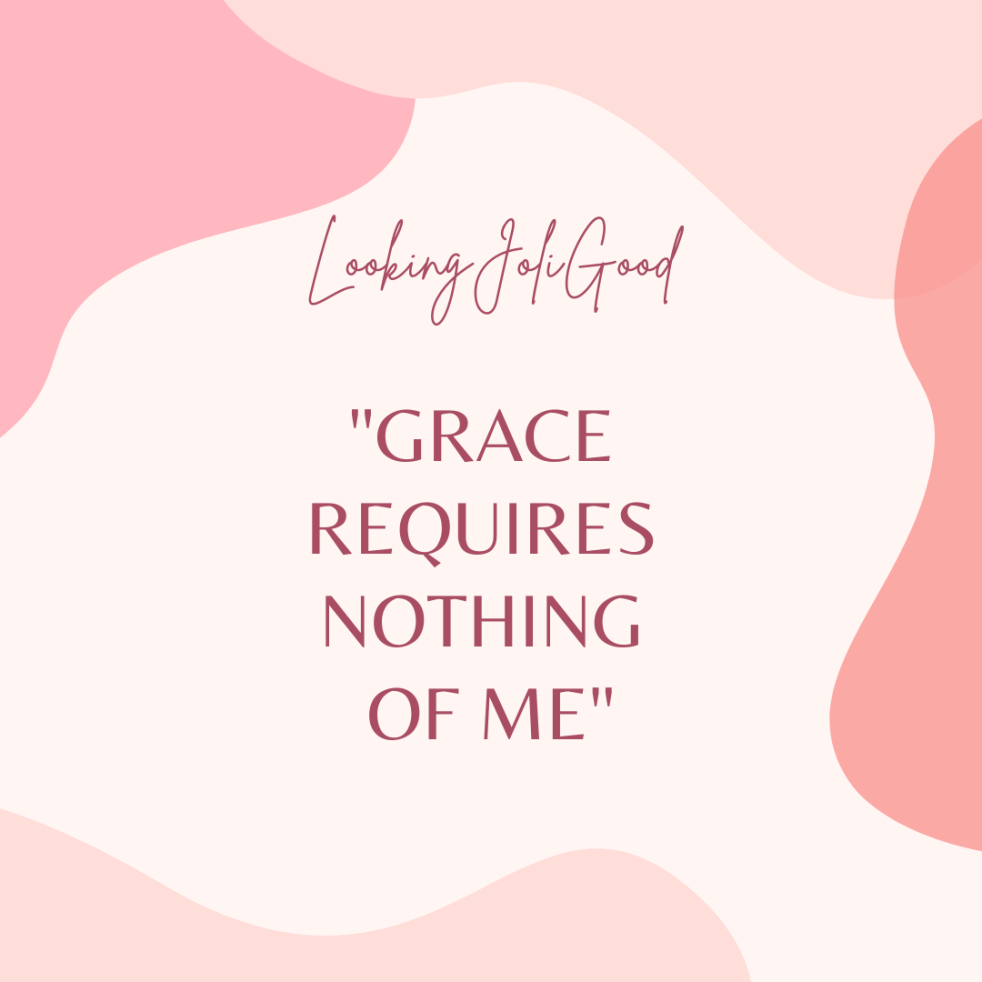
Once I stepped away from the constant messages preached about my inherent worthlessness and my desperate wickedness, a new realization took hold: the truth that grace requires nothing of me and is indeed free despite imperfections.
I have discovered that faith could exist outside the boundaries of performance. Grace, true genuine grace, requires NOTHING of me! Grace doesn’t necessitate an ongoing demonstration of worthiness. Instead, it is an invitation to embrace imperfection and growth. Grace requires nothing of me but an open heart and a willingness to embrace imperfection. The weight of striving for an unattainable perfection began to lift, replaced by a sense of freedom to simply be a flawed yet worthy human.
I will admit that I still often expect perfection from myself. That little voice in the back of my head that holds me accountable for every mistake sometimes screams at me. While I cannot instantly reprogram 40 years of thought patterns, I can, however, give myself and others grace.
The best thing that I have done is to consistently try to create an environment for my children where they are allowed to make mistakes, grow, and learn without the expectation of perfection. Of course I am biased, but in turn, they are pretty perfect.
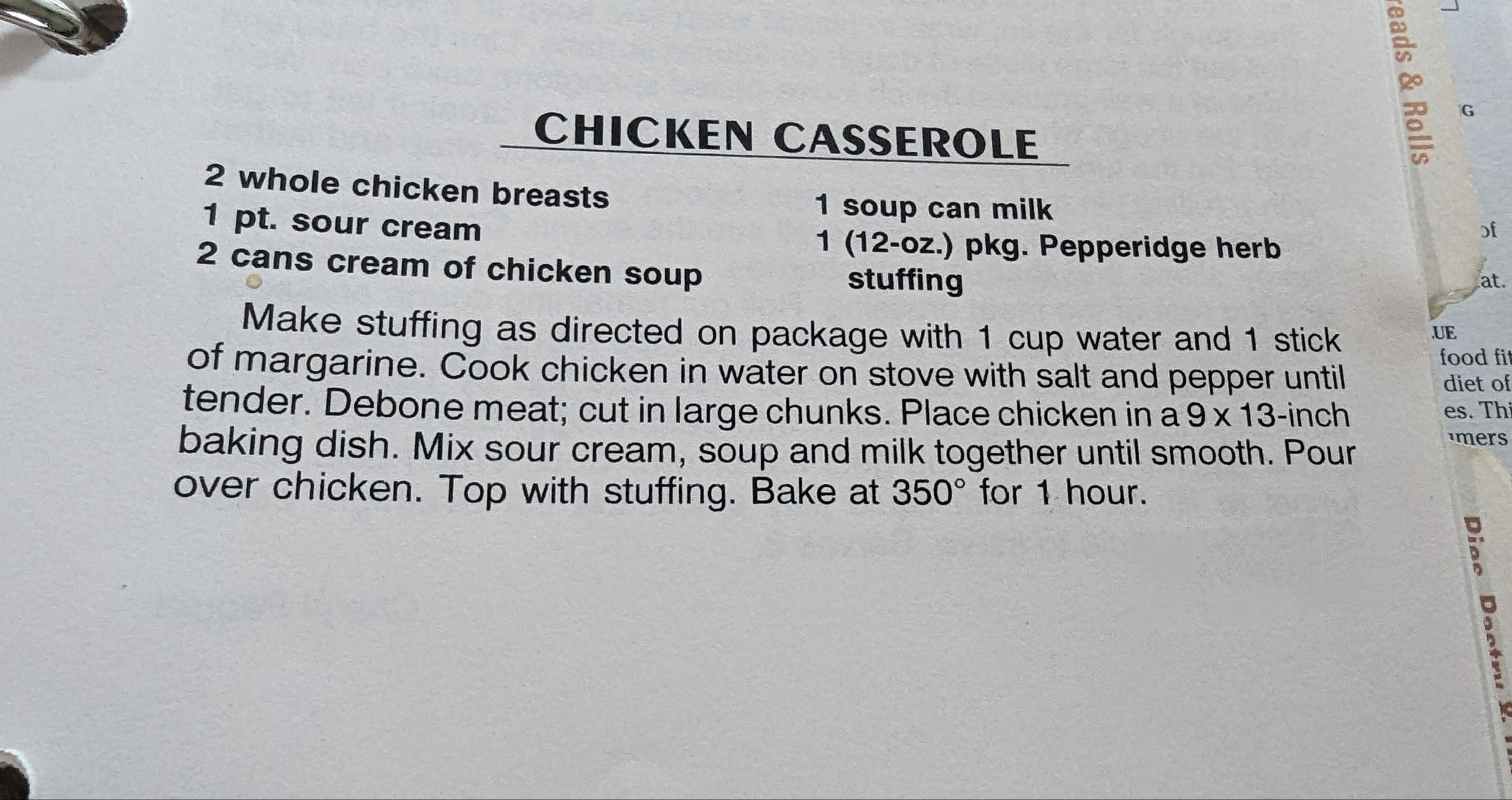
During a recent family gathering, we were discussing one of my favorite topics: food! I reminisced about a delicious casserole I remember enjoying when I was younger. My Mom chimed in, mentioning that the recipe for that dish was actually included in the cookbook published by my former church. I had completely forgotten about the cookbook! (I will include the recipe that I was talking about below)
A couple of days later, I found myself at my parents’ house, flipping through the pages of the cookbook. I have to admit that I was not ready for the mix of emotions that it brought. As I turned the pages, I couldn’t help but feel a rush of memories flooding back. The familiar names of people I had known during my time growing up there filled the pages, and it was a bittersweet reminder of the connections I once had.
The cookbook was compiled and printed during a time in my life that I have mostly only fond memories of my former church and the people who attended at the time. It was a time where youth, naivety, and genuine respect for the kind and authentic leadership kept me from seeing any flaws in the doctrines and teachings.
Seeing those names, some of which I hadn’t thought about in years, was like reconnecting with old friends. Each name represented a face, a story, and a shared experience within the church community. It was a poignant reminder that despite the challenges and complexities of that time, there were genuine relationships that once held significant meaning in my life. (I remember eating many of the items in the cookbook at get togethers, dinners at friends’ houses, and church potlucks.)
But along with the warmth of recognition came a tinge of sadness. Looking at those names also reminded me of the distance that had grown between us. Leaving the church had naturally led to a gradual fading of those connections. It was a reminder that life moves forward, and paths diverge as we each go on our own separate ways.
The cookbook itself is a tangible link to a past that I had both embraced and outgrown. It held recipes and memories, but it also held the echoes of doctrines and beliefs that no longer aligned with my perspective. It was a snapshot of a different time, a world I had inhabited with a mix of joy and uncertainty.
As I closed the cookbook, I felt a sense of closure and gratitude. It was a chapter of my life that had shaped me in profound ways, but it was also a chapter that I had the courage to close. The emotions that surfaced while perusing those pages were a testament to the complexity of human experience—the intertwining of nostalgia, growth, and the resilience to move forward.
While the cookbook held more than just recipes, it is a reminder that even in the midst of change, there’s a thread of continuity that weaves through our lives. The bittersweet blend of recognition and separation highlighted that life is marked by both letting go and holding onto what truly matters.
CHICKEN CASSEROLE
2 whole chicken breasts
1 pt. sour cream
soup can milk
2 cans cream of chicken soup
1 (12-oz.) pkg. Pepperidge herb stuffing
Make stuffing as directed on package with 1 cup water and 1 stick of margarine. Cook chicken in water on stove with salt and pepper until tender. Debone meat; cut in large chunks. Place chicken in a 9 x 13-inch baking dish. Mix sour cream, soup and milk together until smooth. Pour over chicken. Top with stuffing. Bake at 350° for 1 hour.
I started writing this post over four years ago… At the time I was upset and hurt by things happening in my personal life and in my church community. At the time I was conflicted by the discrepancy between church leaders preaching one thing and practicing another. I found myself frustrated and constantly asking Where is the Love?!
Because of various situations and circumstances in my life, I didn’t feel the freedom to honestly express my thoughts and feelings. As a result, this post remained in my drafts. Although this post doesn’t entirely resemble what I began writing four years ago, that is actually a positive change. Back then, my emotions were raw, and my perspective was clouded by the challenges and uncertainties I was facing. I remember the frustration and hurt that seeped into my words, driven by my pain and struggles. A lot has changed for me in the last few years and I no longer feel restricted or held back.
Growing up my church experience was largely shaped by my parents’ unwavering commitment to both God and the church community. Their genuine dedication and eagerness to serve meant that I was always right in the heart of everything that was happening within the church. From events to meetings and all the meaningful moments in between, I found myself on the “inside,” privy to the happenings and closely connected to the pulse of the church.
It wasn’t until a significant turn of events much later in my life that truly changed my perspective. Without going into too many details, there came a point when I found myself in a situation where I experienced a falling out with the wife of one of the church leaders. This shift marked a defining moment for me, as it was during this time that I suddenly understood what it felt like to be on the “outside” looking in.
The experience opened my eyes to a whole new side of church dynamics that I had never truly comprehended before. Suddenly, I began to sense the subtle divides and the complex relationships that often lie beneath the surface. I noticed that I was being shut out, information was being withheld as if I couldn’t be trusted, and I was purposefully being left out of discussions I had once been a part of. This newfound vantage point allowed me to grasp the nuances of how cliques can inadvertently form and how certain dynamics can shape the sense of belonging within a community.
While I found myself in a situation where my own place and standing had undergone a significant shift, what truly opened my eyes was realizing that others had been experiencing similar treatment and feelings all along.
There were people who, despite their dedication and commitment, had silently battled with a sense of not fully belonging. They had faced barriers to connection that were beyond their control, and this had been their reality for much longer than my own temporary experience. It was humbling to recognize that my brief stint on the outside had given me just a taste of what these people had been enduring for a long time.
In an unexpected way, this experience of being on the outside provided me with a valuable lesson in empathy and understanding. It taught me the importance of being inclusive and welcoming, making sure that others don’t feel left out or isolated. It was a reminder that even within the walls of a church, where we seek connection and unity, there’s still room to grow in how we relate to one another and ensure that everyone feels a sense of belonging.
This experience urged me to be an advocate for encouraging a more open and inclusive environment within the church community. It motivated me to stand up for those who may have felt their voices weren’t heard or their presence wasn’t fully acknowledged. The wisdom gained from this eye-opening revelation has become a guiding force in how I approach relationships and interactions, not only within the church but in all aspects of my life.
In conclusion, now I can look back and I’m thankful for this experience. Not only did it open my eyes to the way others might be feeling, but it also served as a catalyst to initiate my departure from the IFB.
Disclaimer:The personal experiences shared in this post are based on my personal perspective. I want to acknowledge that I am on a continuous journey of growth and self-improvement. I am aware that I don’t always respond or behave in the perfect way, as I am only human. However, I hold firm to the belief that treating people with kindness and respect is of utmost importance. While I may stumble along the way, my intention is always rooted in creating positive interactions and demonstrating consideration for others. While I chose to leave the IFB to find a more gracious and loving community, it is important to acknowledge that individuals may have different experiences and find happiness within the IFB or any other religious institution. The decision to leave the IFB does not imply a loss of faith, as faith is a deeply personal and subjective matter.
Abstract/TL:DR:Over time and with some distance from difficult situations, I’ve personally found that things do get easier. The weight of emotions lessens, and healing begins. Stepping away physically and emotionally gaining perspective plays a crucial role in finding relief and strength. While everyone’s situation is unique, the saying “it gets easier with time and distance” holds some truth. So, embrace the process, take it one step at a time, and know that healing and growth are possible.
I’ve found that as time passes and I put some distance between myself and difficult situations, things really do start to get easier. It’s like the weight of those emotions slowly lessens, and I begin to see things in a new light. When I was going through heartbreak or tough times, it felt like I’d never be able to move on or find peace. But with each passing day, the pain seemed to lose its sharpness, and I started to heal.
Sometimes, all it took was physically stepping away from a situation or person that was causing me distress. Getting some space allowed me to clear my head and gain a fresh perspective. And you know what? That made a world of difference. I realized that the intensity of my emotions had been clouding my judgment and hindering my ability to see a way out.
But it’s not just about physical distance; emotional distance plays a significant role too! As I gradually processed my feelings, I could begin to detach myself from the immediate emotional impact. It isn’t easy, and I have to be intentional about it, but I have learned to take a step back and gain a more objective outlook on things. And with time, that emotional distance allowed me to find healing and a sense of inner strength.There are still times where I struggle and fall back into old ways of feeling and thinking, but as time passes those times of recession occur less often.
While time and distance aid in healing wounds, they do not minimize the fact that their was hurt; they simply make it more manageable. Of course, everyone’s journey is different, and healing is a unique process for each person. But from my own experience, I can say that the saying “it gets easier with time and distance” does hold some truth. When I’m in the midst of a difficult situation, it’s sometimes hard to believe that things will ever improve. But looking back on my life, I can see how I’ve grown and overcome challenges, and that gives me hope for the future.
So, to anyone going through a tough time right now, I want to say that it may not feel like it at this moment, but eventually, you’ll find your way through. Take it one step at a time, and remember that healing and growth are possible. With time and a bit of distance, you might just surprise yourself with the strength and resilience you’ll discover that you have.
Disclaimer: While I firmly believe that it gets easier with time and distance, I want to emphasize that I am still growing and working on myself. I don’t have all the answers, but I am trying my best to learn and evolve. The sentiment I expressed about things becoming more manageable with time is based on my personal experiences up until now.I hope that in the future I can use what I have been learning to help me deal with tough situations in a mature and healthy way.





























 Looking Joli Good