
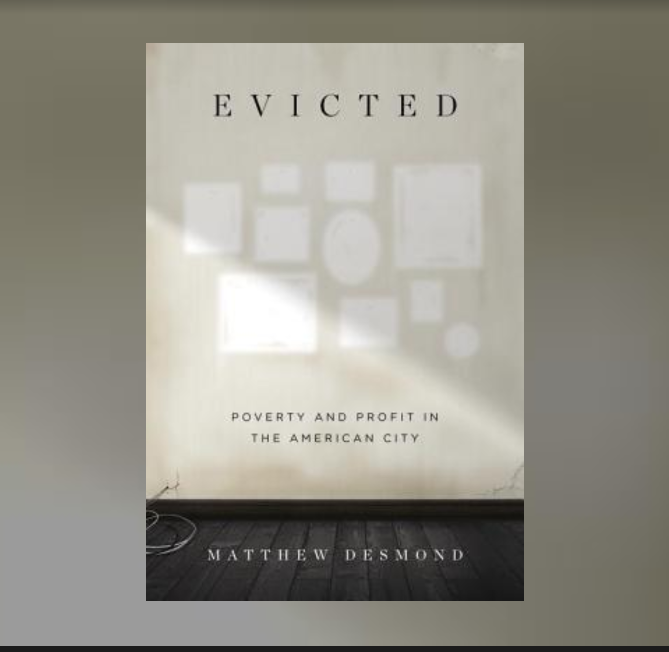
As I wrote in a previous post, Matthew Desmond’s Evicted: Poverty and Profit in the American City is a powerful exploration of housing insecurity and its far-reaching effects on individuals and families. Through his ethnographic study of eight families in Milwaukee, Wisconsin, Desmond captures the relentless struggles of people trying to secure the most basic human necessity: a home. As I have finished reading this book for a second time, I continue to think about how it provides more than just a window into their lives; it underscores a broader truth about the foundational role housing plays in human well-being. As I think about the families in this book, I keep coming back to thoughts outlined in Maslow’s Hierarchy of Needs. By examining the interplay between housing insecurity and Maslow’s framework, it becomes evident that stable housing is essential not only for survival but also for achieving higher levels of personal and societal development.
Maslow’s Hierarchy of Needs, a psychological theory proposed by Abraham Maslow, is often depicted as a pyramid with five levels. The first two levels, physiological needs (such as food, water, and shelter) and safety needs (security, stability, and protection), form the foundation. These must be met before individuals can focus on higher-level needs, including belongingness, esteem, and ultimately, self-actualization. Desmond’s work reveals how housing insecurity disrupts this progression, trapping individuals and families in a cycle where they can barely address their basic needs, let alone aspire to personal growth and fulfillment.

Looking at the pyramid of Maslow’s Hierarchy of Needs, the families featured in Evicted are constantly battling to meet their physiological and safety needs. For Arleen, a single mother, the inability to secure stable housing means frequent moves and evictions, which prevent her from providing consistent shelter for her children. Her story highlights how the lack of a stable home undermines even the most fundamental aspects of life. When people are consumed with finding their next place to sleep, other needs—such as nutrition, employment, and education—are often neglected. As Desmond points out, the loss of housing creates a ripple effect, leading to job loss, health crises, and educational disruptions, further destabilizing families and communities.
“You can only say ‘I’m sorry, I can’t’ so many times before you begin to feel worthless, edging closer to the breaking point. so you protect yourself, in a reflexive way, by finding wayto to say”No, I won’t.’ I cannot help you. So, I will find you unworthy of help.” (Desmond, 2016, p 241)
In Evicted, housing insecurity is shown to have a profound impact on Arleen Bell’s young son, Jafaris, and his asthma. Maslow’s hierarchy of needs emphasizes the importance of stable, safe living conditions for meeting basic physiological and safety needs. Frequent moves, exposure to substandard housing, living in shelters, and the stress associated with housing instability significantly exacerbate his Jafaris’s asthma. Poor living conditions, such as mold or poor ventilation, contribute to environmental triggers, while disrupted routines and limited access to healthcare prevent effective asthma management. Additionally, the loss of Jafaris’s breathing machine due to the family’s unstable situation delays and prevents timely treatment, further complicating his condition. This cycle of instability highlights how unmet basic needs can lead to worsened health outcomes, particularly for vulnerable children like Jafaris.
Safety needs, the second level in Maslow’s hierarchy, are also profoundly compromised by housing instability. Many tenants in Evicted live in fear of landlords, eviction notices, and the threat of homelessness. Arleen living in dilapidated conditions, exemplifies how the lack of secure housing erodes a sense of safety and control. Without a stable environment, individuals cannot establish the security necessary to build relationships, pursue goals, or maintain mental well-being. Desmond’s research illustrates how eviction and housing insecurity perpetuate chronic stress, which has long-term implications for physical and mental health.

Arleen’s struggles provide another poignant example of how housing insecurity disrupts the hierarchy of needs. Arleen, struggling with poverty and homelessness, sometimes lashed out at her children. The book describes instances where she became short-tempered and even cruel, often blaming them for her own frustrations and the hardships they faced. Desmond suggests that Arleen’s harsh behavior stemmed from her own despair and the overwhelming burden of poverty.It was easier for her to direct her anger toward her children than to confront the harsh realities of their situation, the lack of resources, and the constant struggle to survive. This dynamic highlights how unmet physiological and safety needs can compromise an individual’s ability to meet emotional and relational needs, such as providing love and support to their family. When basic survival consumes all of a person’s energy, nurturing relationships and emotional stability often fall by the wayside. Over time, this neglect can perpetuate a generational cycle, as children raised in such environments may struggle to develop the emotional resilience and resources needed to break free from the same patterns of instability and deprivation. This underscores the profound impact of systemic poverty and housing insecurity on both immediate family dynamics and long-term generational outcomes.

Beyond the immediate impact on physiological and safety needs, housing instability also obstructs progress toward higher-level needs such as belongingness and esteem. Maslow’s theory emphasizes the importance of social connections and community for emotional well-being. However, frequent evictions and transience sever ties to neighborhoods, schools, and support networks. Arleen’s repeated displacements make it difficult for her children to form lasting friendships or excel in school, denying them a sense of belonging. Meanwhile, the stigma associated with eviction and poverty diminishes self-esteem, leaving individuals feeling marginalized and powerless.
The pinnacle of Maslow’s hierarchy, self-actualization, remains out of reach for those mired in housing insecurity. Self-actualization involves achieving one’s full potential and engaging in creative, meaningful pursuits. For the families in Evicted, however, the constant struggle to meet basic needs leaves little room for personal growth or self-discovery. Desmond’s narrative makes it clear that systemic barriers, such as exploitative landlord practices and inadequate housing policies, prevent individuals from escaping the cycle of poverty and realizing their potential.
There is no one-stop easy solution to the housing crisis. Desmond’s proposed solution—a universal housing voucher program—aligns with Maslow’s framework by addressing the foundational needs of shelter and safety. By ensuring access to stable and affordable housing, such a program would create the conditions necessary for individuals and families to focus on higher-level needs. Stable housing not only provides a physical structure but also fosters a sense of security, community, and dignity, enabling people to pursue education, build relationships, and achieve their aspirations.
Evicted serves as a poignant reminder that housing is far more than a physical structure; it is the cornerstone of human well-being. Maslow’s Hierarchy of Needs provides a valuable lens through which to understand the profound impact of housing insecurity on every aspect of life. Desmond’s work challenges readers to consider the moral and societal imperative of addressing housing inequality, not just as a matter of policy but as a matter of human dignity. By recognizing the essential role of stable housing in fulfilling human potential, we can take meaningful steps toward a more equitable and compassionate society.
Reference:
Desmond, M. (2016). Evicted: Poverty and profit in the American city. Crown Publishers.
Maslow, A. H. (1954). Motivation and personality. Harper & Row.
Click HERE to order your own copy of Evicted: Poverty and Profit in the American City**

**Affiliate link HERE
Non affiliate link click HERE
**An affiliate link is a unique URL provided by an affiliate program or network to their partners, such as bloggers or website owners. When someone clicks on an affiliate link and makes a purchase or completes a desired action, the affiliate partner earns a commission or other form of compensation. These links are specifically tracked to attribute sales or conversions generated through the partner’s promotional efforts. In summary, an affiliate link is a specialized link that allows partners to earn commissions by driving traffic and sales to a particular product or service.**

 Looking Joli Good
No one really self-actualizes. We can only stand on our own feet with support – community, family, and I would add spiritual.
Even those who claim to have done it the “American Way” did so with others, or by exploiting others.
Meanwhile, stable affordable housing is becoming further out of reach. This world is messed up.
LikeLiked by 1 person
You’re absolutely right—self-actualization, while unlikely for many to achieve, doesn’t happen in isolation. Maslow’s hierarchy itself assumes a foundation of community and stability to even begin pursuing higher needs, but that foundation is crumbling for so many people. The myth of “pulling yourself up by your bootstraps” ignores the support systems—whether community, family, or privilege—that often make success possible. And when basic necessities like affordable housing are out of reach, it’s impossible to focus on growth or fulfillment. It’s a reminder of how interconnected we are and how broken systems prevent so many from even being able to merely survive nevermind having the chance to thrive.
LikeLiked by 1 person