
If you haven’t read The Spirit of Fear Part One, please click HERE to start reading there first. Once you have read that you can come back and read Part Two.
Exploring the intricate layers of fear, its origins, and its impact in a religious context required delving into both personal experiences and the communal dynamics of the Independent Fundamental Baptist (IFB) church and the community I was a part of. Confronting the Spirit of Fear is a topic that has taken significant introspection and courage to unravel its complexities.
The Bible often speaks of the fear of the Lord. Here are some examples from the King James Version (KJV):

Proverbs 1:7 “The fear of the Lord is the beginning of knowledge: but fools despise wisdom and instruction.”
Ecclesiastes 12:13“Let us hear the conclusion of the whole matter: Fear God, and keep his commandments: for this is the whole duty of man.”
Deuteronomy 10:12 “And now, Israel, what doth the Lord thy God require of thee, but to fear the Lord thy God, to walk in all his ways, and to love him, and to serve the Lord thy God with all thy heart and with all thy soul.”
Psalm 111:10 “The fear of the Lord is the beginning of wisdom: a good understanding have all they that do his commandments: his praise endureth for ever.”
In the context of these Bible verses, the “fear of the Lord” refers to a deep reverence, awe, and respect for God. It involves acknowledging God’s holiness, power, and authority. This fear is not about being terrified or scared of God in a negative sense, but rather about recognizing His greatness and living in accordance with His commandments. It implies a posture of humility, obedience, and devotion to God’s will. The fear of the Lord is often associated with the beginning of wisdom and knowledge, suggesting that a proper understanding of God is foundational to a life of spiritual insight and understanding.
This reverence, awe, and respect for God is not the type of fear that I am talking about here.
In the Bible, there are instances where God’s wrath is depicted as a response to disobedience, rebellion, or the violation of His commands. Here are a few examples that quickly came to my mind:
The Flood (Genesis 6-8): God, seeing the wickedness of humanity, decided to send a great flood to cleanse the earth. Noah and his family were spared, but the rest of humanity faced death due to God’s judgment.
Sodom and Gomorrah (Genesis 18-19): Due to the extreme wickedness of these cities, God rained down fire and sulfur, destroying them completely. Lot and his family were the only ones spared. Yet when Lot’s wife looked back she was turned into a pillar of salt. I have often contemplated the idea that, in a similar situation, I would likely turn to look back.
Plagues on Egypt (Exodus 7-12): In response to Pharaoh’s refusal to release the Israelites, God sent a series of plagues, demonstrating His power and demanding obedience. The final plague resulted in the death of the firstborn in every Egyptian household.
Korah’s Rebellion (Numbers 16): Korah, along with others, rebelled against Moses and Aaron’s leadership. In response, God caused the earth to open up and swallow the rebels.
Uzzah and the Ark (2 Samuel 6:1-7): Uzzah touched the Ark of the Covenant when it was being transported, contrary to God’s command. God’s anger burned against Uzzah, and he died instantly as a consequence of his irreverence. (I cannot tell you how many times I have thought about this particular story though out the years. Uzzah, not wanting the Ark to fall disobeyed and reached out and touched it. I too would probably try to help.)
Ananias and Sapphira (Acts 5:1-11): In the early Christian community, Ananias and Sapphira lied about their financial contributions. God’s judgment led to their sudden deaths as a warning to the church about the seriousness of deceit. (How many times have I lied or stretched the truth?!)
These examples illustrate instances where God’s wrath was manifested in response to disobedience, rebellion, or unrepentant sin. And while, as a child and maybe even as an adult, I was terrified that I was going to do something that was going to cause me to die instantly as a consequence of my sin, it’s important to note that these narratives are part of a broader theological understanding of God’s justice and the consequences of human actions.
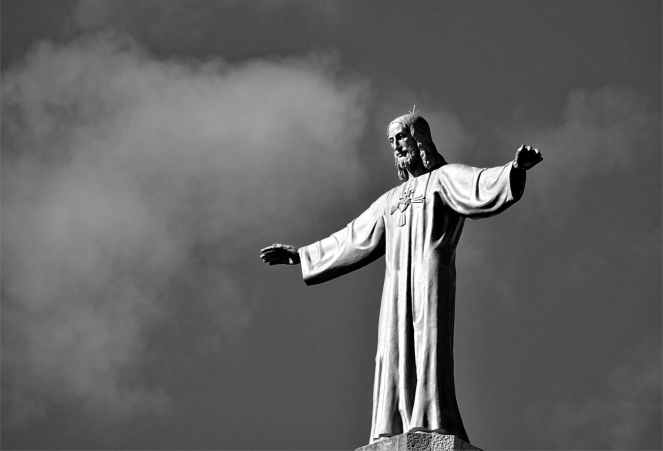
A wrathful God sent His Son, Jesus Christ, as an expression of His love and mercy. The concept is rooted in the idea that humanity, due to sin, deserved divine punishment or wrath. Instead of condemning humanity, God chose to extend His grace by sending Jesus to bear the consequences of sin on behalf of humanity. Through Jesus’ sacrificial death on the cross God’s justice was satisfied, and a way for reconciliation between God and humanity was established. It reflects the belief in God’s desire for redemption and the offer of salvation through faith in Christ.

So, the question remains, should I be afraid of God?
Growing up, I received mixed messages about fear and love in the context of my faith. While I was told to “fear not” and trust in God’s love, the predominant teachings emphasized the fear of God and the consequences of sin. Despite the reassurance to cast away fear, there was an underlying narrative that positioned God as something to be afraid of – a divine figure ready to mete out judgment for any transgression. The dichotomy between the encouragement to trust and the emphasis on fear created a paradoxical relationship with God, where love and fear seemed intertwined. The conflicting narratives left a lack of understanding of a God who could simultaneously inspire love and evoke such immense fear.

Reflecting on this, it becomes evident that the juxtaposition of messages about God’s love and the fear of His wrath created internal conflict and confusion. This experience underscores the importance of consistency and clarity in religious teachings. It highlights the potential impact of mixed messages on an individual’s perception of faith and their relationship with a higher power. When told to love but simultaneously made to fear, the inherent contradiction can hinder the development of genuine love. Understanding that conflicting narratives can lead to internal struggles emphasizes the need for open dialogue, thoughtful interpretation of religious teachings, and a commitment to create a harmonious understanding of faith. Ultimately, seeking a balanced perspective that allows for both reverence and love in one’s relationship with the divine.
The perspective on fearing God varies among individuals and religious traditions. In a healthy spiritual context, fear of God is often interpreted as awe, reverence, and a deep respect for divine power. It is not meant to instill paralyzing fear but rather to inspire humility and a desire to live in accordance with ethical and spiritual principles.
However, if the fear of God becomes overwhelming, causing anxiety, crushing guilt, or hindering one’s relationship with the divine, it may be beneficial to explore a more balanced understanding of God’s nature, one rooted in love and grace. For me personally focusing on God’s grace helped to contribute to a healthier and more enriching spiritual experience than what I was used to during my time in the IFB. I also found that establishing healthy boundaries that prioritize my mental and emotional well-being involved distancing myself from that toxic environment and some IFB individuals.
I cannot honestly say that there are not times that I still feel afraid of God, but these moments are now intertwined with a growing realization. While reverence for the divine is important, I’ve come to recognize that the fear instilled in me was often rooted in a portrayal of a vengeful and punitive deity. As I navigate my own spirituality , I seek a deeper understanding of God—one that encompasses love, mercy, and grace, allowing me to approach the divine with a reverence that nurtures a relationship built on trust and adoration rather than fear and trepidation.

Disclaimer: It’s important to acknowledge that this is my opinion based on my own life experiences. It’s essential to recognize that not all people within IFB churches function in a state of constant fear. Some may be more openminded and respectful of differing viewpoints, acknowledging that genuine faith can coexist alongside diverse beliefs. People have diverse experiences and perceptions, and some may genuinely enjoy and benefit from their involvement in the IFB. I may disagree, but unlike what I experienced while in the IFB I do not intend to diminish or invalidate those positive experiences but rather seeks to highlight the complexities of personal perspectives and their role in shaping our understanding of the world.

 Looking Joli Good